
Choosing a Power Transformer Fuse is not just a matter of matching a voltage rating. Buyers must consider transformer capacity, available fault current, load behavior, and the protection devices connected upstream and downstream. For global projects, product availability and local technical requirements can also shape the decision. A fuse that performs well on paper may not suit a humid coastal substation or a dusty industrial yard. Details matter.
This 2026 guide compares common options, including expulsion, current-limiting, and combined fuse arrangements. It explains where each type may fit, what its ratings mean, and which questions to ask suppliers before ordering. Check the manufacturer’s data, confirm the system voltage and fault levels, and review coordination with qualified electrical professionals. Requirements differ between networks, and product labels alone do not prove suitability. A neat comparison table cannot capture every installation condition. That is worth remembering.
The aim is a practical shortlist, not a universal recommendation. Buyers should confirm applicable standards, operating conditions, and utility specifications for the destination market. Ask for clear documentation, including ratings, test information, and installation guidance. If a key detail is missing, pause and verify it. That small step can prevent an expensive mismatch.
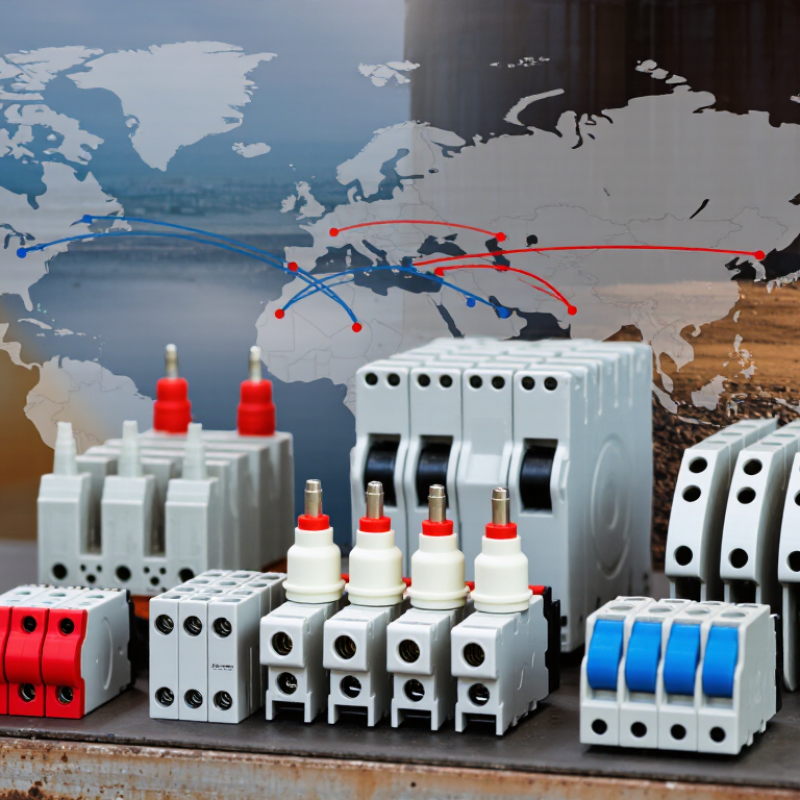
A power transformer fuse is a sacrificial link in the circuit. When current exceeds its designed limit, the fuse melts and interrupts the flow, helping prevent damage to windings, cables, and nearby equipment. It can also reduce the energy released during a severe fault. A fuse does not prevent every failure. That distinction matters.
Different designs respond in different ways. Expulsion fuses use an arc-extinguishing process and are common in outdoor distribution equipment. Current-limiting fuses interrupt high fault currents quickly, reducing the stress placed on the transformer. Some installations use a fuse with a separate protective device, since one fuse may not detect every internal fault or sustained overload. Protection depends on coordination.
Selection needs more than matching the system voltage. Engineers consider transformer capacity, expected fault current, inrush when the transformer is energized, and the characteristics of downstream protection. For example, an undersized fuse may open during normal energization; an oversized one may not protect equipment quickly enough. Those details can be easy to overlook on a specification sheet. Buyers should confirm ratings and coordination with the project engineer, then check the fuse holder and installation conditions before commissioning. A fuse is simple hardware, but choosing it well takes careful system-level review.

Power transformer installations use several fuse types, each suited to a different fault level and operating position. Expulsion, or dropout, fuses are common on distribution transformer primaries. Their visible drop-away link helps crews identify an operated fuse from ground. Current-limiting fuses interrupt high fault currents quickly and are often used where available fault current exceeds an expulsion fuse’s interrupting capability. The choice depends on system voltage, fault current, and coordination with upstream protection—not just transformer size.
IEC 60282-1 covers high-voltage fuses for systems above 1 kV, while IEC 60269 covers low-voltage fuse systems up to 1,000 V AC. These boundaries are practical selection checks, not complete sizing rules. Combination arrangements pair a fuse with a switch, giving operators a way to isolate equipment while the fuse clears certain faults. On the secondary side, low-voltage HRC fuse-links may protect outgoing circuits. Small details matter. Engineers must check transformer inrush, fuse time-current curves, and the protection relay settings together. IEEE C37.48.1 provides application guidance for high-voltage fuse selection and coordination. In practice, the data sheets can still leave uncertainty around inrush and system changes; a technically correct rating may not coordinate well after the network is reconfigured.
Key fuse types used in power transformer installations
Expulsion, current-limiting (backup or full-range), and transformer-mounted bayonet fuses serve different protection arrangements. The chart shows common IEC high-voltage fuse-link rated voltage classes; the appropriate fuse type and rating depend on the transformer, system voltage, and protection coordination. Not every fuse type is available in every class.
Choosing a transformer fuse starts with the transformer’s nameplate, not a catalogue shortcut. Record rated voltage, kVA, primary current, impedance, and expected fault current. Then compare the fuse’s continuous-current rating and time-current curve with transformer inrush and downstream protection. A fuse that clears too quickly may operate during energization; one that is too slow may leave the transformer exposed.
For overhead distribution, an expulsion fuse may suit a location where visible operation and straightforward replacement matter. Current-limiting fuses can restrict high fault currents, while a coordinated backup combination may be appropriate where fault levels exceed an expulsion fuse’s interrupting capacity. Check the fuse’s voltage rating, interrupting rating, and coordination with upstream devices. A close review of the curve matters.
The IEA’s 2023 report, Electricity Grids and Secure Energy Transitions, says more than 80 million kilometres of grids must be added or refurbished by 2040. That expansion makes consistent fuse selection important across varied networks, but the forecast does not replace site calculations. Confirm local short-circuit conditions, ambient temperature, enclosure, and installation altitude with a qualified engineer. Real networks are messy; a neat calculation can still miss actual operating conditions.
| Fuse type | How it interrupts current | Typical transformer application | Key advantages and limitations | Matching requirements |
|---|---|---|---|---|
| Expulsion fuse / fuse link | An arc is extinguished inside a gas-generating fuse tube. The fuse link’s time-current characteristic determines when it operates; interruption is limited by the device’s rated voltage and interrupting capacity. | Common on overhead distribution transformers and in outdoor cutouts where the system design allows an expulsion device. | Visible operation and straightforward replacement are useful for overhead installations. Operation can produce exhaust and noise, and the device must be suitable for the available fault current and its installation environment. | Check system voltage, continuous-current rating, interrupting rating, fuse-link time-current curve, transformer inrush, and coordination with upstream and downstream protection. Confirm that the cutout and fuse link are a compatible, tested combination. |
| Backup current-limiting fuse | Limits and interrupts high fault currents, but has a specified minimum breaking current. Faults below that minimum may not be cleared by the fuse alone. | Often used inside or alongside distribution and power transformer protection arrangements, in series with a suitable device that clears lower currents. | Can substantially limit peak fault current and let-through energy for high-current faults. It is not a standalone solution for all fault levels when the minimum breaking current exceeds the current the fuse must clear. | Verify the minimum breaking current, rated maximum interrupting current, voltage rating, and let-through characteristics. Coordinate it with the series device so the complete arrangement covers the required fault-current range. |
| Full-range current-limiting fuse | Designed to interrupt currents from its specified minimum breaking current through its rated maximum interrupting current, subject to the manufacturer’s stated ratings and test conditions. | Used where a compact, current-limiting transformer protection solution is required and the fuse’s characteristics suit the full expected fault range. | Can cover a broad interruption range and limit high-fault energy. Its time-current curve and continuous-current rating still need to accommodate transformer energization and the intended loading. | Confirm the stated full-range performance, voltage and interrupting ratings, transformer inrush withstand, and coordination with transformer damage limits and upstream protection. Do not infer full-range capability from the fuse’s name alone. |
| Combination fuse arrangement | Typically pairs a backup current-limiting fuse for high-current faults with an expulsion or other series device for lower-current faults. The combined assembly is intended to cover the specified protection range. | Used in transformer installations where a coordinated combination is selected by the equipment designer or specified for the switchgear or transformer assembly. | Can combine high-fault current limitation with lower-current fault clearing. Performance depends on the coordination and ratings of the complete assembly; substituting individual components can invalidate the intended protection. | Use the assembly’s approved coordination data and verify the system voltage, available fault current, minimum and maximum interruption limits, transformer inrush, and applicable installation requirements. |
Global buyers should compare fuse standards as well as nameplate ratings. IEC 60282-1 covers high-voltage current-limiting fuses, while IEEE C37.41 specifies design tests for high-voltage fuses. These standards are not interchangeable checkboxes; confirm the applicable edition and acceptance requirements with the project engineer. Compare rated voltage, continuous current, breaking capacity, and minimum breaking current against the transformer’s system voltage and calculated fault level. Small details matter.
Check the fuse’s time-current curve against transformer inrush, upstream protection, and downstream devices. A fuse that handles normal energization may still interrupt faults too slowly, or operate unnecessarily during a brief overload. Review ambient temperature, enclosure conditions, striker requirements, and the manufacturer’s documented test data. The IEA’s 2023 Electricity Grids and Secure Energy Transitions report says annual grid investment needs to exceed USD 600 billion by 2030 in its climate-aligned pathway, up from about USD 300 billion. That forecast signals expanding grid needs, but it does not replace site-specific protection studies.
Tips: Ask suppliers to state the standard and edition, voltage and current ratings, breaking range, and curve data on the quotation. Match these values to the transformer’s verified fault study. If two options look equivalent, pause; their operating curves may not be.
For global buyers, supplier evaluation should begin with evidence, not a product label. Ask for verified voltage and interrupting ratings, time-current curves, temperature limits, and traceable test documentation. Check that the proposed fuse coordinates with transformer inrush and downstream protection. A fuse that fits mechanically may still fail to protect the system properly.
Expulsion fuses can suit many distribution applications, while current-limiting types help restrict fault current. Some installations use a coordinated combination; confirm the ratings and application with a qualified engineer. IEC 60282-1 covers high-voltage current-limiting fuses, but buyers should also check which national standards and utility specifications apply in each market. Fit matters. Review local system voltage, available fault current, altitude, humidity, and enclosure conditions. Small details count.
Market demand adds pressure to get selection right. The IEA’s 2023 report, Electricity Grids and Secure Energy Transitions, says annual grid investment needs to rise from about USD 300 billion to more than USD 600 billion by 2030. That scale makes dependable supply and consistent documentation important. Compare lead times, quality controls, spare availability, and after-sales technical support. A datasheet can look complete and still leave coordination unclear. Ask suppliers to explain assumptions in writing; honestly, this step is easy to skip when schedules tighten.
3295 Cobb International Blvd.
Kennesaw, GA 30152
800-367-1377
sale@patiostools.com
© 2023 - Marsh Instruments