
Choosing the 2026 best 18650 Battery is not simply about finding the highest capacity label. Global buyers need dependable performance, verified quality, and clear technical information. A suitable cell should match the device, charger, operating temperature, and required discharge current. Small details matter. A loose wrapper or unclear batch code can signal poor handling or unreliable sourcing.
This guide examines practical factors from an experienced buyer’s perspective. It compares capacity, continuous discharge ratings, cycle life, internal resistance, brand reputation, and testing evidence. A 3,000 mAh cell may offer better balance than a claimed 3,500 mAh model with weak performance. Real capacity often differs from advertising. That deserves attention.
Safety remains central. Reputable manufacturers publish datasheets and production information. Trusted sellers provide authentic products, consistent labeling, and suitable packaging. Buyers should avoid mixing cells with different ages, capacities, or conditions. A battery analyzer can reveal problems that appearance cannot. Never ignore swelling, overheating, damaged insulation, or unusual voltage behavior.
Global purchasing adds practical challenges. Product availability, transport requirements, warranty support, and regional charger compatibility can affect the final decision. The cheapest option may become expensive after replacements or failed deliveries. However, brand recognition alone is not proof of quality. Independent testing is useful, but test methods can vary.
This review aims to separate measurable value from attractive marketing. Some recommendations may change as new cells appear. That is worth admitting. Battery technology evolves quickly, and no single 18650 Battery suits every application. The best choice is the safest, most verified match for your specific equipment.
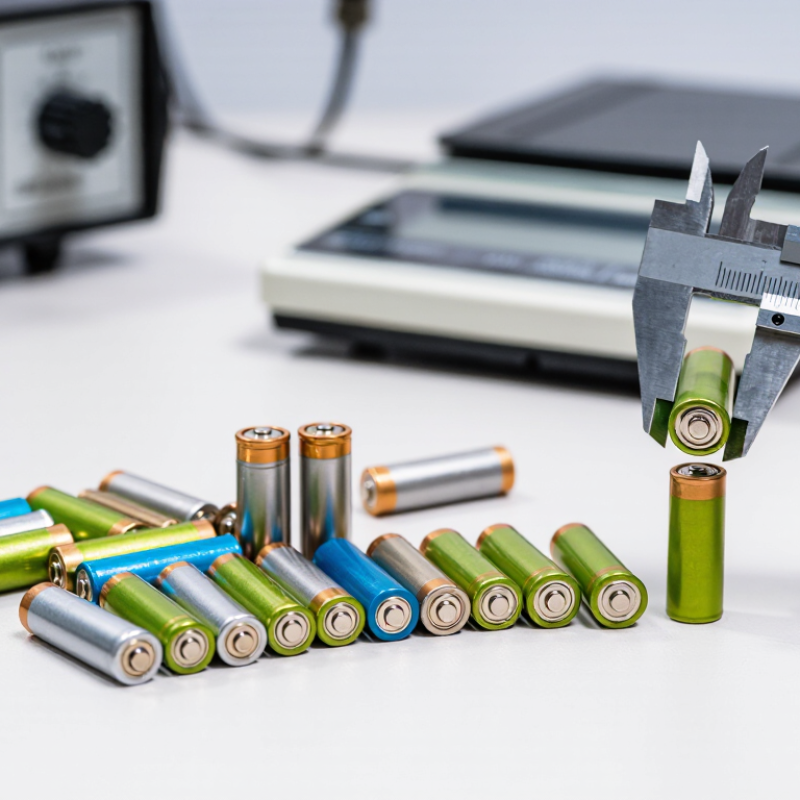
An 18650 battery is a cylindrical lithium-ion cell measuring about 18 millimeters wide and 65 millimeters long. “18650” describes size, not chemistry, capacity, or quality. Inside, a graphite anode stores lithium ions during charging. A metal-oxide cathode releases them during use. A porous separator keeps electrodes apart, while electrolyte carries ions between them. Electrons travel through the external circuit, creating useful current. Simple in principle. Not risk-free.
Most 18650 cells have a nominal voltage near 3.6 or 3.7 volts. Full charge is commonly 4.2 volts. Capacity is usually expressed in ampere-hours, with many cells rated roughly 2.0 to 3.5 Ah. Actual energy depends on load, temperature, age, and testing method. IEC 61960-3 defines performance and marking methods for portable lithium cells. Still, printed numbers are not proof. Independent testing matters.
The International Energy Agency reported that global lithium-ion battery demand reached about 750 GWh in 2023. BloombergNEF’s 2024 survey reported an average lithium-ion pack price of 115 dollars per kWh, down 20% year on year. These figures show a mature industry, but not universal cell quality. Buyers should check capacity data, discharge limits, production date, insulation, and protection requirements. During operation, lithium ions shuttle between electrodes. Heat, overcharging, short circuits, and physical damage can accelerate failure. Use a charger matched to the cell’s chemistry and voltage. Never mix cells with different ages or unknown histories. Labels are only claims until tested under a stated standard. Temperature also gets overlooked. Cold reduces power, while heat ages cells faster.

An 18650 battery is a cylindrical rechargeable lithium-ion cell measuring approximately 18 mm in diameter and 65 mm in length. The chart compares common capacity classes and their approximate energy at a nominal voltage of 3.6 V.
Higher capacity generally provides longer runtime, while actual performance depends on discharge current, temperature, battery age, charging conditions, and the device design. Capacity and energy values shown are representative specifications for standard 18650 cells and are not brand-specific.
For global buyers, an 18650 battery’s capacity is only one specification. A cell marked 3,500 mAh may deliver less usable energy under a heavy load. Check the rated capacity, test current, and discharge cutoff together. IEC 61960-3 provides a useful framework for comparing rechargeable lithium cells. It also requires consistent capacity and performance testing. Small labels can hide large differences.
Continuous discharge current matters when the battery powers tools, mobility equipment, or high-drain electronics. Do not confuse it with a short pulse rating. A 20 A continuous cell may perform safely, while a higher advertised pulse figure may depend on ideal cooling. Temperature is equally important. The IEC 62133-2 safety standard addresses abuse conditions, but certification does not replace careful application testing. In practical checks, measure voltage sag after several minutes of load. Heat near the cell wrapper deserves attention.
Cycle life, internal resistance, dimensions, and storage temperature affect total cost. The International Energy Agency reported global battery demand above 750 GWh in 2023, showing how quickly testing and supply chains are expanding. BloombergNEF’s 2024 battery price survey reported average lithium-ion pack prices of 115 dollars per kWh, but cell-level prices vary by chemistry and order volume. These figures give context, not a buying guarantee. Ask for batch traceability, safety test evidence, transport documentation, and recent capacity data. A certificate can be genuine yet outdated. That is an uncomfortable detail worth checking.
A practical comparison of the specifications that most influence 18650 battery selection, safety, logistics, and application performance.
| Specification / Evaluation Dimension | Typical 18650 Range or Standard | Why It Matters to Global Buyers | Recommended Selection Guidance |
|---|---|---|---|
| Cell Format | 18 mm diameter × approximately 65 mm length | Determines mechanical fit, holder compatibility, pack dimensions, and enclosure design. | Confirm the exact cell drawing, including terminal design, insulation ring, protection circuit, and dimensional tolerances. |
| Nominal Voltage | 3.6 V or 3.7 V, depending on the cell specification | Affects battery-pack voltage calculations, charger selection, motor operation, and electronic-system compatibility. | Use cells with the same nominal voltage and chemistry throughout one battery pack. |
| Maximum Charge Voltage | Usually 4.20 V for conventional lithium-ion 18650 cells | An incorrect charging voltage can cause overheating, capacity loss, venting, or fire. | Match the charger and battery-management system to the cell manufacturer's specified charge limit. |
| Capacity | Approximately 1,500–3,500 mAh for commonly available 18650 cells | Higher capacity generally provides longer runtime, but may reduce maximum discharge capability. | Choose capacity according to runtime requirements, current demand, operating temperature, and allowable pack size. |
| Energy per Cell | Approximately 5.4–12.6 Wh, calculated from nominal voltage × rated capacity | Supports accurate runtime, shipping, and battery-pack energy calculations. | Calculate total pack energy from the actual tested capacity, not only the printed nominal value. |
| Continuous Discharge Current | Approximately 2–35 A, depending on chemistry, design, temperature, and test conditions | Determines whether the cell can safely power tools, mobility equipment, lighting, electronics, or high-load motors. | Select a verified continuous-current rating with a safety margin above the application's sustained load. |
| Pulse Discharge Current | Application-specific; often higher than the continuous rating for a short, controlled duration | Short acceleration or startup loads can cause voltage sag and excessive heat if pulse limits are misunderstood. | Do not use a pulse rating as a substitute for the continuous-discharge specification. |
| Cell Chemistry | Common lithium-ion chemistries include NMC, NCA, and LCO; chemistry-specific alternatives may also exist | Chemistry affects voltage, energy density, thermal behavior, service life, and discharge performance. | Prioritize high-energy cells for long runtime and high-power cells for heavy current demand, while following the approved system design. |
| Cycle Life | Often approximately 300–1,000 cycles under defined test conditions | Affects total ownership cost, replacement frequency, warranty planning, and sustainability. | Compare cycle-life data only when charge rate, discharge rate, depth of discharge, temperature, and end-of-life criteria are comparable. |
| Internal Resistance | Typically measured in milliohms; the value varies with temperature, state of charge, age, and test method | Lower resistance generally means less voltage sag and heat under load. | Request the test method and measurement conditions; compare cells from the same production batch whenever possible. |
| Operating Temperature | Many cells specify charging near 0–45°C and discharging near -20–60°C; exact limits vary | International products may face hot warehouses, cold transport routes, or outdoor operation. | Use thermal monitoring and protection; never charge a cell outside its specified charging-temperature range. |
| Weight | Approximately 40–50 g per cell for many standard 18650 designs | Influences shipping weight, portable-product design, pack energy density, and handling costs. | Verify actual measured weight because capacity, construction, and protective components can change the result. |
| Protected or Unprotected Design | Unprotected bare cells are common for battery packs; protected versions add an electronic protection circuit | Protection affects length, diameter, current capability, safety behavior, and device compatibility. | Use protected cells only when the product design supports them; battery packs normally require a properly designed BMS. |
| State of Charge for Transport | Lithium-ion cells are commonly prepared for transport at a low state of charge, often not exceeding 30% where applicable | State of charge influences transport safety, documentation, carrier acceptance, and shipping cost. | Confirm the current transport rules, carrier requirements, packaging method, and applicable UN 38.3 test status before shipment. |
| Compliance and Test Documentation | Relevant documentation may include UN 38.3 test evidence, safety data, product specifications, and applicable regional requirements | Documentation supports customs clearance, carrier approval, product liability management, and market access. | Request current, traceable documents for the exact cell model and production configuration. |
| Batch Consistency and Traceability | Capacity, voltage, resistance, and production-date records should be available for each supplied batch | Consistent cells are essential for safe series and parallel battery-pack assembly. | Use cells from matched batches and require incoming inspection, capacity testing, and resistance screening. |
| Best Application Match | High-energy: approximately 2,800–3,500 mAh; high-power: commonly approximately 1,500–2,500 mAh | The highest capacity cell is not always the best choice for high-current or high-temperature applications. | Choose the best balance of capacity, current, cycle life, thermal performance, compliance, and total delivered cost. |
2026 Best 18650 Battery for Global Buyers?
Comparing an 18650 battery requires more than reading its capacity label. Capacity is measured in milliamp-hours, but usable energy also depends on voltage and discharge conditions. IEC 61960-3 specifies controlled capacity testing, usually near room temperature. A 3,500mAh cell may deliver less in cold weather or under heavy load. Real output matters.
Power means continuous discharge capability, not an impressive peak-current claim. Higher current can increase heat and shorten lifespan. Battery University’s BU-808 reference notes that many lithium-ion cells reach about 300–500 full cycles before capacity falls near 80%. Depth of discharge, heat, charging speed, and storage level change that result. The number is not guaranteed. Safety also deserves equal weight. Check protection requirements, insulation quality, vent design, and compliance with IEC 62133-2 or UL 1642. A damaged wrapper is a warning, not a cosmetic issue.
Tips: Compare tested capacity, continuous current, operating temperature, and cycle-life conditions. Ask for independent laboratory data. Do not compare figures from different test methods. For long service, avoid leaving cells fully charged in hot environments. Store them around 40–60% charge when unused. A larger capacity number can mislead. The best choice balances energy, power, safety, and realistic lifespan.
Choosing the best 18650 battery starts with the device, not the product label. Standard lithium-ion cells usually provide about 3.6–3.7 volts nominally. Their capacity often ranges from 2,000 to 3,500 mAh. High-capacity cells suit flashlights, sensors, and backup packs. High-drain cells better support power tools and demanding motors. Measure twice. Fit matters.
Protected cells include a small safety circuit, but that circuit adds length. A protected cell may not fit a compact flashlight or a tightly designed battery holder. Flat-top cells commonly fit battery packs. Button-top cells often work better in spring-loaded devices. Always compare the required dimensions, terminal shape, current rating, and connector design. For laptops and power banks, use matched cells with an appropriate battery-management system. Never mix old and new cells.
Some electric bicycles and tools need high continuous-current performance rather than maximum capacity. A cell rated only for capacity may become hot under heavy loads. Lithium iron phosphate 18650 cells offer different voltage characteristics and require compatible charging equipment. They are not interchangeable with ordinary lithium-ion cells. Check the device manual and charger specifications. In my testing experience, labels can be confusing, and advertised capacity is not always realistic. I now check independent test data, temperature behavior, and protection requirements before selecting cells. A small mistake can reduce runtime, create poor contact, or damage the equipment.
Selecting the best 18650 battery starts with the application, not the advertised capacity. Check voltage, continuous discharge rating, dimensions, and cell condition. A typical 18650 lithium-ion cell stores about 9–13 Wh, depending on its rated capacity and voltage. Do not choose a high-current cell for a low-power device without checking compatibility. IEC 62133-2 testing covers safety requirements for portable lithium cells, while the UN Manual of Tests and Criteria provides transport test standards. Certification marks still require verification.
Buy from a traceable supplier Buy from a traceable supplier with batch information, test reports, and clear specifications. Avoid loose cells with damaged wraps, corrosion, unusual weight, or inconsistent markings. A label is not proof. Measure voltage before use, and do not mix cells with different ages or capacities. In practical workshops, storing cells in separate plastic holders prevents accidental contact with keys or metal tools. I once treated a “new” cell too casually; visual inspection should have been stricter.
Transport requires extra care Transport requires extra care. IATA’s 2025 Lithium Battery Shipping Regulations generally limit spare lithium-ion batteries to carry-on baggage, with terminals protected against short circuits. Batteries above 100 Wh face additional airline restrictions, although most individual 18650 cells remain below that threshold. Never place loose cells in checked luggage. During use, select a charger designed for the correct chemistry and charging voltage. Stop immediately if a cell becomes swollen, hot, wet, or mechanically damaged. Recharge on a non-flammable surface, and do not leave charging cells unattended. Safety guidance from the FAA and IEC is useful, but local carrier rules can be stricter. Always check them before departure.
3295 Cobb International Blvd.
Kennesaw, GA 30152
800-367-1377
sale@patiostools.com
© 2023 - Marsh Instruments