What Is the Best China Tote Shuttle for Global Buyers?
Choosing the best Tote Shuttle begins with warehouse reality, not a glossy product brochure. A global buyer must examine order profiles, tote dimensions, throughput, storage height, temperature, labor availability, and after-sales support. One impressive demonstration proves very little.
MHI’s 2024 Annual Industry Report surveyed more than 2,000 supply-chain professionals. It identifies robotics and automation as major investment priorities across modern operations. Interact Analysis also reports continued expansion in warehouse automation, driven by labor pressure and e-commerce complexity. These trends explain the rising interest in Tote Shuttle systems. However, market growth does not guarantee a good project outcome.
Geraint John, Vice President at Interact Analysis, has emphasized, “There is no one-size-fits-all approach to warehouse automation.” That principle matters here. The best Tote Shuttle may offer dense storage, fast tote movement, and flexible workstation connections. Yet it can still disappoint if software integration is weak or maintenance support is distant. Small details matter. A jammed tote, delayed spare part, or unclear interface can stop a busy aisle.
This guide compares system architecture, payload capacity, shuttle speed, battery strategy, software compatibility, safety design, and supplier experience. It also considers total cost over the equipment’s working life. That includes energy, service, training, and future expansion. No single model wins every warehouse. The right choice depends on measurable operating needs, verified supplier performance, and honest planning assumptions.
What Is a China Tote Shuttle and How Does It Work?
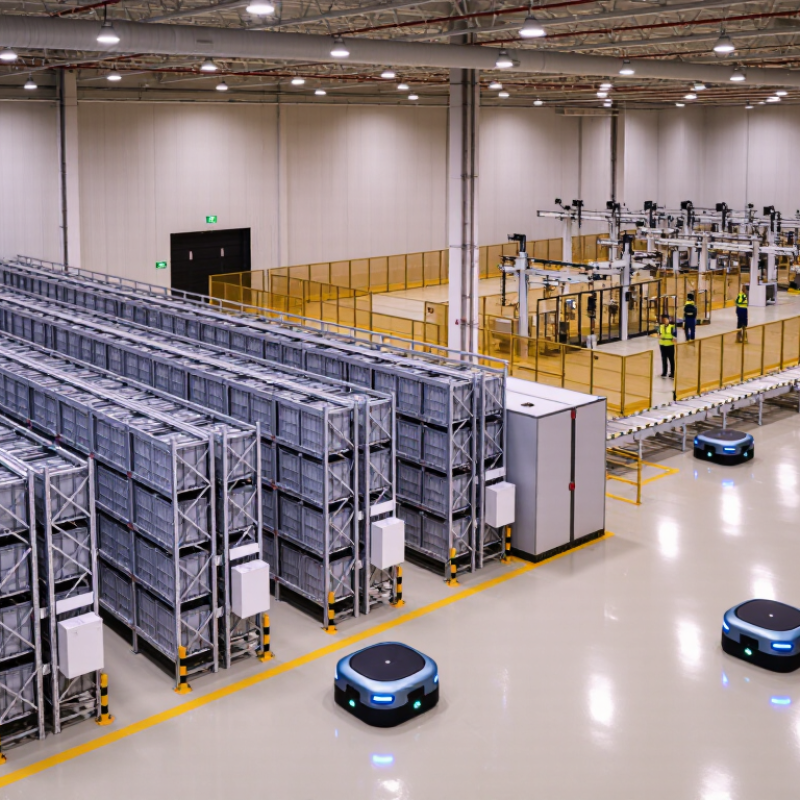
A China tote shuttle is an automated storage system for plastic totes, trays, or small cartons. It operates inside a compact rack structure. A shuttle vehicle moves along rails, while a lift transfers totes between storage levels. Conveyors or robots then carry the totes to picking stations. The process supports goods-to-person handling, reducing unnecessary walking and manual searching.
In a typical cycle, an operator scans an order. Warehouse software selects the tote location. The lift reaches the correct level, and the shuttle retrieves the tote. It places the container on a conveyor or returns it to storage. Sensors monitor position, load weight, and movement. The system can run continuously, but real performance depends on layout, software integration, and maintenance discipline.
I have seen buyers focus too heavily on shuttle speed. That can be a mistake. Tote dimensions, rack tolerance, battery charging, and fire protection also require careful review. Ask for tested throughput using your actual tote size and order profile. Check installation support, spare-part availability, safety documentation, and communication protocols. A lower purchase price may create higher operating costs later. Even experienced teams sometimes underestimate software commissioning time. That detail deserves honest discussion before shipment.
Which Tote Shuttle Types Are Available from Chinese Manufacturers?
Chinese manufacturers offer several tote shuttle types for global warehouse buyers. The common rail-guided shuttle serves one tote at each storage position and suits stable, high-volume operations. Multi-deep shuttle systems store totes behind one another, improving space use but reducing immediate access. Four-way shuttles can travel horizontally and vertically, supporting flexible layouts across multiple aisles. Some suppliers also provide multi-level tote-to-person systems with lifts, conveyors, and picking stations.
The MHI 2024 Annual Industry Report states that 88% of surveyed supply-chain companies are investing, or planning to invest, in technology and innovation. This supports growing interest in shuttle automation, but automation is not automatically efficient. Buyers should compare tote dimensions, payload, aisle width, retrieval speed, battery charging, and software integration. A practical test should include mixed-SKU orders, replenishment peaks, and power-loss recovery.
Single-deep systems are easier to control and maintain. Multi-deep designs can reduce building volume, especially when inventory access is predictable. Four-way models may fit irregular warehouse structures, yet they require stronger scheduling logic and more careful commissioning. The World Robotics 2024 report recorded 541,302 industrial robots installed globally in 2023, showing continued automation demand. Still, tote shuttles are not industrial robots in every application. The cheapest quote is often not the safest decision. A slower pilot may reveal gaps in fire protection, spare parts, or after-sales response.
What Features Define the Best Tote Shuttle for Global Buyers?
What Is the Best China Tote Shuttle for Global Buyers?
The best tote shuttle is not defined by speed alone. It must move containers accurately, repeatedly, and safely through demanding warehouse cycles. In my experience, stable positioning matters more than impressive top-speed figures. Look for a shuttle with a clear payload rating, adjustable sensors, reliable drive components, and controlled acceleration. These features reduce tote damage and product movement inside the container. A practical system should also fit the rack dimensions precisely. Small alignment errors can create expensive delays.
Software compatibility is equally important. The shuttle should communicate smoothly with warehouse control systems through documented interfaces. Manual recovery functions are valuable when communication fails. They are often overlooked. Buyers should request cycle-test records, noise data, energy consumption, and battery performance under realistic loads. Factory acceptance testing can reveal weak detection logic before shipment. However, testing only empty totes is not enough.
Global buyers also need dependable engineering support after installation. Clear electrical drawings, spare-parts lists, maintenance instructions, and remote troubleshooting procedures show professional preparation. Check whether technicians can support the destination time zone and provide training materials in usable English. Supplier audits, quality records, and documented conformity for the target market strengthen trust. Still, paperwork cannot replace a live test. I would inspect emergency stops, sensor responses, charging behavior, and recovery after a simulated fault. No shuttle is perfect. The right choice balances measurable performance, maintainability, rack compatibility, and honest technical communication.
What Is the Best China Tote Shuttle for Global Buyers?
Features That Define the Best Tote Shuttle
The chart presents an indicative 0–100 procurement priority index for global buyers. Load capacity, storage density, throughput, tote compatibility, safety, energy efficiency, and software integration are widely used criteria when evaluating tote shuttle systems. The index is a neutral benchmark and does not represent any specific company or brand.
How Should Buyers Compare China Tote Shuttle Suppliers?
For global buyers, comparing China tote shuttle suppliers starts with application facts, not catalog promises. Ask each supplier to confirm tote size, payload, rack height, aisle width, and required throughput. A system moving 600 totes per hour needs different capacity from a small parts store. Request a layout based on your actual SKU mix. Check acceleration, positioning accuracy, battery type, charging method, and lift cycle time. Also ask how the shuttle recovers after communication loss. I have seen projects look efficient on paper but slow down during peak picking. That gap deserves attention.
Supplier evaluation should include engineering depth, testing records, software integration, and after-sales support. Request factory acceptance testing with your tote dimensions and load weights. Verify warehouse management system integration, safety functions, emergency access, and documentation for your target market. Speak with recent customers about uptime, spare-part delivery, and troubleshooting speed. Compare total ownership cost, not only the initial quotation. A low price can hide difficult maintenance. No supplier is perfect. A supplier that openly explains limits may be more reliable than one promising everything.
Tips: Use the same technical questionnaire for every supplier. Ask for measured data, not estimated performance. Check whether critical components have local replacement options. Include installation training, remote support, warranty scope, and response times in the contract. If possible, run a small pilot with real totes and peak-hour tasks. It may reveal noise, charging delays, or software problems that a presentation will not show.
What Should Global Buyers Check Before Placing an Order?
What Is the Best China Tote Shuttle for Global Buyers?
What Should Global Buyers Check Before Placing an Order?
Choosing a China tote shuttle starts with your warehouse data, not a supplier catalog. Measure tote length, width, height, weight, and acceptable dimensional variation. Confirm the shuttle fits each storage lane without scraping the rails. Small differences can create expensive delays.
Ask for tested throughput under your real operating conditions. A quoted rate may assume empty totes, short travel distances, and perfect software timing. Request a live demonstration using similar loads and storage heights. Check battery runtime, charging time, lift accuracy, and recovery after a power interruption. These details matter daily.
Review the control system before discussing price. It should communicate reliably with your warehouse software and provide clear fault records. Request wiring diagrams, manuals, spare-parts lists, and operator training. Check safety sensors, emergency stops, guarding, and maintenance access. Independent inspection can verify these claims.
Do not overlook the factory itself. Examine production records, quality procedures, testing equipment, and export experience. A remote video call helps, but it cannot replace physical verification. Ask for a sample unit or acceptance test with written criteria. Some buyers focus too heavily on the lowest quote. That is understandable, but often incomplete. Warranty response times, replacement parts, installation support, and local service arrangements may decide the real cost. Leave room for mistakes in your schedule. Integration usually takes longer than expected.