
Choosing the best Gummy Making Machine in China requires more than comparing prices or polished product photos. Manufacturers need equipment that matches their recipe, output target, workspace, and quality standards. A small confectionery line may need compact depositing equipment, while a large factory may require continuous cooking, depositing, cooling, demolding, and packaging systems. The right choice begins with production facts, not attractive promises.
Look closely at heating accuracy, deposit weight, mold design, cleaning access, and control-system stability. These details affect texture, appearance, waste, and daily labor. Food-contact parts should use suitable stainless steel and support practical sanitation procedures. Ask suppliers for factory videos, technical drawings, sample production results, and clear electrical specifications. Better still, test your own gummy formula before signing an order. It reveals problems that brochures often hide.
Supplier experience also matters. A reliable Chinese manufacturer should explain installation, operator training, spare parts, warranty coverage, and response times. Visit a working factory if possible. Watch how the machine handles sticky syrup, uneven cooling, and repeated production cycles. No machine is best for every factory. That assumption deserves testing. Some quotations look economical, yet missing molds or weak after-sales support can increase the real cost. Buyers should compare total ownership value, not only the purchase price. With careful verification and honest technical discussion, a Gummy Making Machine can become a dependable part of a safe, efficient, and scalable confectionery operation. Mistakes can still happen, but they should be discovered during testing, not after delivery.
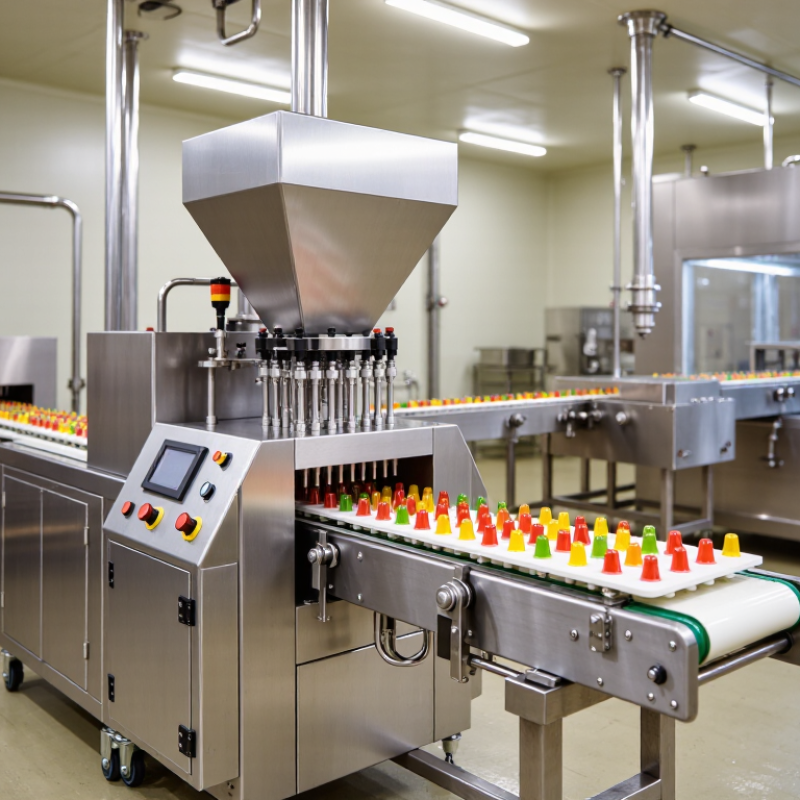
A gummy making machine is a food-processing system that turns a heated mixture into shaped, stable gummies. It usually combines cooking, mixing, dosing, molding, cooling, demolding, and surface treatment. The process resembles a small, controlled kitchen. However, temperatures, viscosity, and depositing speed must remain consistent.
A typical line may use starch or silicone molds, depending on the recipe and product design. The depositor fills each cavity with a measured dose, while cooling tunnels help the gummy set evenly. According to Grand View Research, the global gummy market was valued at about USD 19.6 billion in 2023, with continued growth expected through 2030. This demand makes accurate machinery more important, especially for high-volume production.
The best gummy making machine in China is not simply the fastest one. It should match the formula, daily output, mold shape, and cleaning requirements. Food-grade contact parts, programmable temperature control, and quick mold changes are practical advantages. A 2024 report from IMARC Group also identifies functional and fortified gummies as major market growth areas. That means dosing accuracy matters when active ingredients are included. Ask for production trials, test the texture, and inspect the cooling result. A machine can look impressive in a brochure. Real performance may differ. That is where careful evaluation is needed.

China offers several gummy machine types, and the best choice depends on product shape, output, and process control. Depositing machines are widely used for standard bear, ring, and fruit shapes. They pour heated syrup into starch or silicone molds. Their dosing accuracy suits factories producing consistent batches.
Starch-molding lines remain practical for high-volume confectionery production. They combine cooking, depositing, cooling, starch filling, demolding, and oiling.
Silicone-mold systems usually provide cleaner changeovers and sharper details. Rope-extrusion machines form continuous gummy strands before cutting them into uniform pieces.
They can reduce mold costs, but shape variety is limited. Three-dimensional depositing systems create layered or filled pieces. They require tighter temperature control and more experienced operators.
Grand View Research estimated the global gummy market at about USD 19.15 billion in 2023, with a projected 12.6% CAGR from 2024 to 2030. This growth increases demand for flexible equipment in China.
However, market size does not guarantee a suitable machine. Buyers should inspect depositing accuracy, heating stability, cleaning access, and spare-part response.
I have found that impressive speed figures can hide difficult changeovers. A smaller line may perform better when formulas change often. Testing real syrup samples is essential.
Small details matter.
A gummy making machine turns prepared syrup into consistent pieces through heating, mixing, depositing, and cooling. The process begins in a stainless-steel cooking tank. Water, sugar, gelling ingredients, and approved flavors are blended as the temperature rises. A scraper prevents hot syrup from sticking to the vessel walls. When the mixture reaches its target temperature, gentle agitation can reduce trapped air. Small differences matter. Overheating may weaken texture or darken the batch.
The cooked mixture moves through insulated pipes toward the depositing head. Precise valves release equal portions into starch or silicone molds. The deposit size affects weight, shape, and eating texture. Cooling then helps the gummies set without losing their designed form. A cooling tunnel may use filtered air and controlled humidity. After demolding, the pieces can pass through polishing, oiling, or sugar-coating equipment. Every transfer point should be easy to inspect and clean.
In practical factory evaluations, temperature control and cleaning access often matter more than impressive output numbers. Operators should check heating accuracy, deposit consistency, mold changes, and emergency controls. Food-contact parts should resist corrosion and support documented sanitation procedures. A machine can run quickly yet perform poorly with unstable syrup. This is where selection becomes less simple. The best equipment depends on recipe viscosity, daily capacity, mold style, and available workspace. Some production teams overlook cooling conditions. That mistake can create sticky surfaces, uneven shapes, and avoidable waste.
The best gummy machine is not judged by speed alone. In real production, accurate depositing matters more than impressive advertising numbers. A reliable system should control syrup temperature within a narrow range. This helps maintain consistent texture, color, and weight. Servo-driven depositing can reduce filling variation during long runs. Still, operators should verify accuracy with regular weight checks.
Hygienic design is equally important. Product-contact parts should use suitable stainless steel and allow quick removal without hidden residue. Tool-free access saves cleaning time. Smooth surfaces and simple drainage reduce contamination risks. A clear control panel should record temperatures, batch settings, alarms, and production data. These records support quality checks and responsible manufacturing. Safety guards, emergency stops, and stable electrical systems are essential features, not optional extras.
Flexibility also defines a strong gummy machine. Adjustable molds should support different shapes, weights, and formulas without lengthy changeovers. The cooling tunnel needs steady airflow and even temperature control. Otherwise, some pieces may remain soft while others become too firm.
No machine performs perfectly in every factory. I would test a sample batch before making a final decision. Noise, cleaning effort, energy use, and operator training can reveal weaknesses that brochures often overlook. Good technical support and available replacement parts add practical value over time.
Choosing a reliable Chinese gummy machine supplier requires more than comparing prices. A suitable supplier should explain production capacity, depositing accuracy, heating control, cooling performance, and cleaning procedures clearly. Ask for actual test videos using a recipe close to yours. A polished demonstration is not enough.
Look for practical engineering evidence. Check whether the machine uses food-grade contact materials and accessible pipelines. Inspect the control cabinet, emergency stops, temperature sensors, and mold-changing process. Request technical drawings, electrical specifications, installation instructions, and a complete spare-parts list. These details reveal how seriously the supplier supports long-term operation.
Experience matters on the factory floor. Speak with existing customers, preferably those producing similar gummy sizes and shapes. Ask about delivery delays, training quality, and response times after installation. A trustworthy supplier should accept a factory audit and provide a documented factory acceptance test. Test viscosity changes, repeated depositing, and cleaning time before signing.
Do not choose only by the lowest quotation. It may exclude molds, commissioning, shipping protection, or essential spare parts. Sometimes, a cheaper machine creates higher labor costs later. I would also question impressive claims without measurable data. Even reliable suppliers can make mistakes, so confirm every promise in writing. A clear contract protects both sides.
3295 Cobb International Blvd.
Kennesaw, GA 30152
800-367-1377
sale@patiostools.com
© 2023 - Marsh Instruments