Best Liquid Filled Gauges for Accurate Measurement?
In industries where precision is essential, liquid filled gauges stand out. These devices ensure accurate measurements, enhancing reliability in various applications. Liquid filled gauges prevent vibration and reduce the effects of shock, making them a preferred choice for many professionals.
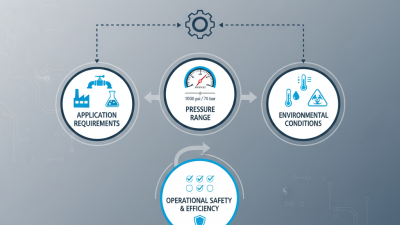
When selecting the best liquid filled gauges, factors such as pressure range and temperature stability come into play. Each gauge serves specific needs. For example, automotive applications may require durable designs, while HVAC systems benefit from specialized features. However, users must consider potential challenges in compatibility and maintenance.
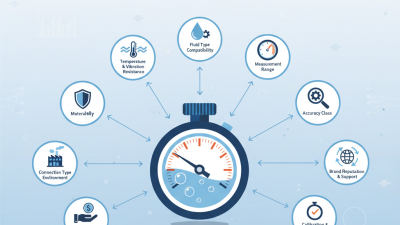
Choosing the right liquid filled gauge can sometimes be overwhelming. There are numerous products available, each with unique benefits. This diversity necessitates careful evaluation. Some gauges may require frequent calibration, while others offer enhanced features at a higher cost. Therefore, it's essential to understand the specific requirements of your application before making a decision.
Types of Liquid Filled Gauges Used in Industry
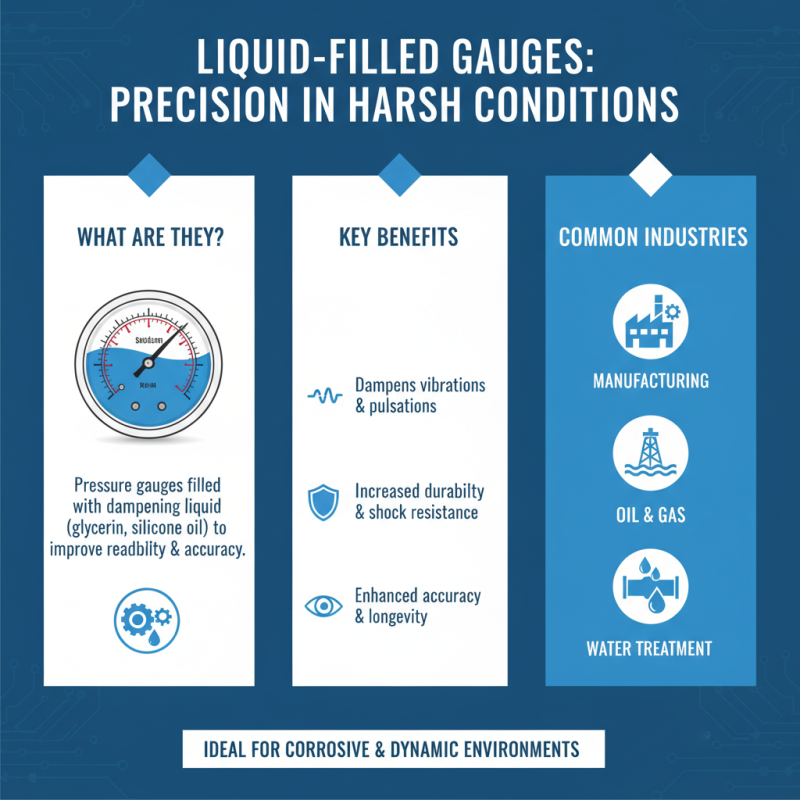
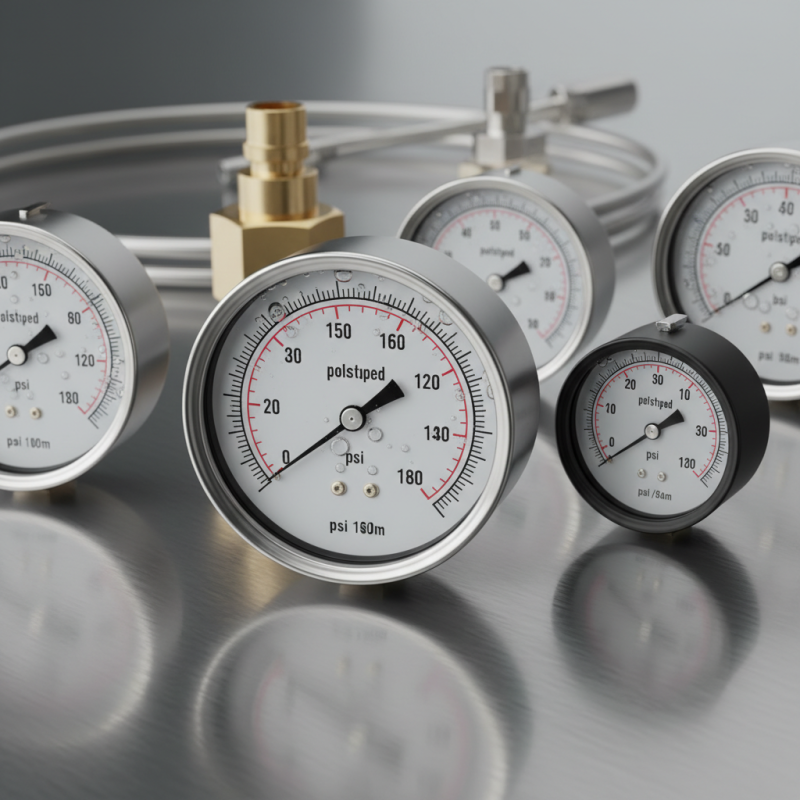
Liquid-filled gauges are essential tools in various industries. They provide users with precise measurements even in harsh conditions. Typically, the liquid inside buffers vibrations and improves accuracy. Different types of liquid-filled gauges serve specific purposes.
Bourdon tube gauges are common for measuring pressure. They have a curved tube that straightens as pressure rises. These gauges are reliable and easy to read, making them ideal for many applications. Another type is the diaphragm gauge, often used in corrosive environments. They utilize a flexible membrane to detect pressure changes and can handle aggressive media.
Tip: Regularly check for leaks in liquid-filled gauges. A leak can lead to inaccurate readings and potential safety hazards.
Adding a case for these gauges can help protect them from damage. A sturdy case minimizes wear and maintains accuracy over time.
Tip: Consider calibration at routine intervals. This ensures the instruments maintain their reliability for all necessary measurements.
Benefits of Using Liquid Filled Gauges for Accurate Measurements
Liquid filled gauges provide several benefits for accurate measurements in various applications. The liquid inside the gauge dampens vibrations and reduces shock from sudden pressure changes. This feature enhances measurement stability, making it ideal for environments with fluctuating conditions. Furthermore, the gauge's liquid helps to eliminate air bubbles. Air can lead to inaccurate readings, so this design minimizes that risk.
When choosing a liquid filled gauge, consider the operating environment. High temperatures or corrosive fluids can affect performance. Picking the right material for the casing is essential for longevity. A robust exterior helps protect internal components.
**Tips:** Regularly inspect your gauges for leaks. Any visible signs of wear should prompt immediate replacement. Calibration checks are also crucial. Skipping them can result in cumulative errors over time. Remember, neglecting maintenance compromises accuracy. Keep a log of your measurements. Patterns might reveal trends requiring attention.
Best Liquid Filled Gauges for Accurate Measurement
This chart illustrates the performance metrics of liquid filled gauges in various aspects important for accurate measurements. Metrics such as accuracy and durability are rated higher, showcasing the benefits of using liquid filled gauges in various applications.
Factors Influencing the Accuracy of Liquid Filled Gauges
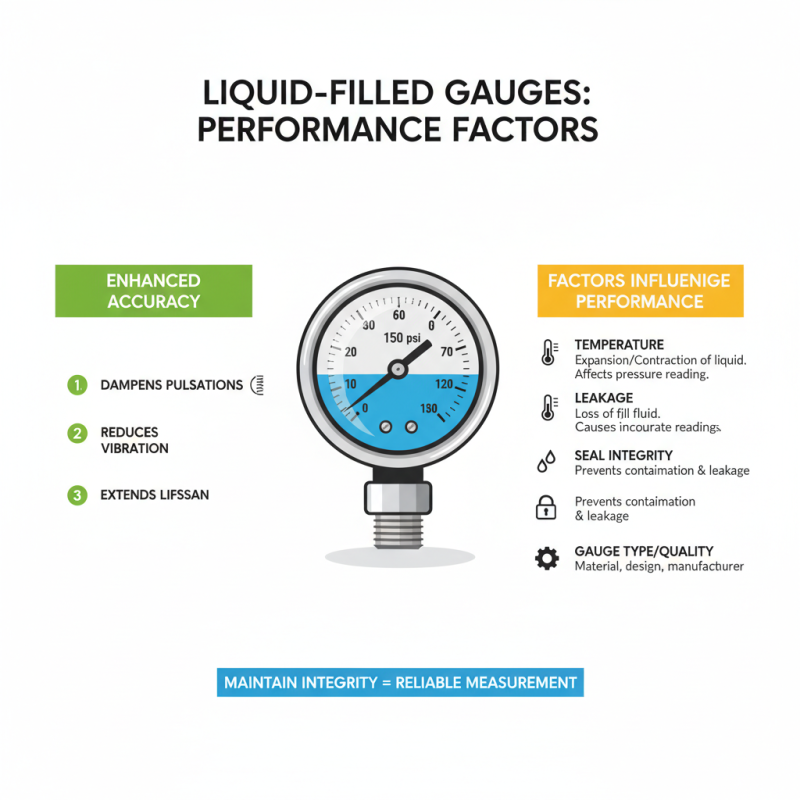
Liquid filled gauges are essential tools in various industries. They offer enhanced accuracy in pressure measurement. However, several factors can influence their performance. Understanding these factors is crucial for maintaining measurement integrity.
One significant factor is temperature. Liquid filled gauges can experience pressure changes due to temperature fluctuations. For instance, a rise in temperature may cause the liquid to expand, leading to inaccurate readings. According to a report by the American Society of Mechanical Engineers, a temperature change of just 10°C can create a pressure variation of 1% to 2%.
Another factor is the viscosity of the filling liquid. A thicker liquid can respond more slowly to pressure changes. This delay can lead to lags in measurement, especially in dynamic applications. Research indicates that liquid viscosity impacts accuracy by as much as 3% in some cases. Regular calibration and maintenance are necessary to ensure the liquid remains at optimal levels. This requires attention and can sometimes be overlooked, leading to problems in the field.
Ultimately, proper installation is also vital. Even small misalignments can skew readings. Users must also ensure that the gauges are not subjected to excessive vibration. This oversight can affect accuracy, highlighting the importance of careful setup and monitoring.
Popular Brands and Models of Liquid Filled Gauges
Liquid-filled gauges are popular for their ability to provide accurate measurements in various environments. These gauges are typically filled with a liquid to dampen vibrations and reduce wear. They are commonly found in industrial settings where precision is crucial. The liquid inside acts as a buffer, helping to stabilize the needle and providing readable results.
Many users prefer specific brands and models for their reliability. Some models feature brass or stainless steel casings to enhance durability. Others focus on temperature resistance or specialized fluids to suit their applications. Users often debate which gauge offers the best balance of price and performance. It's important to consider the intended use and environment before making a choice.
Feedback on these gauges varies. Some users report excellent performance, while others experience issues with accuracy over time. Calibration can be tricky. Regular checks are essential to ensure measurement remains precise. Selecting the right gauge often requires trial and error. Finding the perfect fit may take time, but the right liquid-filled gauge enhances measurement confidence.
Best Liquid Filled Gauges for Accurate Measurement
| Gauge Type |
Pressure Range |
Accuracy |
Connection Type |
Size |
| Standard Liquid Filled Gauge |
0-300 psi |
±1% |
1/4" NPT |
2.5" |
| High Accuracy Gauge |
0-1500 psi |
±0.5% |
1/2" NPT |
4" |
| Submersible Pressure Gauge |
0-100 psi |
±1% |
3/4" NPT |
2" |
| Industrial Liquid Filled Gauge |
0-5000 psi |
±1% |
1/4" NPT |
3" |
| Digital Liquid Filled Gauge |
0-2000 psi |
±0.5% |
1/4" NPT |
4" |
Maintenance Tips for Ensuring Gauge Accuracy and Longevity
When using liquid-filled gauges, proper maintenance is essential. Regularly check the gauge for any signs of wear or damage. A small crack can lead to inaccuracies. Ensure the fluid inside is clear. Contamination can affect readings.
Temperature fluctuations can impact the gauge's performance. Protect gauges from extreme heat or cold. Store them in a controlled environment when not in use. Always ensure they are calibrated according to the manufacturer's guidelines. This will help maintain precise measurements over time.
It's often easy to neglect cleaning. Dust and debris can accumulate. A quick wipe can prevent buildup. Additionally, consider the environment where the gauge operates. High vibrations may cause premature wear. Regular inspections help catch issues early. This proactive approach can extend the lifespan of your gauges significantly.