Which Is the Best PoE Switch for 2026?
Choosing the best PoE Switch for 2026 requires more than comparing port counts or advertised wattage. Modern networks must support wireless access points, IP cameras, VoIP phones, sensors, and emerging AI-enabled devices. The IEEE 802.3bt standard now supports higher power delivery through Type 3 and Type 4 PoE. That changes the buying decision.
Industry research points in the same direction. Dell’Oro Group continues to track strong demand for enterprise Ethernet switching, driven by cloud growth, Wi-Fi upgrades, and data-center expansion. MarketsandMarkets also identifies PoE as a growing networking segment, especially across smart buildings, surveillance, and connected infrastructure. These reports provide useful market context, but they do not identify one universal winner. The right choice still depends on power budgets, uplink speed, management features, noise, and long-term support.
Peter Jones, a recognized Ethernet Alliance leader, described PoE as “a key enabling technology for the Internet of Things.” That statement remains relevant, although it can sound too broad without practical testing. A reliable PoE Switch should deliver stable power at full load, protect against overheating, and provide enough bandwidth for future devices. Look beyond the box.
This guide compares leading options for 2026. It considers real deployment conditions, not only laboratory specifications. A compact switch may suit a small office. A managed 48-port model may better serve a campus network. Neither is automatically best.
What Is a PoE Switch and How Does It Work?
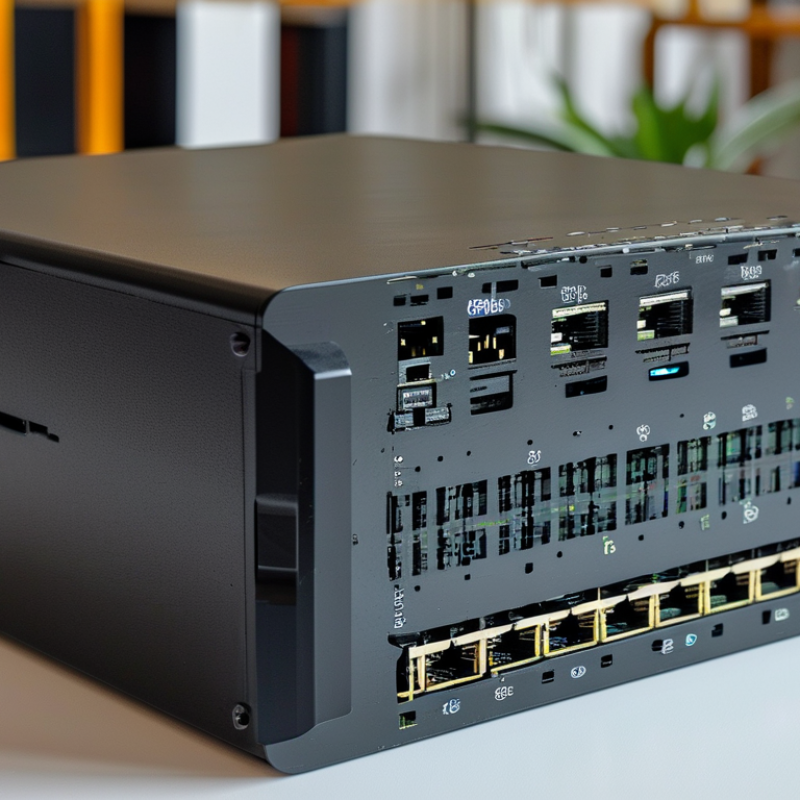
A Power over Ethernet switch sends network data and electrical power through one Ethernet cable. It connects devices such as cameras, wireless access points, and desk phones without separate power adapters. The switch acts as the power sourcing equipment, while the connected device receives power as powered equipment. It checks the device before supplying electricity. This prevents unsuitable equipment from receiving power accidentally. It is not magic. Data and power simply share the cable through controlled electrical pairs.
Modern switches commonly follow IEEE 802.3af, 802.3at, or 802.3bt standards. These standards define power levels, negotiation, and safety behavior. A practical installation starts with a power budget, not the port count. A 24-port switch may not power 24 high-demand devices simultaneously. Check the budget. Cable quality also matters. Cat5e cable can support many installations, but long runs, warm ceilings, and tightly bundled cables increase risk. I have seen a camera reboot because a shared switch reached its limit during nighttime infrared operation. That detail is easy to miss.
For 2026, selecting the best PoE switch means matching real device demand with reserve capacity. Look for clear per-port status lights, automatic power management, surge protection, and reliable temperature monitoring. Managed models provide useful controls, including VLAN separation and remote port resets. However, extra features do not repair poor planning. Measure cable distances, record each device’s wattage, and test the system under peak load. A small mistake in the worksheet can become a large maintenance problem.
Which PoE Standards and Power Ratings Matter in 2026?
In 2026, PoE selection is less about maximum wattage and more about standards, heat, and endpoint demand.
IEEE 802.3af delivers 15.4 W at the switch while 802.3at raises the limit to 30 W. Usable endpoint power is lower: about 12.95 W and 25.5 W. That difference matters when a camera adds infrared lighting or an access point reaches peak load. Bigger is not automatically better.
IEEE 802.3bt introduces Type 3 and Type 4, commonly rated at 60 W and 90 W per port. Endpoint power is approximately 51 W and 71.3 W.
The Ethernet Alliance identifies multi-gigabit networking, wireless expansion, surveillance, and building automation as major PoE growth areas. MarketsandMarkets’ 2024 forecast estimates the PoE market could grow from roughly 1.5 billion dollars in 2023 to 2.6 billion dollars by 2028, near an 11% CAGR.
Forecasts vary. Treat them as direction, not certainty.
For a 2026 switch, check the total PoE budget, not only port ratings. A 24-port switch may advertise 90 W per port but cannot necessarily supply 2,160 W continuously. Verify shared power limits, cooling, cable category, and 802.3bt compatibility. Wi-Fi 7 access points, multi-lens cameras, displays, and lighting controllers may justify 60 W-class delivery. Basic phones and cameras usually need far less. Leave around 20% headroom. The uncomfortable detail: endpoint specifications can be optimistic.
How to Compare PoE Switches by Speed, Ports, and Management
Choosing the best PoE switch for 2026 starts with speed, not price. A 1Gbps uplink suits cameras, phones, and access points. However, crowded offices may need 2.5Gbps or 10Gbps uplinks. Omdia’s 2024 Ethernet Switch Market Tracker reports continuing demand for higher-speed access networks. That trend matters when several devices share one uplink.
Port count should match real growth. A 16-port switch may support twelve cameras today, but four spare ports disappear quickly. Check the PoE budget, not only the port number. IEEE 802.3bt supports up to 90 watts supplied by Type 4 equipment, enabling higher-power devices. Yet every port may not deliver that level simultaneously. Heat and cable length also reduce practical performance.
Management features separate a dependable switch from a basic power box. Look for VLANs, traffic monitoring, loop prevention, remote rebooting, and firmware controls. SNMP can help technicians spot rising errors before users complain. The 2024 Ethernet Alliance PoE guidance emphasizes power negotiation and improved efficiency across PoE generations. I still treat peak specifications cautiously. Real racks are warmer, cables vary, and installation quality is uneven. A quieter fan and clear event logs may matter more than one extra feature.
How to Choose the Best PoE Switch for Your 2026 Network Needs
Which Is the Best PoE Switch for 2026?
Choosing the best PoE switch starts with your network’s actual workload, not a product ranking. Count access points, cameras, phones, and other powered devices. Then estimate their maximum wattage, including future expansion. A switch with 120 watts may fail quickly when twelve devices each approach 15 watts. In real installations, extra capacity prevents unstable connections.
Check the supported PoE standard carefully. PoE delivers up to 15.4 watts per port, while PoE+ provides up to 30 watts. Higher-power devices may require PoE++ support. Confirm both port output and the total power budget. A fast uplink also matters. One gigabit uplink can become a bottleneck when many cameras send continuous video. I once underestimated this traffic during a small office installation. The network worked, but video loading felt slow. That mistake changed my selection process.
Managed switches offer useful control for growing networks. Look for VLAN support, traffic monitoring, port scheduling, and remote diagnostics. These tools help separate guest traffic from internal devices. They also make faults easier to locate. Consider heat, noise, rack space, and backup power. A fanless model may suit a quiet office, but ventilation still matters. Review operating temperature limits and security updates before purchasing. The “best” choice can still be wrong when its power budget, uplink capacity, or management features do not match your environment.
Which Is the Best PoE Switch for 2026?
The best PoE switch depends on the power requirements of your network devices. IEEE 802.3af supports basic devices such as IP phones and standard cameras, while 802.3at is suitable for wireless access points and pan-tilt-zoom cameras. IEEE 802.3bt Type 3 and Type 4 provide higher power for multi-radio access points, lighting, displays, and other high-power equipment. When selecting a 2026 switch, also verify the total PoE budget, port count, uplink speed, VLAN support, and network management features.