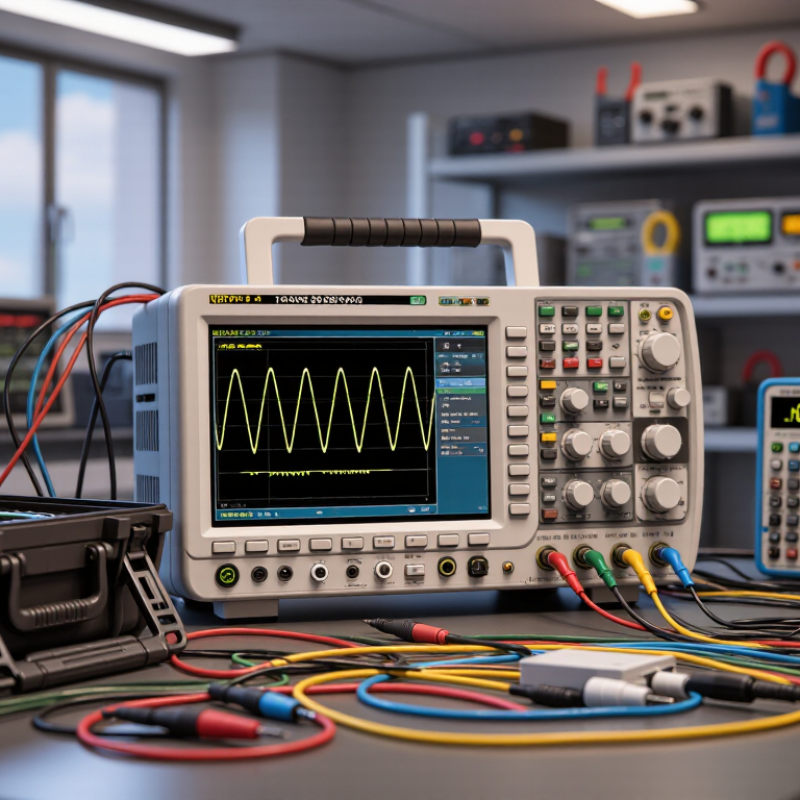
In 2026, the strongest test instruments are not necessarily the ones with the widest feature lists. They are instruments that combine accurate measurements, flexible software, and clear data trails. AI-assisted analysis can flag unusual waveforms or drifting measurements while engineers work. But it still needs sound reference data. A misleading training set can make a clever system confidently wrong.
The shift reflects growing chip complexity. SEMI’s year-end 2024 report recorded global semiconductor equipment sales of $117.1 billion, up 10% from 2023. WSTS’s Autumn 2024 forecast projected semiconductor sales of $697.2 billion for 2025. These figures help explain demand for faster automated test, high-bandwidth signal analysis, and precise power measurements. On a lab bench, that may mean capturing a brief signal glitch across many channels without losing timing detail.
Speed matters.
Modular, software-defined instruments are also gaining importance. Engineers can reconfigure one chassis for different measurements, which helps when projects change mid-cycle. Digital twins may let teams test setups virtually before connecting costly prototypes. Yet virtual models can miss connector wear, heat, or messy electromagnetic conditions.
Real measurements remain essential.
Buyers should check calibration traceability, measurement uncertainty, update policies, and compatibility with existing workflows. A polished dashboard is not proof of accuracy.