
Buying a Car Alternator for international use requires more than comparing prices online. A unit may look identical, yet differ in output, mounting design, pulley type, or voltage control. These small differences can leave a vehicle with a weak battery and an expensive repair.
This guide introduces seven practical buying tips for global buyers. It focuses on real sourcing concerns, including vehicle compatibility, rated amperage, remanufactured quality, supplier verification, warranty terms, shipping protection, and regional requirements. Check the part number carefully. Then confirm the engine code, model year, connector shape, and belt system. A clear product photo helps, but it cannot replace technical documentation.
Quality evidence matters. Ask for test records, material details, and consistent product specifications. Reliable suppliers should explain their inspection process without avoiding difficult questions. Independent checks can reduce risk, especially when ordering in bulk. Still, no checklist guarantees a perfect purchase. Human errors happen. Catalog information can be incomplete. Even experienced buyers sometimes trust a familiar brand too quickly.
Look beyond the purchase price. Consider customs delays, return costs, storage conditions, and after-sales support. A cheaper alternator may become costly after repeated failures. Packaging also deserves attention; damaged terminals or bent mounting ears can appear after long-distance transport. The following tips are designed to help buyers compare offers carefully, identify hidden risks, and choose a Car Alternator that performs reliably across different markets. Use the advice as a practical starting point, not as a substitute for professional vehicle inspection.
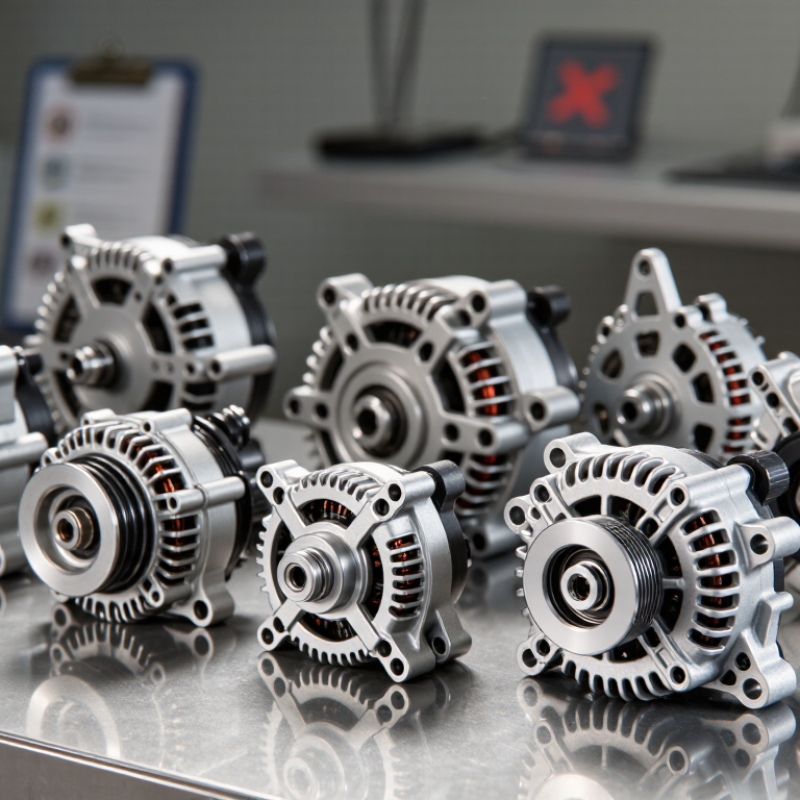
An alternator converts the engine’s mechanical energy into electrical power. It charges the battery while supporting lights, sensors, climate controls, and other vehicle systems. It is not a battery. The battery stores energy for starting, while the alternator produces energy after the engine runs.
Conventional Alternators Most passenger vehicles use conventional alternators with internal voltage regulators. These units provide steady output under normal electrical loads.
High-Output Alternators High-output alternators produce more current for vehicles with extra lighting, audio equipment, or commercial accessories.
Smart Alternators Smart alternators adjust charging voltage through the vehicle’s control system. They can improve fuel efficiency, but compatibility requires careful checking. A replacement may look identical yet communicate differently with the vehicle.
During inspections, I check the pulley design, mounting points, connector shape, rated amperage, and rotation direction. Heat matters. A unit tested in a cool workshop may perform differently in a crowded engine bay.
I once focused too heavily on rated output and overlooked the connector pin layout. That mistake caused unnecessary installation delays.
Output ratings also need context, because maximum current may occur only at a specific engine speed. Buyers should compare test conditions, operating voltage, bearing quality, and warranty terms. Regional vehicle specifications can vary, even within the same model year. When uncertain, verify the original part number and charging system requirements with a qualified technician.

A reliable alternator purchase starts with voltage, not appearance.
Most passenger vehicles use 12-volt electrical systems, while many commercial vehicles use 24 volts. Charging voltage is different from battery voltage. A 12-volt system may charge near 13.8–14.7 volts, but smart charging systems can vary output. Check the vehicle’s service manual and connector layout.
Guessing is expensive.
Amperage must match the vehicle’s real electrical demand.
Headlamps, heated seats, cooling fans, audio equipment, and driver-assistance systems can consume substantial current. A 120-amp alternator may not deliver 120 amps at idle. ISO 8854:2012 specifies alternator performance testing under defined speed and temperature conditions. Compare ratings only when test conditions match.
A higher number is not automatically better.
It may overload wiring, reduce belt life, or confuse the charging control system.
Vehicle compatibility goes beyond engine size.
Confirm mounting points, pulley grooves, belt alignment, regulator communication, rotation direction, and plug configuration. The International Energy Agency reported more than 17 million electric cars were sold globally in 2024. That shift makes accurate vehicle identification even more important, because not every modern vehicle uses a conventional alternator.
I have made this mistake: matching only the engine code.
Use the full vehicle identification number, production year, and original alternator rating. Small details matter.
A reliable alternator starts with solid construction, not attractive packaging. Inspect the housing for even casting, firm mounting points, and clean, corrosion-resistant surfaces. The pulley should rotate smoothly without wobbling. Small play may signal worn bearings or poor assembly.
Look inside when possible. Copper windings should appear evenly formed and securely insulated. Check the diode assembly, voltage regulator, slip rings, and cooling fan for durable materials. In workshop inspections, I have found that loose terminals often reveal weak quality control. A polished casing can still hide poor internal workmanship. That is easy to miss.
Performance specifications must match the vehicle and operating environment. Confirm rated voltage, output current, rotational speed, pulley size, and connector design. A higher amp rating is not automatically better. It may overload wiring or create installation problems. Compare cold-start performance and heat resistance, especially for vehicles working in deserts, mountains, or heavy traffic. Ask for test records, efficiency data, and duty-cycle information. Independent inspection reports add confidence, but paperwork alone proves little. I would also verify noise levels and charging stability under changing electrical loads, because catalog figures may reflect ideal laboratory conditions rather than daily driving.
For global buyers, the key decision is not simply price. It is the condition behind the alternator.
A new alternator uses new components and usually offers the most predictable output. A rebuilt unit may replace only failed parts, such as brushes, bearings, or a voltage regulator. Quality can vary sharply. A remanufactured alternator should be disassembled, inspected, restored, and tested against defined performance standards. Ask for test records, not promises. Confirm rated amperage, voltage, pulley grooves, mounting points, connector position, and rotation direction. These details prevent an expensive mismatch.
S&P Global Mobility reported that the average U.S. vehicle age reached 12.6 years in 2024. Older vehicles increase demand for cost-controlled replacement parts. A remanufactured unit can fit that need, especially when its warranty and core-return terms are clear. However, “remanufactured” is not used identically across every market. Check the inspection process and replaced components. Cheap is not always efficient.
Consider seven practical checks: application data, output rating, internal parts, testing, warranty, core charge, and shipping protection. Moisture-resistant packaging matters during ocean transport. So does a traceable batch number. In my experience, buyers often compare only unit prices. That is a mistake. A slightly cheaper alternator may arrive with a weak regulator or incorrect pulley. New units reduce uncertainty, while rebuilt units demand closer inspection. Remanufactured units often provide the middle path, but only when documentation is genuine.
| Tip | Buying Dimension | New Alternator | Rebuilt Alternator | Remanufactured Alternator |
|---|---|---|---|---|
| 1 | Confirm exact vehicle fitment | Usually supplied with a complete new assembly, but the correct application still must be verified. | Fitment depends on the donor unit and the replacement parts used during rebuilding. | Normally matched to a defined original-equipment application, but part-number verification remains essential. |
| 2 | Match electrical specifications | Check rated voltage, maximum output current, regulator type, connector configuration, and charging-control protocol. | Output may be restored to the original specification, but specifications vary with the quality and compatibility of replacement components. | Typically rebuilt to meet the specified application rating and should include documented output testing. |
| 3 | Understand component replacement | Major components are new; the unit generally has no used internal core. | Commonly replaces only failed or visibly worn parts. Reusable components may remain in service. | Usually disassembled, cleaned, inspected, and fitted with replacement wear components such as bearings, brushes, rectifiers, or regulators as required. |
| 4 | Compare purchase-cost structure | Usually the highest initial purchase price because the principal assembly is new. | Often the lowest initial price, although quality and included parts can vary substantially. | Usually priced below a fully new unit and above a basic rebuild; shipping, taxes, and any core charge must be included in the landed-cost comparison. |
| 5 | Evaluate testing and quality control | Ask for production test information covering output, voltage regulation, diode performance, noise, and load response. | Do not rely only on a basic pass/fail test; request test results and details of the parts replaced. | Prefer suppliers that provide documented end-of-line testing under electrical load and identify the applicable test standard or procedure. |
| 6 | Check warranty and return terms | Warranty coverage is supplier-specific; exclusions may apply to installation errors, modified vehicles, or consequential damage. | Warranty length and claim approval can vary more widely, so obtain the written terms before ordering. | Often offered with a defined limited warranty, but confirm duration, labor coverage, return freight, and the process for handling a failed unit. |
| 7 | Plan global logistics and installation | May avoid a core-return requirement, but packaging size, customs classification, duties, and local electrical regulations still affect total cost. | May require a compatible used core for exchange, which can add deposit, return-shipping, and customs complications. | May also involve a refundable core charge. Confirm whether the returned core must be complete, undamaged, and from the same application. |
When sourcing alternators internationally, supplier evaluation deserves more than a polished catalog. Ask for the factory address, production capacity, test records, and recent export experience. A video call can reveal storage conditions, test benches, and labeling practices. Request samples from the same production line. One attractive sample proves little.
Check certifications carefully. Confirm the issuing body, certificate number, expiry date, and covered product range. A certificate for one model may not cover another. Compare electrical output, pulley design, voltage regulation, and fitment data with your vehicle requirements. Independent testing helps when documents look vague. Do not rely on copied files. I have learned that small details matter. A perfect quotation can still hide quality gaps.
Read the warranty before placing a deposit. Clarify coverage length, return procedures, labor limits, and claim evidence. Ask how defective units are inspected and replaced. Then calculate global shipping costs, including packaging, insurance, customs paperwork, and destination charges. Confirm Incoterms, carton dimensions, pallet strength, and tracking responsibility in writing. Salt air and rough handling can damage poorly packed units. Shipping is not just freight. Leave room for delays; schedules sometimes fail.
3295 Cobb International Blvd.
Kennesaw, GA 30152
800-367-1377
sale@patiostools.com
© 2023 - Marsh Instruments