
Choosing China’s best Nickel Alloy Round Bar supplier starts with the application, not the sales claim. The USGS Mineral Commodity Summaries 2025 estimated global mined nickel production at 3.7 million metric tons in 2024. That figure shows the scale of nickel supply, but it does not measure alloy-bar quality or prove a mill’s capability. Numbers need context.
Nickel Institute technical resources describe nickel alloys used in demanding corrosive and high-temperature environments. For buyers, the practical test is whether a supplier can match the specified grade, condition, and inspection requirements. Ask for a material test certificate tied to each heat number, with chemistry and mechanical results. Check bar diameter, straightness, surface finish, and agreed nondestructive testing. Request traceability documents and confirm whether processing occurs in-house or through subcontractors. Small details matter.
A polished certificate is not enough. Verify that its heat number matches the bar and that the test scope fits the purchase specification. No supplier is best for every service. A defensible shortlist weighs documented quality, production consistency, lead time, and technical support against the intended operating conditions. This comparison can feel slow. It is still safer than choosing on price alone.
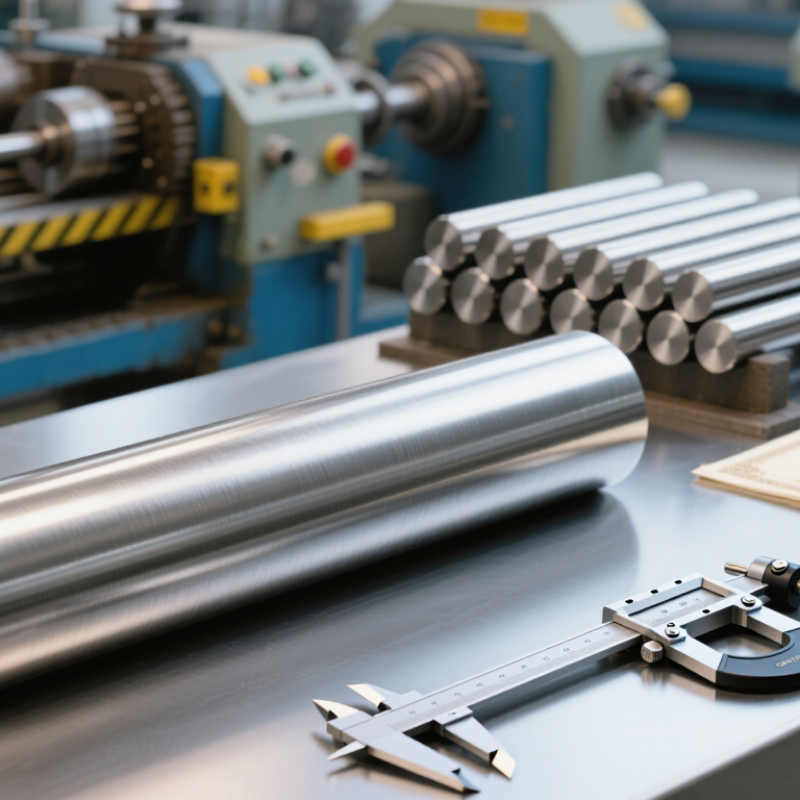
Nickel alloy round bars are solid, cylindrical products made from nickel combined with elements such as chromium, iron, copper, or molybdenum. Their classification usually reflects chemical composition, strengthening method, and intended service conditions. Common families include nickel-copper alloys, nickel-chromium alloys, nickel-iron-chromium alloys, and precipitation-hardening alloys. Each offers a different balance of corrosion resistance, heat tolerance, strength, and machinability.
These bars may be supplied in hot-worked, cold-drawn, or heat-treated conditions. That detail matters. A bar used near hot process equipment may need strong oxidation resistance, while a component exposed to seawater may require better resistance to localized corrosion. Alloy names alone are not enough; confirm the grade, dimensions, heat treatment, and applicable material specification. The categories help narrow a choice, but they cannot replace checking the actual service environment. This part is easy to overlook.
Tips: Ask for a material test certificate and verify that its grade and heat-treatment details match the order. Check diameter tolerance and surface condition, too. A clean-looking bar is not proof of suitable composition. When the application is demanding, consult a qualified materials engineer before selecting a grade.

Nickel alloy round bars are chosen for strength and corrosion resistance in demanding service. Their performance depends on alloy chemistry, heat treatment, and the operating environment. Heat, chlorides, and acidic media can affect grades differently. Small details matter.
Common grades include Nickel 200 and 201, valued for ductility and resistance to caustic environments. Alloy 400 offers useful corrosion resistance in seawater and some reducing conditions. Alloy 600 suits applications involving oxidation and elevated temperatures. For greater strength and broad corrosion resistance, engineers often consider Alloy 625. Alloy 718 can provide high strength after precipitation hardening. C-276 is used where resistance to several aggressive chemicals is needed. No grade fits every case.
When comparing round bars, match the grade to temperature, media, and mechanical loads. Check the required diameter, straightness, surface condition, and heat-treatment state. Request material test certificates and confirm traceability to the heat number. These checks help connect the delivered bar to its chemistry and test results. It is easy to overlook machining needs, though a highly corrosion-resistant grade may be harder to work. A supplier’s grade name alone is not enough; verify the specification and inspection records before ordering.
Manufacturing starts with a controlled melt, where nickel, chromium, and other elements are measured against the required grade. Depending on the alloy and specification, producers may use vacuum melting or secondary refining to limit unwanted inclusions. The molten metal is cast into an ingot or billet, then heated and forged or rolled into round bar.
Temperature control matters: uneven heating can affect grain structure and later performance. The bar is heat-treated when required, straightened, and machined or ground to its finished diameter.
Small details count.
Testing checks both composition and condition. A laboratory may use spectrometric analysis to verify the chemistry, while tensile and hardness tests assess mechanical properties. Ultrasonic inspection can help detect internal discontinuities; visual and dimensional checks look for surface flaws, straightness, and diameter variation.
The exact methods and acceptance limits should match the order specification, not a generic checklist. A bright surface proves little about the bar’s interior.
No process is flawless, either: sampling can miss local variation, so traceable records and clear inspection plans matter. Buyers should review test reports and confirm that heat numbers link each bar to its production and inspection history.
That step is easy to overlook.
China Best Nickel Alloy Round Bar Supplier?
Common Industries and Applications for Nickel Alloy Round Bars
Nickel alloy round bars serve industries where heat, pressure, or corrosive fluids challenge ordinary metals. In chemical processing plants, machinists turn them into pump shafts, valve stems, and fittings. These parts may face hot acids or salt-laden solutions, so alloy selection must match the actual process chemistry. “Corrosion resistant” is not a complete specification.
Power generation and aerospace use nickel alloys for components exposed to elevated temperatures. Depending on the grade, bars can be machined into turbine hardware, fasteners, or support parts that need strength during prolonged heat exposure. Marine equipment is another common application, including shafts and fittings near seawater. Not every grade fits. Chlorides, temperature cycles, and stress can still cause damage.
For buyers and engineers, the application should guide the material choice—not the other way around. Confirm the alloy designation, heat treatment, bar dimensions, and required inspection records before production. A clear specification helps avoid costly rework, especially when a bar will become a close-tolerance shaft. Even then, machining behavior can vary between grades and batches. Trial machining may reveal issues that a datasheet cannot.
Nickel alloy round bars are selected for their corrosion resistance, strength, and performance at elevated temperatures. The appropriate grade depends on the service environment, operating temperature, and required mechanical properties.
| Industry | Common Nickel Alloy Grades | Useful Characteristics | Typical Round Bar Applications |
|---|---|---|---|
| Chemical processing | Alloy C-276, Alloy 625, Alloy 400 | Resistance to various corrosive chemicals; performance depends on the specific media and conditions. | Pump and valve components, shafts, fasteners, and machined fittings. |
| Oil, gas, and offshore | Alloy 625, Alloy 718, Alloy C-276 | High strength and corrosion resistance in demanding service environments; grade selection requires evaluation of temperature and fluid chemistry. | Valve stems, connectors, coupling components, and machined parts for subsea or process equipment. |
| Aerospace and gas turbines | Alloy 718, Alloy 625 | Alloy 718 offers high strength after heat treatment; Alloy 625 combines strength with oxidation and corrosion resistance. | Machined fasteners, engine and turbine components, and high-temperature structural parts. |
| Power generation and heat treatment | Alloy 600, Alloy 800H | Designed for elevated-temperature service; Alloy 800H is used where creep and rupture strength are important considerations. | Furnace fixtures, heat-treatment hardware, and components in high-temperature process equipment. |
| Marine and seawater systems | Alloy 400, Alloy 625 | Useful corrosion resistance in selected marine environments; actual suitability depends on seawater conditions and design. | Pump shafts, valve parts, marine fasteners, and seawater-handling equipment components. |
| Pulp, paper, and pollution control | Alloy C-276, Alloy 625 | Resistance to a range of aggressive process environments, subject to the chemicals, concentrations, and temperatures involved. | Scrubber and process-equipment parts, shafts, and corrosion-resistant machined components. |
Note: These are typical examples, not a substitute for engineering review. Confirm alloy grade, product specification, heat treatment, dimensions, and material certification against the applicable design and service requirements.
Choose a supplier by checking evidence, not polished sales claims. Ask for the exact alloy grade, applicable material standard, diameter tolerance, and delivery condition. Chemistry reports should match the grade ordered, while mechanical test results should identify the tested heat or batch. Ask for evidence.
Review how each bar is marked and traced. Heat numbers should connect the material to its inspection documents, including after cutting or repacking. For critical service, discuss independent testing and confirm which checks are included in the quote. A certificate alone may not answer every question.
Samples can reveal practical details: surface finish, straightness, and how consistently the bars measure. Ask how the supplier protects long bars from moisture and dents during shipment. Compare lead times against realistic production capacity, and note how clearly staff answer technical questions. A low price may be attractive, but unclear tolerances can create costly rework. I would still verify a sample before placing a large order; paperwork can look complete while the material needs closer inspection.
3295 Cobb International Blvd.
Kennesaw, GA 30152
800-367-1377
sale@patiostools.com
© 2023 - Marsh Instruments