
3295 Cobb International Blvd. Kennesaw, GA 30152 800-367-1377 sale@patiostools.com

Product Variation:

China Top 10 Assembly Line Manufacturers for Global Buyers

China has become a major source of industrial automation and production equipment. For global buyers, selecting a reliable Assembly Line manufacturer requires more than comparing prices. It requires evidence.

This guide introduces ten Chinese manufacturers serving automotive, electronics, appliances, packaging, and other industries. Each company should be assessed through practical criteria. These include engineering capability, production capacity, quality controls, customization experience, and after-sales support. Factory audits can reveal details that brochures often miss. Look for organized wiring, labeled control panels, calibrated tools, and documented inspection records. Ask for reference projects with similar products and production targets. Request technical drawings, cycle-time data, acceptance procedures, and maintenance guidance before signing a contract.

Small details matter.

A dependable supplier should understand takt time, material flow, operator safety, PLC integration, and future expansion. International buyers should also confirm electrical specifications, applicable certifications, installation responsibilities, spare-parts availability, and remote support arrangements. Factory acceptance testing can expose problems before shipment. Site acceptance testing can reveal different issues after installation. Both stages deserve clear written criteria.

The ranking in this article is a practical starting point, not an absolute judgment. Manufacturer strengths can change with project size, industry focus, and service location. Some suppliers may communicate well but lack deep integration experience. Others may offer excellent engineering while needing stronger overseas support. That is worth considering honestly. A careful buyer compares evidence, visits facilities when possible, and evaluates total ownership cost. The best Assembly Line partner is not always the cheapest. It is the supplier that delivers measurable performance, transparent communication, and dependable support over time.
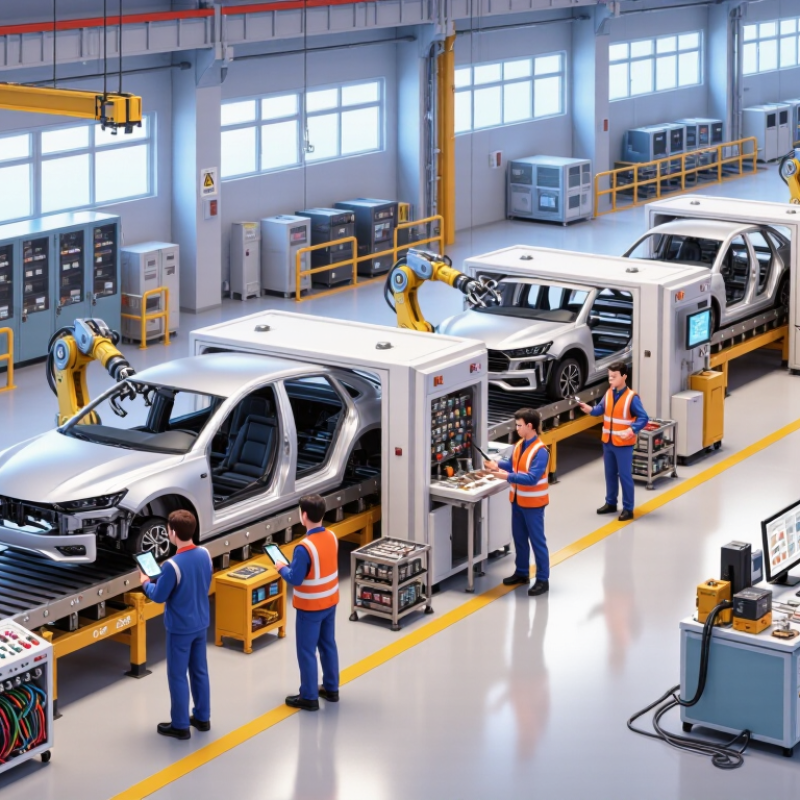
China Top 10 Assembly Line Manufacturers for Global Buyers

Assembly Lines Explained: Takt Time, Cycle Time, OEE, and Throughput Metrics

China’s assembly lines serve global buyers, but metrics matter more than impressive machinery. Takt time comes from demand: available production minutes divided by required units. If a shift offers 25,200 seconds and needs 420 units, takt time is 60 seconds.

Cycle time measures the actual time between completed units. It must stay below takt time, or queues will grow. Throughput shows the finished output, yet high output can hide defects and rework. A practical line review checks the operator’s hand movement, feeder replenishment, torque reading, and conveyor gaps. Small delays often repeat hundreds of times.

OEE combines availability, performance, and quality. The Japan Institute of Plant Maintenance widely associates 85% with world-class OEE, but treating it as a universal target is imperfect. A line producing 600 units may report 80% OEE while missing delivery because demand changed. According to the International Federation of Robotics’ World Robotics 2024 report, 541,302 industrial robots were installed globally in 2023. Automation is expanding, but measurement discipline must expand too. Deloitte’s 2024 Smart Manufacturing and Operations Survey found that many manufacturers view smart operations as a major competitiveness driver. Data alone does not fix a slow station. It needs clean timestamps, consistent definitions, and honest downtime coding. Even then, operators may record stoppages differently. That weakness deserves attention.


China Top 10 Assembly Line Manufacturers for Global Buyers

Assembly Lines Explained: Takt Time, Cycle Time, OEE, and Throughput Metrics

How to read this chart: Takt time represents the available production time divided by customer demand. Cycle time is the actual time required to complete one unit. OEE combines availability, performance, and quality: OEE = Availability × Performance × Quality.

The estimated throughput is calculated from the cycle time and OEE using: Throughput = 3,600 ÷ Cycle Time × OEE. The ten profiles are representative operating scenarios for assembly-line evaluation and do not represent individual companies or brands.

China’s Top 10 Manufacturers: Products, Industries, and Export Capabilities

China Top 10 Assembly Line Manufacturers for Global Buyers

China’s Top 10 Manufacturers: Products, Industries, and Export Capabilities

China’s leading assembly-line manufacturers serve automotive, electronics, appliances, medical devices, packaging, and industrial equipment sectors. Their product ranges include conveyor systems, robotic stations, testing units, palletizers, and customized production cells. Many factories support complete projects, from layout design and component selection to installation and operator training.

A careful buyer should compare technical depth, not only quotation prices. During factory audits, useful evidence includes live production tests, control-panel samples, wiring standards, and maintenance records. Export-ready manufacturers usually provide English manuals, remote troubleshooting, spare-parts lists, and documentation for customs clearance. Some also adapt machines to different voltages, safety requirements, and factory layouts.

The strongest suppliers often combine engineering teams with in-house machining and software development. This can shorten revision time. It may also improve accountability when problems appear. However, “top ten” rankings are rarely universal. Capacity, delivery history, certification coverage, and after-sales response can change by industry and destination. A food-processing line needs different hygiene controls from an automotive line. Buyers should request reference projects, acceptance-test procedures, and clear warranty terms. Details matter. One overlooked sensor can stop an entire shift.

China Top 10 Assembly Line Manufacturers for Global Buyers - China’s Top 10 Manufacturers: Products, Industries, and Export Capabilities

Industry-based comparison of major Chinese assembly-line manufacturing profiles and commonly documented export capabilities

No. Manufacturer Profile Main Assembly-Line Products Primary Industries Served Common Manufacturing Hubs Typical Export Markets Typical Compliance Requirements Typical Project Scope Indicative Lead Time
1 Automotive Assembly-Line Manufacturer Body-in-white lines, welding cells, battery-pack assembly, conveyor systems, inspection stations Passenger vehicles, commercial vehicles, electric vehicles, auto components Jiangsu, Zhejiang, Guangdong, Hubei, Anhui Southeast Asia, Europe, Middle East, South America, Africa ISO 9001, ISO 14001, machinery safety, electrical safety, customer-specific automotive standards Turnkey lines, robotic workstations, line integration, production testing and commissioning 4–12 months
2 Consumer-Electronics Assembly-Line Manufacturer PCB assembly equipment, screwdriving systems, dispensing machines, functional testers, aging-test systems Mobile devices, home electronics, smart appliances, electronic accessories Guangdong, Jiangsu, Zhejiang, Fujian, Shanghai East Asia, Southeast Asia, Europe, North America, India ISO 9001, ESD control, RoHS-related production requirements, CE-related equipment documentation Modular assembly cells, traceability systems, automated inspection and test integration 2–8 months
3 Packaging Machinery Assembly-Line Manufacturer Filling machines, labeling systems, cartoners, case packers, palletizers, end-of-line packaging cells Food and beverage, cosmetics, pharmaceuticals, chemicals, consumer goods Jiangsu, Zhejiang, Guangdong, Shanghai, Shandong Europe, Middle East, Southeast Asia, Africa, Latin America ISO 9001, hygienic-design requirements, CE-related machinery documentation, GMP-related applications Complete packaging lines, format changeover systems, conveyors and automated pallet handling 3–9 months
4 Food and Beverage Processing-Line Manufacturer Processing tanks, washing systems, pasteurization units, filling lines, bottle handling and cleaning systems Dairy, beverages, sauces, canned food, edible oils and packaged foods Jiangsu, Zhejiang, Shandong, Guangdong, Henan Southeast Asia, Africa, Middle East, Central Asia, Latin America ISO 9001, food-contact material requirements, sanitary design, HACCP-oriented production environments Process equipment, filling and packaging integration, CIP systems and commissioning support 4–10 months
5 Pharmaceutical Production-Line Manufacturer Liquid filling lines, powder filling systems, blister packaging, vial handling, washing and sterilization equipment Pharmaceuticals, vaccines, medical consumables, nutraceuticals and cosmetics Jiangsu, Zhejiang, Shanghai, Guangdong, Shandong Asia-Pacific, Middle East, Africa, Eastern Europe, Latin America ISO 9001, GMP-oriented design, cleanroom compatibility, data-integrity and validation documentation Validated filling and packaging systems, cleanroom-compatible conveyors, serialization and inspection 6–14 months
6 Battery and Energy-Storage Line Manufacturer Cell sorting, module assembly, pack assembly, laser welding, electrical testing and end-of-line inspection Electric vehicles, energy-storage systems, power tools, consumer batteries Guangdong, Jiangsu, Zhejiang, Hunan, Anhui Europe, Southeast Asia, North America, Middle East, Australia ISO 9001, electrical safety, battery transport requirements, traceability and process-control documentation Semi-automatic to fully automatic lines, battery management testing, vision inspection and MES integration 5–15 months
7 Home-Appliance Assembly-Line Manufacturer Refrigerator lines, washing-machine lines, small-appliance assembly, leak testing and performance testing Refrigeration, laundry equipment, kitchen appliances, heating and ventilation products Guangdong, Zhejiang, Jiangsu, Anhui, Shandong Southeast Asia, Europe, Middle East, Africa, Latin America ISO 9001, electrical safety, energy-efficiency testing, product-specific regional requirements Assembly conveyors, foaming and sealing stations, automated testing and warehouse interfaces 4–11 months
8 Industrial Automation and Robotics Integrator Robotic cells, automated guided transport, vision systems, PLC control panels, machine-tending lines General manufacturing, automotive, metalworking, logistics and electronics Shanghai, Jiangsu, Zhejiang, Guangdong, Beijing Europe, East Asia, Southeast Asia, Middle East, North America ISO 9001, machinery risk assessment, electrical safety, industrial-network and cybersecurity requirements Retrofit projects, complete automation cells, digital traceability and production-data integration 2–10 months
9 Medical-Device Assembly-Line Manufacturer Syringe assembly, catheter assembly, diagnostic consumable lines, packaging and visual inspection systems Medical disposables, diagnostics, laboratory products and healthcare equipment Jiangsu, Zhejiang, Guangdong, Shanghai, Shandong Europe, North America, Asia-Pacific, Middle East, Latin America ISO 9001, ISO 13485-oriented quality systems, cleanroom compatibility, risk-management documentation Precision assembly, leak testing, camera inspection, packaging and batch traceability 6–16 months
10 Textile and Garment Production-Line Manufacturer Garment sewing lines, fabric cutting systems, automated handling, pressing equipment and quality inspection stations Apparel, footwear, home textiles, technical textiles and soft goods Zhejiang, Jiangsu, Guangdong, Fujian, Shandong Southeast Asia, South Asia, Europe, Africa, Latin America ISO 9001, workplace safety, energy-efficiency requirements and buyer-specific social-compliance programs Production-line layout, cutting and sewing automation, material handling and quality-control integration 1–6 months

Note: The table uses anonymized, industry-based manufacturer profiles rather than company names or brands. Export destinations, certifications, project scope and lead times are typical market ranges and should be verified directly for each quotation.

Comparing Manual, Semi-Automatic, and Robotic Assembly Line Systems

China Top 10 Assembly Line Manufacturers for Global Buyers

Manual, semi-automatic, and robotic assembly lines serve different production realities. Manual lines suit changing products, low volumes, and skilled operators. They need lower investment, but output varies with fatigue, training, and workstation design. Semi-automatic systems add controlled fastening, dispensing, testing, or material handling. They often provide a practical balance between flexibility and repeatability.

Robotic lines deliver consistent cycles and traceable process data. They require higher capital, programming skills, safety controls, and reliable component feeding. The International Federation of Robotics reported 541,302 industrial robots installed worldwide in 2023. It also recorded about 4.28 million robots operating globally. These figures show strong automation demand, but they do not prove that every factory needs robots. A fast robot can amplify poor layouts and unstable upstream processes. That judgment can be wrong.

Tips: Compare total cost, not only purchase price. Measure takt time, changeover minutes, defect rates, labor availability, and maintenance response. Request sample cycle-time tests using your actual parts. For semi-automatic lines, inspect sensor accuracy and manual recovery steps. For robotic systems, verify spare-parts access, safety validation, software documentation, and local technical support. The 2024 Deloitte Smart Manufacturing survey found that many manufacturers still struggle to scale digital initiatives. This suggests a smaller, well-supported system may outperform an ambitious installation. Expect some rework. Real factories rarely match the spreadsheet.

Factory Verification: ISO 9001, CE, FAT, and the 85% OEE Benchmark

China’s top 10 assembly line manufacturers should pass more than a showroom inspection. Global buyers need evidence from production floors, quality records, and factory acceptance tests. A practical audit begins with ISO 9001 certification. Check the certificate scope, issuing body, and expiration date. The certificate must cover assembly-line design and manufacturing.

CE compliance requires careful review. Ask for the applicable directives, risk assessment, technical files, and declaration of conformity. A CE logo alone proves little. During FAT, inspect cycle time, emergency stops, sensor accuracy, guarding, and software alarms. Run representative products, not empty fixtures. Record results under normal operating conditions.

The 85% OEE benchmark is useful, but it is not absolute proof of performance. Verify availability, performance, and quality separately. Request downtime logs from comparable installations. Watch one complete shift if possible. I have seen impressive trial data weaken during changeovers. That is where many assumptions fail. Ask how maintenance delays are recorded. Ask who approves rejected units. A reliable manufacturer welcomes these questions and provides traceable calibration records, operator training documents, and corrective-action reports. Some factories still calculate OEE generously. Recheck the formula with production data, scrap counts, and actual running minutes. Small gaps matter.

Global Buyer Selection: Total Cost, Lead Time, Warranty, and Service KPIs

China Top 10 Assembly Line Manufacturers for Global Buyers

A credible top-10 shortlist should begin with measurable buyer outcomes, not polished factory photos. Compare total cost across equipment, installation, training, spare parts, energy use, and production losses. A low quotation can become expensive after commissioning. Ask for a five-year cost model with assumptions clearly stated.

Lead time needs more detail than “ready to ship.” Request milestone dates for design approval, component sourcing, factory testing, shipping, installation, and operator training. A practical buyer should also examine delay records from similar projects. One missed shipment can disrupt an entire production schedule. However, even strong suppliers may provide optimistic dates. Build a reasonable buffer.

Warranty terms should specify coverage, response time, excluded parts, and remote diagnostic procedures. Service performance matters when a sensor fails during a night shift. Track first-response time, mean time to repair, spare-part availability, and technician arrival time. Ask for evidence from recent international installations, such as service logs or acceptance reports. Some suppliers may hesitate to share them, which deserves careful reflection. A signed warranty is useful, but a weak service network can still reduce its value. Evaluate communication quality during technical discussions, because slow answers before purchase rarely improve afterward.