3295 Cobb International Blvd. Kennesaw, GA 30152 800-367-1377 sale@patiostools.com

Product Variation:

China Top HVAC and Refrigeration Suppliers for Global Buyers

China has become a major manufacturing base for HVAC and refrigeration equipment, serving projects across many climates and market segments. Global buyers now compare more than price. They examine factory experience, product performance, refrigerant choices, certifications, and long-term support.

Bill Bahnfleth, a former ASHRAE President, has stated, “Decarbonization is the biggest challenge facing our industry.” His observation matters to buyers choosing Chinese suppliers. Efficient compressors, variable-speed drives, heat pumps, and lower-global-warming-potential refrigerants can influence both operating costs and environmental performance. However, technical claims require evidence. Factory test reports, independent certifications, documented quality systems, and field references deserve careful review.

This guide examines China’s leading HVAC and refrigeration suppliers from a global buyer’s perspective. It considers manufacturing capacity, product categories, export experience, customization, delivery reliability, and after-sales service. A supplier may offer an attractive quotation, yet weak commissioning support can create expensive problems later. Details matter. Check control compatibility, voltage requirements, ambient-temperature limits, spare-parts access, and warranty conditions before signing a contract.

Supplier rankings are never perfect. Market coverage changes, product quality varies, and regional service networks may develop unevenly. Buyers should therefore treat this overview as a practical starting point, not a final decision. Factory audits and sample testing remain valuable. A polished website proves little. Actual performance does. Through a balanced review of China’s HVAC and refrigeration manufacturers, global purchasers can identify capable partners while recognizing the risks that cheaper offers sometimes conceal.

China Top HVAC and Refrigeration Suppliers for Global Buyers

Understanding China’s HVAC and Refrigeration Industry

China Top HVAC and Refrigeration Suppliers for Global Buyers

Understanding China’s HVAC and Refrigeration Industry

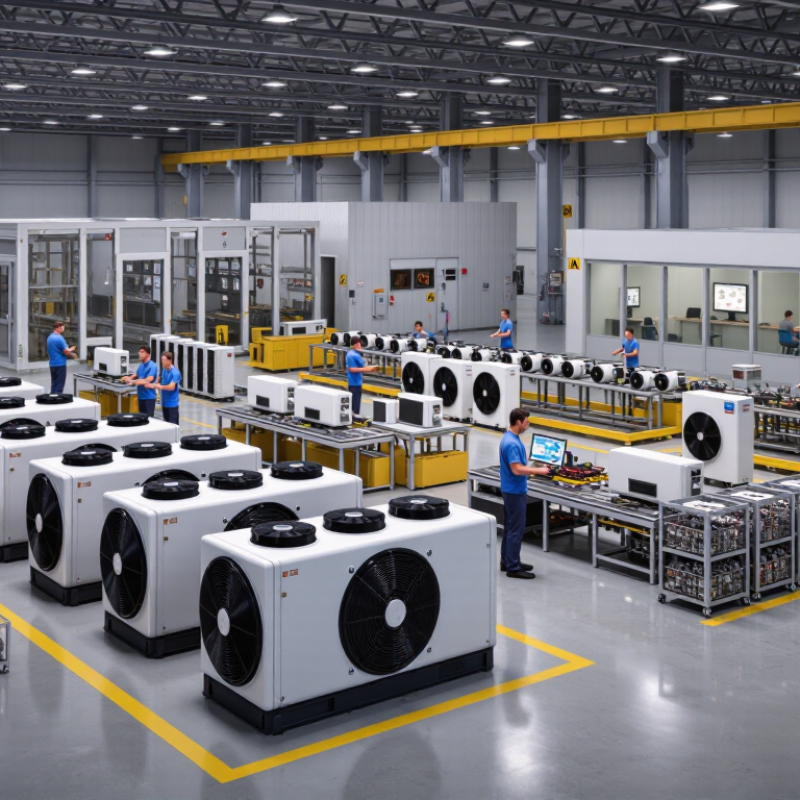
China’s HVAC and refrigeration industry covers compressors, heat exchangers, controls, duct systems, and complete equipment. Production is concentrated in several manufacturing regions with different technical strengths. Some factories focus on commercial chillers, while others produce compact household units or cold-storage equipment. This variety helps global buyers match products with climate, voltage, installation space, and operating conditions.

Reliable sourcing requires more than comparing prices. Buyers should review factory experience, production capacity, quality procedures, and export documentation. Ask for test reports, material specifications, energy data, and refrigerant details. A serious supplier can explain how a unit performs at high ambient temperatures, not only in a showroom. Factory audits also reveal practical details, such as calibration records, assembly cleanliness, and spare-parts storage.

Samples deserve careful testing. Check noise, vibration, temperature stability, power consumption, and controller response under realistic loads. Confirm whether drawings and manuals match the delivered unit. A polished catalog can hide weak after-sales support. Communication may also become unclear across languages and time zones. I have seen buyers focus heavily on unit cost, then overlook installation training and replacement components. That approach needs reconsideration. Local service partners, warranty procedures, packaging strength, and port handling can affect the real purchase cost. Even a well-built system may fail commercially when technical support arrives too slowly.

Key Product Categories Offered by Chinese Suppliers

Chinese HVAC and refrigeration suppliers serve global buyers through a broad range of product categories. Residential air conditioners include wall-mounted, floor-standing, and portable units for apartments, shops, and small offices. Commercial suppliers often provide rooftop systems, ducted units, fan coil units, and variable refrigerant flow equipment. These products require careful matching between cooling capacity, indoor layout, voltage, and local climate.

Industrial buyers may source air-cooled or water-cooled chillers for factories, hotels, and process facilities. Heat pumps are also widely available for space heating, water heating, and mixed climate applications. Refrigeration categories include condensing units, display cases, cold rooms, evaporators, compressors, and insulated panels. A complete cold-room package can include doors, temperature controllers, lighting, and alarm devices. Small details matter.

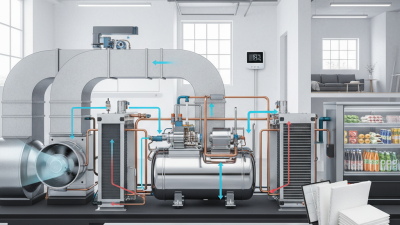
Ventilation products form another important category. Air handling units, exhaust fans, fresh-air systems, filters, and heat recovery equipment support indoor air quality and energy management. Suppliers may also offer thermostats, sensors, valves, pumps, copper fittings, and control panels. Buyers should request performance curves, wiring diagrams, refrigerant details, noise data, and test documentation before ordering. Product listings are not always perfectly comparable. A unit rated for one test condition may perform differently in a humid warehouse or coastal environment. Clear technical questions often reveal more than a polished catalog. Spare-part availability and installation guidance can still be uneven, so those points deserve written confirmation.

China Top HVAC and Refrigeration Suppliers for Global Buyers - Key Product Categories Offered by Chinese Suppliers
Product Category Typical Products Common Technical Features Typical Applications Common Refrigerants or Media Key Buyer Checks
Air-Conditioning Units Split air conditioners, multi-split systems, packaged air conditioners, rooftop units and portable air conditioners. Cooling and heating functions, inverter-driven compressors, variable-speed fans, remote controls, sleep modes and programmable timers. Residential buildings, offices, retail stores, hotels and light commercial spaces. R32, R410A and, in some applications, R290. Electrical power is commonly single-phase or three-phase AC. Rated capacity, energy-efficiency rating, voltage and frequency, operating temperature range, noise level and local certification.
Heat Pumps Air-source heat pumps, air-to-water heat pumps, swimming-pool heat pumps and domestic hot-water heat pumps. Reversible heating and cooling, hydronic output, defrost control, integrated pumps, weather compensation and low-ambient operation. Space heating, domestic hot water, underfloor heating, radiators and swimming-pool heating. R32, R410A, R290 and water as the distribution medium in hydronic systems. Heating capacity at specified outdoor temperatures, coefficient of performance, seasonal efficiency, water-flow requirements and frost-protection strategy.
Chillers Air-cooled chillers, water-cooled chillers, scroll chillers, screw chillers and modular chillers. Chilled-water production, multiple compressor configurations, microprocessor controls, pump integration and modular expansion options. Commercial buildings, industrial process cooling, data rooms, hospitals and large public facilities. R32, R410A, R134a, R1234ze and other refrigerants depending on design and regional regulations. Cooling capacity, leaving-water temperature, entering-water temperature, full-load and part-load efficiency, water quality and service access.
VRF and VRV-Type Systems Variable-refrigerant-flow outdoor units, indoor cassette units, ducted units, wall-mounted units and heat-recovery systems. Multiple indoor units connected to one or more outdoor units, inverter compressors, branch piping, centralized controls and simultaneous heating and cooling in heat-recovery configurations. Hotels, office buildings, apartment projects, schools and mixed-use developments. R410A and R32 are commonly used, subject to system design and destination-market requirements. Refrigerant-piping limits, connection ratios, total capacity, control compatibility, commissioning requirements and installer training.
Commercial Refrigeration Reach-in refrigerators, undercounter units, display cases, bottle coolers, ice makers and preparation counters. Forced-air circulation, automatic defrost, digital temperature control, stainless-steel interiors and self-closing doors. Restaurants, supermarkets, convenience stores, cafés, catering facilities and food-service operations. R290, R600a, R134a and R404A in selected legacy or specialized systems, subject to local rules. Internal volume, temperature class, ambient operating condition, energy consumption, food-contact materials and electrical plug configuration.
Cold-Storage Equipment Modular cold rooms, freezer rooms, insulated panels, condensing units, evaporators, doors and control systems. Polyurethane or polyisocyanurate insulated panels, adjustable temperature control, forced-air evaporators and modular construction. Food distribution, seafood storage, meat processing, pharmaceuticals, agriculture and logistics warehouses. R404A, R507A, R448A, R449A, R134a, R290, CO₂ and other options depending on temperature range and regulations. Required room temperature, pull-down time, insulation thickness, vapor sealing, door configuration, defrost method and standby capacity.
Condensing Units Hermetic condensing units, semi-hermetic condensing units, scroll condensing units and low-temperature condensing packages. Compressor-condenser assemblies, receiver tanks, filter-driers, pressure controls, fan motors and optional liquid-line components. Walk-in coolers, display cases, cold rooms, process refrigeration and small industrial systems. R134a, R404A, R507A, R448A, R449A, R290 and CO₂ configurations are available across different product ranges. Refrigeration capacity, suction and discharge conditions, compressor type, refrigerant approval, ambient temperature and service-parts availability.
Evaporators and Air Coolers Unit coolers, ceiling-mounted evaporators, cubic evaporators, finned-coil evaporators and air-cooling units. Copper tubes with aluminum fins, axial or centrifugal fans, electric or hot-gas defrost and corrosion-resistant coatings. Cold rooms, freezer rooms, food processing areas, refrigerated transport facilities and industrial cooling systems. Compatible with the specified refrigerant and operating temperature; water or glycol may be used in indirect systems. Heat-transfer capacity, fin spacing, air throw, defrost load, fan voltage, corrosion protection and drain-pan design.
Refrigeration Compressors Reciprocating compressors, scroll compressors, screw compressors, rotary compressors and semi-hermetic compressors. Fixed-speed or inverter operation, oil management, thermal protection, capacity control and configurations for positive-displacement refrigeration circuits. Air conditioners, chillers, commercial refrigeration, cold storage and industrial refrigeration. Refrigerant selection depends on compressor design; common options include R32, R410A, R134a, R404A, R290, CO₂ and low-GWP alternatives. Displacement, operating envelope, motor voltage, oil type, starting current, sound level, efficiency and replacement compatibility.
Air Handling and Ventilation Air handling units, fan-coil units, fresh-air units, energy-recovery ventilators, axial fans and centrifugal fans. Filtration, heating and cooling coils, humidity control, heat recovery, variable-speed drives and fresh-air ventilation. Offices, hospitals, factories, clean areas, shopping centers, hotels and residential developments. Chilled water, hot water, direct expansion refrigerant circuits and air as the primary distribution medium. Airflow, external static pressure, filtration grade, heat-recovery efficiency, casing leakage, sound level and maintenance access.
Cooling Towers and Evaporative Equipment Open-circuit cooling towers, closed-circuit coolers, evaporative condensers and cooling-tower accessories. Counterflow or crossflow operation, fill media, axial fans, drift eliminators, water-distribution systems and corrosion-resistant structures. Water-cooled chillers, industrial process cooling, power facilities and manufacturing plants. Water is the primary cooling medium; treated water is normally required to control scale, corrosion and biological growth. Heat-rejection capacity, design wet-bulb temperature, water flow, approach temperature, drift rate, noise and water-treatment requirements.
Controls and System Components Thermostats, electronic controllers, expansion valves, solenoid valves, pressure switches, sensors, manifolds and control panels. Digital monitoring, alarm functions, temperature and pressure sensing, electronic expansion control and remote communication interfaces. HVAC systems, cold rooms, supermarkets, process refrigeration and building-management systems. Component compatibility varies by refrigerant, pressure rating, temperature range and system architecture. Working-pressure rating, connection size, communication protocol, calibration accuracy, ingress protection and replacement availability.
Heat Exchangers Brazed-plate heat exchangers, shell-and-tube heat exchangers, finned coils and coaxial heat exchangers. Compact heat-transfer surfaces, refrigerant-to-water or water-to-water operation, stainless-steel plates and custom connection arrangements. Chillers, heat pumps, refrigeration systems, hydronic heating and industrial process applications. Refrigerant, water, glycol solution, brine and other approved heat-transfer fluids. Heat-transfer duty, pressure drop, maximum working pressure, design temperature, fluid compatibility and cleanability.
Insulated Panels and Accessories PIR and polyurethane sandwich panels, cold-room doors, floor panels, ramps, profiles, seals and lighting accessories. Low thermal conductivity, tongue-and-groove joints, cam-lock connections, vapor-resistant seals and modular installation. Cold rooms, freezer rooms, cleanrooms, food-processing areas and temperature-controlled warehouses. The panel itself does not use refrigerant; insulation performance supports systems using refrigerants or chilled fluids. Core material, panel thickness, thermal conductivity, fire performance, hygienic finish, door sealing and installation tolerances.
Buyer note: Product availability, refrigerant options, electrical configurations, certifications and performance ratings vary by model and destination market. Buyers should verify technical datasheets, applicable safety requirements, efficiency regulations, installation conditions and after-sales support before placing an order.

How to Evaluate China-Based HVAC and Refrigeration Manufacturers

China-based HVAC and refrigeration manufacturers should be evaluated beyond price and catalog range. The International Energy Agency reported that space cooling consumed about 2,000 TWh of electricity in 2016. Demand could more than triple by 2050. This makes efficiency, durability, and refrigerant management commercial priorities. Ask each manufacturer for verified COP, SEER, EER, noise, and operating-temperature data. Compare test conditions carefully. A higher number may reflect a different laboratory method.

Review factory controls, not only certificates. Check production traceability, incoming-component inspections, leak-testing records, and compressor failure rates. Request recent reports from independent laboratories. ISO 9001 supports process discipline, but it does not guarantee field reliability. The manufacturer should also explain refrigerant compliance, spare-parts availability, warranty handling, and technician training. The UNEP Kigali Amendment is accelerating the transition toward lower-global-warming refrigerants. Confirm that selected equipment matches the destination market and service network.

Tips: Ask for three years of failure data. Visit the factory if possible. Speak with two existing buyers. Test a sample under your actual climate conditions. A spreadsheet can miss vibration, condensation, or delayed support. That is where evaluation becomes less certain. Keep a written scoring sheet, but leave room for engineering judgment. Check whether promised delivery dates match real production capacity, especially during peak cooling seasons.

Major Export Markets and International Compliance Requirements

China remains a major sourcing base for air conditioners, chillers, heat pumps, and refrigeration equipment. Demand is expanding across Europe, North America, Southeast Asia, and the Middle East. The International Energy Agency’s Future of Cooling report projects that global space-cooling demand could more than triple by 2050. That growth increases pressure on suppliers to prove efficiency, refrigerant safety, and product reliability.

Compliance varies by destination. European buyers often require CE documentation, Ecodesign performance data, energy labels, RoHS evidence, and controls aligned with the EU F-gas Regulation 2024/573. The regulation strengthens refrigerant management, leak prevention, recovery, and phased restrictions. In the United States, importers may need evidence supporting federal efficiency rules and refrigerant requirements under the AIM Act. Gulf and Southeast Asian markets can add local conformity certificates, electrical testing, and Arabic or local-language labels. Requirements are not interchangeable.

The Kigali Amendment, supported by UNEP, targets major global reductions in hydrofluorocarbon consumption by mid-century. Refrigerant selection now affects both market access and long-term operating costs. A reliable supplier should provide test reports, refrigerant declarations, factory quality records, and traceable serial-number data. Certificates alone are not enough. Product pages can look stronger than factory reality. Buyers should verify laboratory scope, production consistency, compressor compatibility, and after-sales parts availability. A small documentation mismatch can delay customs clearance. Even experienced purchasers sometimes underestimate this risk. Rules also change faster than many catalogues. Source verification remains essential.

Sourcing Process for Global HVAC and Refrigeration Buyers

China Top HVAC and Refrigeration Suppliers for Global Buyers

Global HVAC sourcing should begin with the building, not a supplier list. Record climate data, room loads, operating hours, voltage, noise limits, and required refrigerants. The International Energy Agency reports that space cooling demand could more than triple by 2050. Efficiency must guide every purchasing decision.

Ask potential suppliers for verified capacity tables, test reports, factory quality procedures, and production references. Check whether measurements follow recognized standards, not only internal laboratory data. Request samples before negotiating volume prices. Inspect compressors, heat exchangers, control boards, insulation, and packaging in person or through an independent auditor. Small defects become expensive after installation.

Regulatory screening is essential. Confirm refrigerant requirements, electrical approvals, energy labels, import documents, and local service obligations. The UNEP-led Global Cooling Watch 2023 found that better efficiency and low-emission cooling could reduce projected cooling emissions by 68% by 2050. That figure makes lifecycle cost more meaningful than the lowest quotation.

Compare energy use over ten years, spare-part access, warranty response, and seasonal performance. Include an inspection hold point before shipment. A spreadsheet can still miss field conditions. I have seen technically compliant equipment fail because installers lacked clear wiring diagrams. The sourcing plan should therefore include translated manuals, training videos, commissioning support, and a realistic escalation route. Some buyers still underprice service. That is a costly blind spot.