
Choosing a Fire Pump Supplier in 2026 is not just a price comparison. A pump may look right on paper, yet fail to suit a building’s water supply, pressure needs, or operating conditions. The right decision starts with the system, not the sales brochure.
Ask suppliers for clear performance curves, equipment specifications, and test records for the proposed model. Check that the pump, driver, controller, and accessories are compatible as a complete package. Confirm which certification or approval requirements apply to your project and location; do not assume one label covers every installation. A useful supplier can explain the evidence and answer technical questions without rushing you.
Look beyond delivery day. Ask who will support commissioning, routine testing, troubleshooting, and replacement parts. A technician’s response time matters when a pump room is warm, noisy, and difficult to access. So does the availability of parts that match the installed model. Compare warranty terms and service commitments in writing, then speak with references who have operated similar equipment.
There is no perfect supplier. Some offer strong engineering support but longer lead times; others deliver quickly but provide limited follow-up. That trade-off deserves a closer look. Requesting a site review and a written scope can reveal gaps before purchase, though it cannot remove every risk. This guide explains practical ways to assess a Fire Pump Supplier, verify claims, and choose a partner whose capabilities fit your project and long-term maintenance needs.
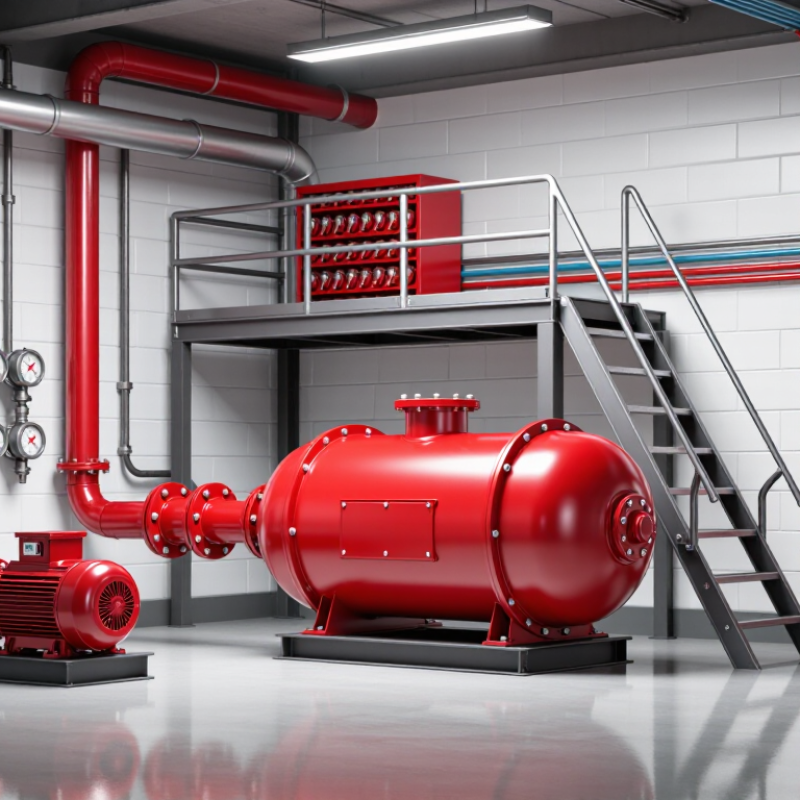
Before comparing fire pump suppliers, define the hazard the system must protect. Record the building’s occupancy, fire area, sprinkler demand, hose allowance, available water supply, and required pressure at the most demanding outlet. Include elevation changes and pipe losses. Small details matter. A pump that meets a catalog rating may still fall short at the actual duty point.
Check the standards adopted by the local authority having jurisdiction. NFPA 20 covers stationary fire pump installation; NFPA 22 addresses fire protection water tanks, while NFPA 25 covers inspection, testing, and maintenance. Confirm the applicable editions and any local amendments before requesting proposals.
NFPA’s 2021 U.S. Experience with Sprinklers report found sprinklers operated in 92% of reported fires large enough to activate them, and were effective in 96% of cases when they operated. That is useful context, not a pump-sizing formula.
Ask suppliers to show calculations against your project’s flow and pressure requirements, plus test arrangements and control-panel details. I would still revisit assumptions about water supply early; they are easy to overlook and costly to correct.

Choosing a fire pump supplier in 2026 starts with evidence, not a polished brochure. NFPA’s U.S. Fire Loss in 2023 report estimated 1.389 million fires and $23.2 billion in direct property damage. Those figures do not measure pump failures, but they show why dependable protection deserves careful procurement. Ask for current quality-system certificates, product approvals, and model-specific test records. Confirm each certificate matches the proposed pump, driver, controller, and rated duty point. Details matter.
Walk the factory, or request a live video tour. Look for calibrated test instruments, documented assembly checks, traceable serial numbers, and a test bay sized for the quoted flow. Ask how long test records are retained and who signs release documents. A supplier may have impressive machinery yet outsource critical work. That is not automatically a problem, but disclose it and verify the controls. Paperwork can look perfect. It still needs checking.
Tips: Request a witnessed performance test and raw pressure-flow readings, not only a pass certificate. Check whether the supplier can provide spare-parts lists, commissioning support, and realistic delivery dates. Call two references with similar installations. If answers stay vague, pause. One awkward question now is cheaper than an undocumented assumption later.
How to Choose a Fire Pump Supplier in 2026?
Compare Pump Performance, Certifications, and System Compatibility
Choosing a fire pump supplier starts with the operating point, not a headline flow rate. Request the performance curve and compare it with required flow, pressure, and suction conditions. Check efficiency near the duty point, motor capacity, and expected starting frequency. Numbers can mislead.
Certifications matter, but verify what each document covers: the pump, controller, driver, and manufacturing site may have separate records. Confirm applicable standards with the project engineer and local authority, since requirements vary by location. Then check system compatibility, including pipe sizes, voltage, control signals, room access, and test-header layout. A pump may fit on paper yet be awkward to service. I would not skip a site review; small assumptions can lead to costly changes.
Tips: Request the data sheet, curve, certification evidence, and installation dimensions together. Compare them with the project specification line by line. Ask who supports commissioning and supplies replacement parts. Does the package match the actual site?
| Evaluation Area | Data and Documents to Request | Comparison and Acceptance Checks | Why It Matters |
|---|---|---|---|
| Hydraulic performance | Certified pump curve showing flow, pressure, speed, and power; rated capacity and rated pressure. | Compare the curve with the project’s hydraulic calculations and required operating point. For a pump specified to NFPA 20, check the applicable curve criteria, including pressure at 150% of rated flow and shutoff pressure, against the adopted edition and project requirements. | Confirms that the pump can meet the system demand across expected operating conditions, not just at one point. |
| Suction conditions and NPSH | Required net positive suction head (NPSHr) curve, suction-pressure assumptions, and minimum water-source level or pressure. | Verify that available NPSH exceeds the pump’s required NPSH under the project’s worst-case suction conditions, with the margin required by the design criteria. | Helps reduce the risk of cavitation, vibration, and loss of pump performance. |
| Product listing and approval | Current, verifiable product listing or approval documentation for the exact pump model and configuration. | Confirm that the listing or approval is accepted by the authority having jurisdiction (AHJ) and applies to the offered pump, driver, and relevant accessories. UL 448 and FM Approval are examples of product certification or approval routes used for fire pumps in applicable markets. | Product acceptance requirements depend on the project, applicable codes, insurer, and AHJ; verify the actual equipment rather than relying on a general claim. |
| Installation standard and local requirements | Proposed installation basis, applicable code and standard editions, and a compliance statement. | Check that the design follows the edition of NFPA 20 or other fire-pump installation standard adopted for the project, together with local code and AHJ requirements. NFPA 20 addresses installation; it is not, by itself, a product listing. | Requirements can vary by jurisdiction and project. Confirm the governing requirements before comparing quotations. |
| Driver and controller | Driver type and rating; controller documentation; starting method; electrical or fuel requirements; and coordinated equipment submittals. | Check that the driver can operate the pump across its specified performance range and is compatible with the available power supply or fuel system. Verify controller ratings, interfaces, and required listings or approvals for the project. | A compatible pump package depends on the complete driver-and-controller arrangement, not the pump alone. |
| System and site compatibility | Connection sizes and locations, flange details, materials, dimensions, baseplate requirements, and installation clearances. | Match the offered package to the approved piping layout, suction and discharge arrangement, foundation, room dimensions, and maintenance access. Confirm pressure ratings and materials against the system design. | Prevents avoidable redesign, connection changes, and installation delays. |
| Electrical and frequency compatibility | Motor voltage, phase, frequency, full-load current, starting characteristics, and control-panel supply requirements. | Confirm these values match the site supply and project documents. Check that the quoted pump curve corresponds to the offered speed and frequency; do not assume a 50 Hz and 60 Hz configuration has identical performance. | Electrical mismatches can affect starting, operation, and the delivered hydraulic performance. |
| Factory testing and traceability | Factory performance-test procedure, test report format, serial-number traceability, and documentation supplied with the equipment. | Confirm which test standard and acceptance criteria will be used, what readings will be recorded, and whether witnessed testing is available when required by the specification. | Clear test records make it easier to verify that the delivered equipment matches the approved submittal. |
| Quality management | Quality-management-system certificate and its scope, issuing body, and validity dates. | Check the certificate’s authenticity and scope. Treat a quality-management certificate, such as one based on ISO 9001, as evidence about an organization’s management system—not as proof that a particular fire pump is listed or approved. | Separates manufacturing-process credentials from product-specific certification. |
| Documentation and support | Installation and maintenance manuals, parts lists, warranty terms, commissioning support, and local service or spare-parts arrangements. | Compare the stated response process, parts availability, warranty conditions, and scope of commissioning support. Ensure documentation covers the exact proposed configuration. | Supports commissioning, inspection, maintenance, and long-term system readiness. |
| Note: Final selection should be based on the project’s hydraulic calculations, adopted codes and standards, AHJ requirements, and approved equipment submittals. Performance values and certification requirements are project-specific; verify them for the exact proposed configuration. | |||
Assess Technical Support, Spare Parts, and Lifecycle Service
A fire pump is only useful when it starts, reaches its required pressure, and keeps running. NFPA’s U.S. Fire Loss in 2023 report estimated 1.39 million fires and $23.2 billion in property damage. That scale makes post-installation support more than a sales promise. Ask who will attend commissioning, how quickly a technician can respond, and whether support is available outside business hours. Request a sample pump curve and test record, not just a brochure.
Spare parts deserve the same scrutiny. Ask for written lead times and a recommended on-site list covering wear items such as seals, bearings, and coupling components. A part listed as “available” may still be weeks away. That detail matters. Check that the supplier can identify parts from your pump’s serial number and explain compatible replacements without guesswork.
Lifecycle service should fit the maintenance routine set out in NFPA 25, including inspection and testing of water-based fire protection systems. Compare service plans by tasks, records supplied, and follow-up when a test reveals a problem. I would also ask for a clear escalation path and named technical contacts. A cheap package can look convincing; I would still challenge what it leaves out. Some service needs are hard to predict, so judge the supplier by how clearly it handles uncertainty.
A fire pump proposal should be judged by evidence, not a low headline price. Compare the quoted duty point, flow, pressure, driver, controller, and listed configuration against the project specification. Ask for the certified pump curve and test records; check that they match the exact proposed model. NFPA’s 2023 U.S. fire-loss report estimated 1.389 million fires and $23 billion in direct property damage. That context makes dependable equipment and verification more than paperwork.
Delivery terms deserve equal attention. Request a dated production schedule, shipping method, named delivery point, and clear responsibility for freight, insurance, customs, and damage claims. Confirm what happens if a key component is delayed. Supplier reliability is easier to assess with recent on-time delivery records, documented quality controls, accessible technical support, and references for comparable installations. A polished quotation can still leave gaps; I would ask for written answers before comparing totals.
Tips: Request a sample factory test report and verify the proposed pump’s listing independently. Ask who handles commissioning and spare parts after delivery. Check warranty exclusions carefully, especially for storage, installation, and testing. A short lead time sounds attractive, but confirm it against component availability and the supplier’s actual production plan.
Suggested evaluation weights for comparing proposals in 2026. These are planning guidelines, not market statistics; adjust them to project requirements and applicable authority requirements.
Prioritize verified technical compliance, achievable delivery commitments, and documented supplier reliability. Compare lifecycle cost only after confirming that each proposal meets the project’s required performance and compliance criteria.
3295 Cobb International Blvd.
Kennesaw, GA 30152
800-367-1377
sale@patiostools.com
© 2023 - Marsh Instruments