3295 Cobb International Blvd. Kennesaw, GA 30152 800-367-1377 sale@patiostools.com

Product Variation:

How to Choose a Liquid Nitrogen Dosing System in 2026?

Choosing a Liquid Nitrogen Dosing System in 2026 requires more than comparing price tags or advertised dosing speeds. The right equipment must match your product, container format, production rate, and facility conditions. A system designed for small beverage bottles may perform poorly with cans, sauces, or pharmaceutical packaging. That difference matters.

Start with the real production environment. Measure line speed, fill volume, closure timing, and available nitrogen storage. Observe how containers move beneath the dosing head. A fraction of a second can affect internal pressure and package strength. Check whether the system offers adjustable dosing, accurate sensors, and reliable controls. These details often matter more than impressive brochure specifications.

Safety and compliance deserve equal attention. Liquid nitrogen is extremely cold and requires suitable ventilation, insulation, operator training, and emergency procedures. Confirm that the equipment supports applicable food, packaging, workplace, and electrical requirements in your region. Ask suppliers for technical documents, validation records, maintenance guidance, and service response times. A trustworthy manufacturer should explain limitations clearly.

Real-world testing remains essential. Request sample trials using your actual containers and products. Inspect pressure consistency, oxygen exposure, product temperature, and rejected packages. Record results across several operating conditions, not only during a perfect demonstration. No system is flawless.

The best choice balances performance, safety, integration, and long-term support. It should also leave room for future production changes. Sometimes, the most expensive option is not the most suitable one. Careful evaluation can prevent unstable dosing, unnecessary waste, and costly line modifications.

How to Choose a Liquid Nitrogen Dosing System in 2026?

Understanding Liquid Nitrogen Dosing Systems and Their Applications

How to Choose a Liquid Nitrogen Dosing System in 2026?

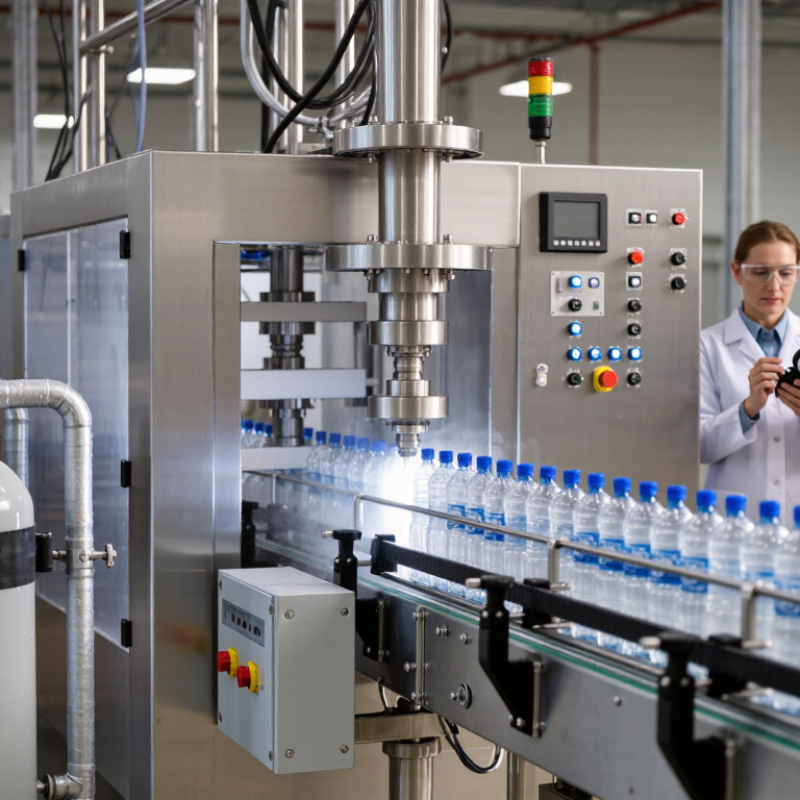
A liquid nitrogen dosing system injects a controlled volume into each container. The nitrogen rapidly expands, creating internal pressure and reducing oxygen exposure. Applications include beverage packaging, edible oils, pharmaceuticals, and selected food products. The system usually combines a storage vessel, insulated piping, dosing valve, timing controls, and safety monitoring.

Market data shows continuing demand for cryogenic equipment. Grand View Research estimated the global cryogenic equipment market at about USD 22.5 billion in 2023. Its report also forecasts approximately 6.4% annual growth from 2024 to 2030. These figures are broader than nitrogen dosing, so they should not be treated as direct dosing-market values. Application needs remain more important than market forecasts. A high-speed filling line may require precise micro-dosing, while a smaller operation may value easy cleaning and manual adjustment. Container shape matters too. A narrow neck can make dosing alignment surprisingly difficult.

Tips: Compare dose accuracy, response time, nitrogen consumption, and maintenance access. Ask for production-line trials using your real container, product temperature, and filling speed. Check oxygen monitoring, ventilation, pressure relief, and operator training. Do not select a system from flow rate alone. A larger valve may waste nitrogen and create unstable pressure. In practice, spreadsheets can miss condensation around the nozzle. That detail may affect hygiene, labels, and sealing. Review performance again after seasonal temperature changes.

Defining Product, Container, and Production Requirements

How to Choose a Liquid Nitrogen Dosing System in 2026?

Choosing a liquid nitrogen dosing system starts with the product, not the machine. Define the target dose, product temperature, viscosity, and package headspace. A liquid product may require a different dose pattern than a dry snack. Measure actual production conditions, not ideal laboratory results. Small dose changes can affect package pressure, texture, and shelf life. The system should deliver repeatable dosing at the required line speed. It should also support accurate monitoring and straightforward cleaning. That sounds simple. It is not always simple.

Container design is equally important. Record the container material, opening size, wall strength, and closure timing. A narrow opening can create splashing or uneven distribution. A weak container may deform when nitrogen expands. Production requirements include conveyor speed, filling distance, ambient temperature, and available floor space. Operators also need clear controls and practical access to valves, sensors, and pipes. In my experience, teams often underestimate changeover time. That mistake becomes expensive during busy shifts. Testing with real containers is essential, although early tests may reveal uncomfortable design flaws.

Tips: Build a small test plan before purchasing. Compare several dose settings and record pressure, weight, sealing results, and reject rates. Leave capacity for future speed increases. Ask for documented accuracy data under your actual conditions. Keep the design flexible. Your first specification may be wrong. That is useful information, not failure.

Comparing Dosing Technologies, Controls, and Performance

How to Choose a Liquid Nitrogen Dosing System in 2026?

Liquid nitrogen dosing depends on control quality, not only injection speed. NIST data places nitrogen’s boiling point at 77.36 K. At room temperature, one liquid volume becomes roughly 694 gas volumes. Small timing errors can therefore create large pressure changes inside a package. Pressure-based dosing suits stable production lines. Volumetric dosing offers repeatable fills when container size changes. Load-cell systems provide stronger feedback, but they need careful vibration control.

Mordor Intelligence’s 2025 Cryogenic Equipment Market report forecasts a 6.23% compound annual growth rate through 2030. That growth reflects rising demand for efficient cryogenic handling and automated controls. Select a system with closed-loop pressure monitoring, adjustable pulse timing, and alarms for low supply pressure. A practical trial should measure dose weight, headspace pressure, line speed, and reject rates. Test after cold starts, because the first doses may behave differently. Perfect settings rarely survive a busy shift.

Tips: Keep the dosing nozzle close to the container opening, but avoid contact. Record pressure trends every shift. Use nitrogen-compatible seals and insulated piping. NIST data should guide expansion calculations, while on-site trials should confirm real performance. Operators sometimes trust the display too much; manual checks still matter.

How to Choose a Liquid Nitrogen Dosing System in 2026?

Comparing dosing technologies, controls, and representative performance

How to read the chart: Gravimetric feedback generally provides the tightest dose control because the system verifies mass directly. Pump-metered systems offer a practical balance between accuracy, speed, and integration cost. Timed pressure dosing is simpler and easier to install, but its accuracy is more sensitive to pressure, temperature, nozzle condition, and product flow characteristics.

Typical engineering ranges shown as dose error bands (±%). Actual performance depends on container geometry, nozzle design, line insulation, pressure stability, product speed, and calibration frequency. Lower values indicate better dosing accuracy.

Evaluating Safety, Compliance, Maintenance, and Total Cost

How to Choose a Liquid Nitrogen Dosing System in 2026?

Safety should be measured at the operator’s breathing zone, not only at the machine. OSHA defines oxygen-deficient air as below 19.5% oxygen (29 CFR 1910.146). Therefore, choose continuous oxygen monitoring, automatic shutoff, pressure relief, and strong room ventilation. The Compressed Gas Association’s P-12 guidance also stresses training, labeling, and controlled transfer procedures. A practical test includes opening the enclosure, checking alarm audibility, and simulating a low-oxygen event. If workers cannot understand the alarm in a noisy room, the design is incomplete.

Compliance affects maintenance and total cost. NFPA 55 addresses cryogenic fluid storage, ventilation, separation, and emergency controls. Ask suppliers for documented risk assessments, material compatibility records, and validation evidence. Maintenance should include valve inspection, sensor calibration, insulation checks, and leak testing. The U.S. Department of Energy’s Operations & Maintenance Best Practices report links proactive maintenance with potential energy savings of 5–20% across industrial facilities. That figure is not a guarantee for dosing equipment, but it supports budgeting for planned service rather than emergency repair. Track nitrogen consumption, rejected units, downtime, spare parts, and technician hours for twelve months. The cheapest purchase can become expensive quickly. I would also question overly complex automation; more sensors may improve control, but they create more calibration points and failure modes.

How to Choose a Liquid Nitrogen Dosing System in 2026? – Evaluating Safety, Compliance, Maintenance, and Total Cost
Comparative planning guide for food, beverage, pharmaceutical, and industrial packaging applications. Ratings are indicative and should be validated against the actual product, line speed, facility layout, and local regulations.
Evaluation Dimension Intermittent Single-Nozzle System Intermittent Multi-Nozzle System Continuous Inline Single-Lane System Continuous Multi-Lane System
Typical Application Small and medium packaging lines, batch production, or variable product formats. Multiple containers or packages requiring synchronized dosing at one station. Stable high-speed production with consistent container spacing and product geometry. High-throughput facilities with several lanes, fillers, or packaging machines operating together.
Indicative Throughput Approximately 5–60 containers per minute, depending on dose size and indexing time. Approximately 30–180 containers per minute, depending on nozzle count and control logic. Approximately 60–300 containers per minute, depending on line speed and dosing tolerance. Approximately 180–1,200 containers per minute across all lanes, subject to product and package design.
Dose Consistency Medium
Suitable when moderate dosing repeatability is acceptable and line speed is limited.
High
Improved repeatability when each nozzle is individually controlled and calibrated.
High
Best suited to stable product flow, reliable container detection, and closed-loop timing.
High
Requires coordinated lane control, synchronized sensors, and robust recipe management.
Safety Requirements Oxygen monitoring, ventilation, insulated transfer lines, emergency shutoff, and restricted access are required. Requires the same controls as a single-nozzle system, with additional isolation points and nozzle protection. Requires continuous monitoring of oxygen concentration, line guarding, interlocked access, and safe exhaust routing. Highest Control Need
Multiple dosing points increase the need for zoning, alarm management, emergency isolation, and ventilation capacity.
Oxygen-Depletion Risk Medium
Risk depends on dose rate, room volume, ventilation, and the amount of nitrogen released as gas.
Medium–High
Higher potential release rate than a single-nozzle installation.
Medium–High
Continuous operation requires a documented ventilation and oxygen-monitoring assessment.
High
Facility design should consider the maximum credible release from storage, piping, and all dosing points.
Compliance Documentation Equipment risk assessment, operating procedures, training records, pressure-system documents, and sensor calibration records. All single-nozzle documentation plus nozzle-level isolation, controls validation, and multi-point maintenance procedures. All core documents plus machine integration records, software or PLC validation, and line-interlock verification. Full system risk assessment, zoning plan, emergency response procedure, change-control records, and coordinated validation.
Relevant Good-Practice References Applicable local occupational-safety, machinery, electrical, pressure-equipment, and cryogenic-gas requirements. Applicable local requirements plus documented control of multiple valves, sensors, and isolation devices. Applicable local requirements plus machine-safety, control-system, and production-line integration standards. Applicable local requirements plus facility-wide oxygen-deficiency hazard assessment and emergency planning.
Installation Complexity Low
Usually the simplest option for a short transfer line and one production point.
Medium
Requires balanced distribution, additional controls, and more commissioning time.
Medium–High
Requires accurate conveyor tracking, sensor positioning, and interface with the line control system.
High
Requires engineered distribution, coordinated controls, and capacity checks for storage and ventilation systems.
Routine Maintenance Inspect insulation, valves, nozzle condition, sensors, alarms, and oxygen monitors; verify calibration at defined intervals. More frequent inspection of valves, nozzles, actuators, sensors, and distribution lines is required. Includes conveyor sensors, timing controls, dosing valves, software settings, and product-changeover verification. Requires planned maintenance for every lane, redundancy checks, control-system backups, and coordinated calibration.
Expected Maintenance Burden Low–Medium
Fewer components generally reduce troubleshooting time and spare-parts requirements.
Medium
Component count rises with each additional dosing point.
Medium
Mechanical maintenance is moderate, while controls and sensor reliability are critical.
High
More valves, instruments, software functions, and operating zones increase maintenance workload.
Indicative Capital Cost Index 1.0 × baseline configuration; usually the lowest initial equipment cost. Approximately 1.5–2.5 × baseline, depending on nozzle count and control architecture. Approximately 1.8–3.0 × baseline, depending on line integration and automation requirements. Approximately 3.0–6.0 × baseline, depending on lanes, storage capacity, ventilation, and validation scope.
Liquid Nitrogen Efficiency Medium
Efficiency depends strongly on dose size, nozzle geometry, line stops, and transfer-line heat gain.
Medium–High
Can improve utilization when multiple containers are dosed during each indexed cycle.
High
Stable speed and controlled dosing can reduce over-dosing and process variation.
High
Potentially efficient at high utilization, but idle lanes and frequent changeovers can increase losses.
Downtime Exposure Low
A fault normally affects one dosing point, although the entire line may still require a stop.
Medium
A common control or supply fault can affect several dosing points simultaneously.
Medium
Sensor, conveyor, or control faults can interrupt continuous production.
High
More interconnected equipment increases the potential impact of a shared-system failure.
Best Fit for 2026 Selection Choose when flexibility, low complexity, and a modest production rate are more important than maximum throughput. Choose when several packages must be dosed simultaneously without moving to a fully continuous architecture. Choose when production is stable and the business case depends on repeatability, automation, and high utilization. Choose only when sustained throughput justifies the higher engineering, safety, validation, and maintenance investment.
Total Cost of Ownership Outlook Lowest Initial Cost
May have higher labor cost per unit if production volume increases significantly.
Balanced
Often provides a practical compromise between capacity, redundancy, and investment.
Strong at High Utilization
Lower unit cost is possible when the line runs consistently with controlled nitrogen consumption.
Project-Dependent
Can deliver the lowest unit cost at sustained scale, but fixed costs and compliance obligations are substantially higher.
Planning note: Liquid nitrogen is an asphyxiation and cryogenic-burn hazard. Final selection should be supported by a documented oxygen-deficiency hazard assessment, ventilation design, pressure-system review, emergency isolation strategy, operator training program, and compliance review against all applicable local regulations. Capital-cost indexes exclude site-specific construction, storage-tank supply, ventilation upgrades, utilities, taxes, and validation costs.

Selecting and Validating the Right System for 2026 Needs

Choosing a liquid nitrogen dosing system in 2026 requires validation, not catalogue comparison. Start with product data: container volume, line speed, fill temperature, closure strength, and allowable nitrogen residuals. A dosing trial should measure dose accuracy across start-up, steady operation, and short stoppages. Cold metal can behave differently after cleaning. That detail is often missed.

Safety data must guide the specification. OSHA defines an oxygen-deficient atmosphere as below 19.5% oxygen. Therefore, test room ventilation, alarm response, and emergency isolation before production approval. ISO 11625 also emphasizes safe handling, storage, and transport of cryogenic liquids. Record sensor locations and alarm times. Do not rely on one reading.

Validation should connect engineering results with business evidence. PMMI’s 2024 packaging outlook highlights automation, flexible equipment, and traceability as major investment priorities. The International Energy Agency’s 2024 energy-efficiency analysis also shows why utilities deserve measurement, not assumptions. Compare nitrogen consumption per thousand containers, rejected units, maintenance minutes, and changeover losses. Include at least three product formats in the test plan. A system may perform well on a quiet line but drift during rapid filling. That happened in one of our early evaluations. We underestimated condensation near the dosing nozzle. The correction required better shielding, not simply a larger valve. Validate cleaning access, data logging, operator training, and spare-part availability. The strongest 2026 choice is the system that proves repeatability under realistic, imperfect conditions.