
3295 Cobb International Blvd. Kennesaw, GA 30152 800-367-1377 sale@patiostools.com

Product Variation:

How to Choose the Best PE Gas Pipes for Global Projects?

Choosing PE Gas Pipes for a global project requires more than comparing price per meter. A buried pipeline may cross deserts, floodplains, cities, and regulatory borders. Each location changes the engineering decision. Soil movement, operating pressure, temperature, gas composition, and installation methods all affect pipe performance. A strong selection process must connect these conditions with verified material data.

The International Energy Agency’s Gas 2024 report highlights continued investment in gas infrastructure and growing pressure on supply reliability. This trend increases the need for durable, leak-resistant distribution systems. The Plastics Pipe Institute’s Handbook of Polyethylene Pipe explains that polyethylene can provide flexibility, corrosion resistance, and reliable fusion joints when correctly designed and installed. However, these benefits depend on resin classification, wall thickness, pressure rating, joint quality, and traceable manufacturing. PE Gas Pipes should also comply with applicable standards, such as ISO 4437, EN 1555, or ASTM D2513, depending on the project region.

A practical evaluation should examine long-term hydrostatic strength, rapid crack resistance, environmental stress cracking, and field fusion procedures. Do not ignore installation reality. A technically excellent pipe can fail when trench preparation, bending limits, or electrofusion control are poorly managed. Independent certification, factory testing, and supplier experience deserve serious attention. Lower purchase cost may create higher lifecycle expenses. This is often underestimated. Project teams should also review local utility rules, climate records, and maintenance access before approval. No checklist is perfect, but a documented, evidence-based comparison can reduce risk and support dependable global gas infrastructure.
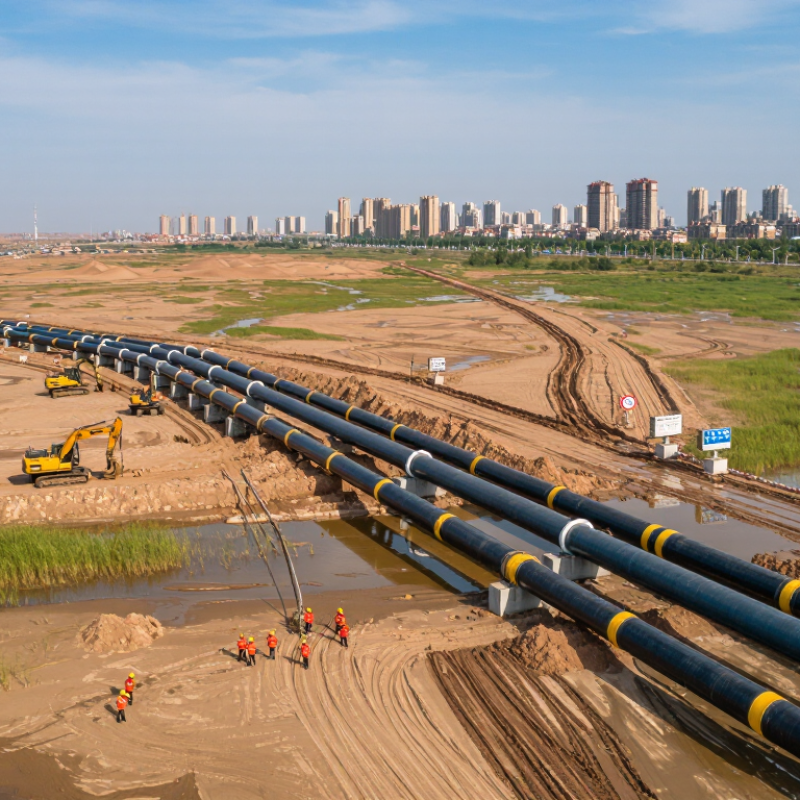
How to Choose the Best PE Gas Pipes for Global Projects?

Understanding PE Gas Pipes and Their Main Types

How to Choose the Best PE Gas Pipes for Global Projects?

Polyethylene gas pipes are not a single product. They are a family of materials with different strength, density, and pressure performance. Common choices include MDPE, PE80, PE100, and PE4710. PE80 and PE100 follow ISO 4437 and EN 1555 practices, while PE4710 is widely specified under North American standards. According to the 2023 PHMSA Pipeline Statistics report, the United States operates more than 1.3 million miles of gas distribution mains. PE is a major material in this network because it resists corrosion and supports trenchless installation.

The pipe designation matters. PE100 generally offers higher long-term strength than PE80, allowing thinner walls at the same pressure rating. However, a thinner wall is not automatically better. Designers must check the SDR, operating pressure, temperature, soil movement, and gas composition. The Plastics Pipe Institute’s Handbook of Polyethylene Pipe identifies butt fusion and electrofusion as proven joining methods when trained crews control heating, alignment, and cooling. Small errors remain costly.

Look closely at local standards.

ISO 4437, EN 1555, ASTM D2513, and national gas codes may require different dimensions, markings, and testing. Industry reports often emphasize material performance, but field conditions can decide the result. For global projects, UV exposure, rocky backfill, seismic movement, and limited repair access deserve equal attention. A pipe selected only from a catalogue may pass the specification and still fail the project’s practical test.


Identifying Project Requirements and Operating Conditions

Choosing a PE gas pipe starts with the project, not a catalogue table. Define the gas service, design pressure, required flow, route length, and expected service life. Record minimum and maximum ground temperatures, since cold handling and hot operating conditions can affect installation and performance. Small details matter. A buried line crossing rocky soil needs different protection planning from one laid through soft, stable ground. Also check groundwater, chemical exposure, traffic loads, and the space available for joining equipment.

Specify pipe dimensions, pressure rating, material designation, and jointing method against the project design and applicable standards. Consider pressure surges, bends, fittings, and connections to existing systems; these details can shape the pipe choice as much as steady operating pressure. For exposed storage or transport, review UV exposure and handling conditions. A tidy spreadsheet still cannot capture every site condition. It is easy to focus too heavily on pressure class and overlook installation limits. That assumption can be wrong. Ask the design and installation teams to review the same operating data, then document any unresolved uncertainties before procurement. Verify product records and inspection requirements early, especially when components will pass through several suppliers or job sites.

Evaluating Pipe Standards, Materials, and Supplier Quality

Global gas projects rarely fail because polyethylene looks unsuitable. They fail when standards, material grades, and installation conditions are treated as interchangeable. A procurement team should confirm the required pipe standard, pressure class, SDR, dimensions, and approved joining method. National codes may differ, even when the pipe carries the same gas.

Material selection needs practical judgment. PE100 commonly provides strong pressure performance, while PE80 may suit specific legacy systems. The choice should follow design calculations, operating temperature, surge risk, and soil conditions. Ask for resin traceability, melt-flow data, oxidation-induction results, and hydrostatic test records. A certificate alone is not enough. Documents can look complete while lacking batch references.

Supplier quality is visible in small details. Inspect storage yards for sunlight exposure, ovalized coils, damaged ends, and mixed batches. Request independent test reports and verify the laboratory’s competence. Check whether factory controls cover extrusion, wall thickness, surface defects, and marking clarity. A reliable supplier should explain nonconformities without hiding them. That honesty matters. Sample a shipment before full approval, and compare measured dimensions with declared tolerances. Review fusion procedures with local installers, because excellent pipe can still fail through poor heating or contamination. I would not rely on one audit visit. Follow-up inspections may reveal inconsistent labeling, rushed packing, or gaps in records.

How to Choose the Best PE Gas Pipes for Global Projects? — Evaluating Pipe Standards, Materials, and Supplier Quality

Evaluation dimension What to check Why it matters Project selection guidance
Applicable pipe standard Identify the standard required by the destination market and project specification. Common examples include ISO 4437, EN 1555, and ASTM D2513. Requirements differ by jurisdiction, including dimensions, material qualification, marking, testing, and conformity documentation. Confirm the exact standard edition and applicable national regulations before procurement; do not assume that compliance with one standard automatically satisfies another.
Polyethylene material grade Check the material designation and its certified long-term hydrostatic strength classification, such as PE80 or PE100 where applicable under the specified standard. Material classification is linked to pressure design and long-term performance; the designation alone does not establish suitability for every operating condition. Request traceable material data and verify that the grade is permitted by the governing standard and local gas-network rules.
Pressure rating and SDR Compare nominal outside diameter, wall thickness, SDR (outside diameter divided by minimum wall thickness), and the stated pressure rating. Pressure capacity depends on the material classification, dimensions, design factors, temperature, and the rules used in the relevant jurisdiction. Have the project designer confirm the required dimensions and allowable operating pressure. Do not infer a gas pressure rating from SDR alone.
Temperature and service conditions Review operating and installation temperatures, gas composition, burial conditions, external loads, and any relevant chemical exposure. Design limits and permissible pressure may change with service conditions, and installation environment can affect handling and long-term performance. Use the project design basis and applicable code to establish allowable conditions; obtain written technical confirmation for non-standard service.
Dimensions and tolerances Verify diameter series, wall-thickness tolerances, length or coil dimensions, and compatibility with the specified fittings and joining method. Dimensional consistency supports correct assembly and helps prevent delays or incompatibility in the field. Check the dimensional schedule against the project drawings and the relevant standard, including requirements for fittings and electrofusion or butt-fusion joints.
Testing and conformity evidence Request applicable test reports, declarations or certificates required by the project, and batch-specific inspection or release records. Evidence helps demonstrate that products were assessed against specified requirements and can be traced to production batches. Check document scope, issuing body where relevant, product range, standard edition, and validity. A certificate should not be treated as proof beyond its stated scope.
Manufacturing quality control Review documented controls for incoming material, extrusion, dimensional checks, visual inspection, testing, nonconforming product, and calibration. Consistent process control and recorded inspections support product uniformity and effective investigation of quality issues. Assess quality records and audit evidence relevant to the actual product and production site, rather than relying only on general marketing claims.
Traceability and marking Confirm that pipe markings and delivery records identify required information, such as standard, material designation, dimensions, production identification, and manufacturer details where required. Traceability links installed product to its production and inspection records, supporting acceptance, maintenance, and defect investigations. Agree on marking and batch-record requirements before ordering, and verify that markings remain legible through delivery and site handling.
Supplier delivery and handling Evaluate production capacity, lead-time commitments, packaging, loading, transport protection, and procedures for handling pipe coils or straight lengths. Poor planning or handling can cause project delays or physical damage before installation. Confirm delivery quantities, packaging method, storage guidance, inspection on receipt, and a process for reporting damage or shortages.
Technical support and documentation Check availability of current product data, installation guidance, joining recommendations, and timely responses to technical queries. Clear, project-specific documentation helps designers, contractors, and inspectors verify requirements throughout installation. Include document submittals and response expectations in the procurement plan; verify that guidance aligns with the governing code and approved joining procedures.

Note: Standards, editions, design factors, and approval requirements vary by country and project. Confirm the current applicable requirements with the project engineer and the relevant authority before specification or installation.

Comparing Sizes, Pressure Ratings, and Jointing Methods

For gas projects, select PE pipe size from peak flow, route length, and allowable pressure loss—not demand alone. A long, cold site route can change the calculation. ISO 4437-2 provides requirements for PE pipes used in gas supply, including dimensions and material characteristics. Pressure rating also depends on the pipe’s SDR, the ratio of outside diameter to wall thickness. The Plastics Pipe Institute’s Handbook of PE Pipe, Chapter 6, gives the relationship P = 2HDS/(SDR − 1), where HDS is hydrostatic design stress. A lower SDR means a thicker wall and, under the same design basis, higher pressure capacity. Small differences matter. Confirm the selected material designation, operating temperature, and design factors with the project engineer.

Jointing affects both reliability and installation time. Butt fusion suits long, accessible pipe runs; electrofusion can help where space is tight or fittings are needed. Both require controlled surface preparation, alignment, and cooling time. Dirt on a fusion face is not a minor detail. PPI’s handbook describes qualified fusion procedures and inspection practices, while ISO 4437-3 covers fittings for gas supply systems. Mechanical joints may simplify tie-ins, but check their pressure rating and compatibility with the pipe. A practical comparison should include equipment access, crew qualification, weather exposure, and repair plans. It is tempting to choose one jointing method for the whole route; transitions and cramped excavations may make that choice less efficient.

Planning Transport, Installation, and Long-Term Maintenance

For global gas projects, transport planning begins before pipes reach the port. Confirm coil or straight-length dimensions, lifting points, and unloading equipment against the route and site access. Secure loads without sharp chains, and protect pipe ends from grit and impact. Small damage matters. A nick may become a leak path after installation, so inspect each length and record rejected sections.

At the site, keep pipes off rough ground and away from heat sources. Plan trench access, fusion equipment, and qualified crews before delivery; otherwise, stored pipe can block work areas. The Plastic Pipe Institute’s Handbook of PE Pipe describes a 50-year design basis in pressure-rating methods. That is a design framework, not a promise of service life. ISO 9080 sets out methods for extrapolating long-term hydrostatic strength from test data, which helps engineers assess material performance.

Maintenance starts with good records. Keep fusion logs, pressure-test results, as-built locations, and repair histories accessible to future operators. Mark valves and crossings clearly, especially where later excavation is likely. Schedule inspections around local operating conditions, ground movement, and third-party work. Even a tidy handover can miss details, so verify records in the field before commissioning.