
Choosing the right Water Purification System begins with the water entering your home, not with attractive product claims. The WHO and UNICEF Joint Monitoring Programme reported that 2.2 billion people lacked safely managed drinking water in 2022. That figure makes water treatment a public-health decision, even in developed communities. However, one device cannot solve every water problem.
A practical evaluation starts with a laboratory water test. Check for lead, nitrates, hardness, chlorine, bacteria, and unpleasant odors. A glass filled from the kitchen tap may look clear while containing invisible contaminants. The U.S. Environmental Protection Agency recommends testing private wells regularly, especially after flooding, repairs, or changes in taste. For product verification, NSF/ANSI 42 addresses aesthetic impurities, NSF/ANSI 53 covers specific health effects, and NSF/ANSI 58 applies to reverse-osmosis systems. Certification matters. Marketing language is not evidence.
Capacity also deserves attention. A family of four needs different flow rates and replacement schedules than a single apartment resident. Reverse osmosis can reduce dissolved contaminants, but it may waste water and remove beneficial minerals. Carbon filtration is often simpler, yet it cannot address every contaminant. The best choice depends on test results, maintenance habits, local water conditions, and budget.
Small details matter. Who will replace the cartridge? Can the filter be sourced locally? Will the system fit beneath the sink? These questions are easy to overlook. I have found that “advanced” is not always better; sometimes, it only means more maintenance. A reliable decision combines certified performance, transparent test data, professional installation advice, and realistic household behavior.
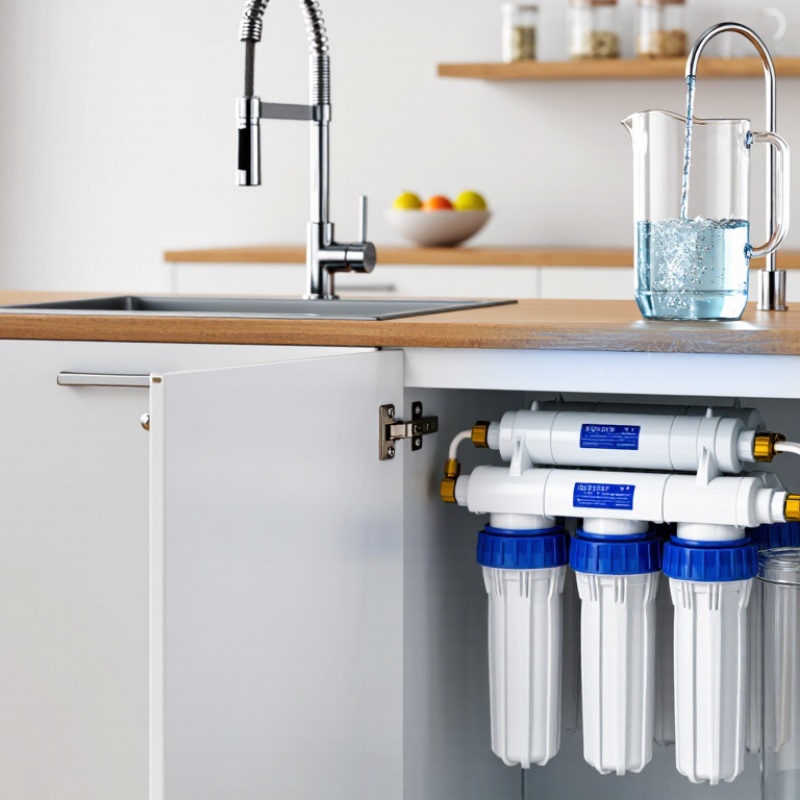
How to Choose the Best Water Purification System?
Understanding Water Quality and Purification Needs
Choosing a purification system should begin with your water, not a product label. Tap water may look clear yet contain chlorine, sediment, hardness minerals, or harmful microorganisms. A recent water report can reveal local risks and treatment requirements. If no report is available, use an accredited laboratory for testing. Home strips can help, but they cannot measure everything. A glass can look perfect.
Check taste, odor, staining, and scale around faucets. These clues are useful, but they are not proof of safety. Test for bacteria, lead, nitrate, hardness, and chlorine when relevant. Private well owners need regular testing, especially after flooding or nearby construction. I once underestimated hard water because the odor seemed normal. The white buildup told a different story. That mistake changed my approach.
Tips: Match the system to the tested contaminant. Sediment filters suit visible particles. Carbon filters often reduce chlorine and unpleasant taste. Reverse osmosis can reduce several dissolved substances, but it may waste water and remove useful minerals. Ultraviolet treatment requires clear water and reliable electricity. Check flow rate, replacement schedules, certification, and maintenance costs before buying. Keep testing after installation. Filters can become less effective when neglected, and warning signs may appear slowly. Safety depends on consistent upkeep, not equipment alone.

Understanding Water Quality and Purification Needs
This chart compares selected World Health Organization guideline values for drinking-water contaminants. Lower values indicate a stricter concentration limit. Test your source water first, then select a purification method that targets the specific contaminants detected.
Reference: World Health Organization, Guidelines for Drinking-water Quality. Values are shown in micrograms per liter (µg/L) using a logarithmic scale: arsenic 10 µg/L, lead 10 µg/L, nitrate 50,000 µg/L, and fluoride 1,500 µg/L.
How to Choose the Best Water Purification System?
Comparing the Main Types of Water Purification Systems
Choosing a water purification system starts with identifying the problem in your supply. A recent water test can reveal sediment, chlorine, hardness, metals, or microbial risks. Taste alone is not reliable evidence. It may hide serious issues.
Sediment filters trap sand and rust before they reach household fixtures. Activated carbon improves taste and reduces chlorine, but it cannot remove every contaminant. Reverse osmosis uses a membrane to reduce many dissolved substances, including certain metals and salts. However, it produces wastewater and needs steady pressure. Ultraviolet treatment can control microorganisms without changing taste, yet it does not remove chemicals or particles. Distillation is effective for many dissolved impurities, but it consumes energy and works slowly. Whole-house systems treat water at several entry points, while under-sink units focus on drinking and cooking water.
Match the system to verified needs. A certified laboratory report is more useful than a dramatic sales claim. Check replacement costs, filter life, installation space, and maintenance records. Neglected equipment can reduce water quality instead of improving it. My first choice is not always reverse osmosis; unnecessary treatment can waste water and money. I would also reconsider a whole-house unit when only drinking water needs extra treatment. Keep the test results and service dates. Small details matter.
| Purification System | Main Operating Principle | Typical Contaminants Addressed | Typical Filtration or Treatment Capability | Water Recovery / Wastewater | Energy Requirement | Maintenance Needs | Best Suited For | Key Limitations |
|---|---|---|---|---|---|---|---|---|
| Activated Carbon Filtration | Adsorbs compounds onto porous carbon media and may reduce sediment with a prefilter. | Chlorine Taste and odor Some organic chemicals Some sediment | Effectiveness varies substantially by carbon type, contact time, flow rate, and certified claims. It generally does not remove dissolved minerals or salts. | Usually no reject-water stream; nearly all incoming water can be used. | Normally none for gravity or pressure-fed units. | Replace cartridges according to capacity and manufacturer instructions; sanitation may be required for some housings. | Improving municipal tap-water taste and reducing chlorine or selected organic contaminants. | Does not reliably remove microorganisms, nitrate, fluoride, hardness, or most dissolved salts unless specifically designed and certified to do so. |
| Reverse Osmosis (RO) | Uses pressure to force water through a semipermeable membrane, leaving many dissolved substances in a reject stream. | Dissolved salts Many metals Nitrate Fluoride Microorganisms | Typically reduces a broad range of dissolved solids; contaminant reduction varies by membrane, pretreatment, pressure, and water chemistry. | Produces wastewater. Traditional residential units may discharge several litres for each litre of treated water; high-efficiency designs can use less. | Requires a pressurized supply; electricity is usually needed for booster pumps or advanced controls, but not always for basic systems. | Replace prefilters and postfilters; replace the membrane when performance declines; sanitize the system periodically. | Homes needing substantial reduction of dissolved contaminants or lower-mineral drinking water. | Slower production, wastewater generation, mineral removal, and possible need for remineralization or storage tanks. |
| Ultrafiltration (UF) | Presses water through hollow-fiber membranes with very small pores that physically retain particles and many microorganisms. | Suspended solids Bacteria Protozoan cysts Some viruses | Common residential UF membranes have pore sizes around 0.01 micrometres, though specifications vary. Dissolved salts generally pass through. | Often little or no continuous wastewater; some systems use periodic flushing. | Usually none beyond normal water pressure; pumps may be required in low-pressure installations. | Prefilter replacement and periodic membrane flushing or cleaning. | Reducing turbidity and many microorganisms while retaining beneficial minerals. | Generally ineffective for dissolved salts, hardness, nitrate, fluoride, and many dissolved chemicals. |
| Ultraviolet (UV) Disinfection | Uses ultraviolet light to inactivate microorganisms by damaging their genetic material. | Bacteria Viruses Protozoa | Can provide effective disinfection when the correct UV dose is delivered; performance depends on flow rate, lamp output, and water clarity. | No wastewater and no material removal. | Requires continuous electricity while operating; energy use is generally modest for household units. | Annual lamp replacement is commonly recommended; quartz sleeves require cleaning when fouled; prefiltration may be necessary. | Microbiologically unsafe private well water that is relatively clear and has been appropriately tested. | Does not remove chemicals, metals, salts, sediment, or taste and odor; cloudy water can shield microorganisms from UV exposure. |
| Distillation | Boils water and condenses the steam, leaving many nonvolatile contaminants behind. | Many dissolved minerals Heavy metals Microorganisms Some chemicals | Produces very low-mineral water when properly operated; volatile compounds may require activated-carbon treatment to prevent carryover. | Leaves concentrated residue that must be discarded; water production is relatively slow. | High energy demand compared with pressure-based filtration because water must be heated to boiling. | Clean the boiling chamber to remove scale; replace optional carbon filters as directed. | Small-volume production of low-mineral water where broad contaminant reduction is needed. | High energy use, slow output, heat generation, and possible carryover of volatile contaminants without suitable design. |
| Ion Exchange Softening | Exchanges calcium and magnesium ions for sodium or potassium ions using resin beads. | Hardness minerals Scale-forming calcium Scale-forming magnesium | Effective for reducing hardness when correctly sized and regenerated; it is not a general-purpose purifier. | Regeneration creates a brine wastewater stream; volume depends on system settings and water hardness. | Control valves typically use a small amount of electricity; some systems operate without continuous power. | Requires salt or potassium chloride, periodic regeneration, and resin-bed maintenance. | Protecting plumbing, water heaters, and appliances from scale caused by hard water. | Does not generally remove microorganisms or most chemicals; increases sodium or potassium concentration and does not produce low-TDS water. |
| Sediment Filtration | Physically captures particles using a porous cartridge, screen, or depth-filtering media. | Sand Silt Rust particles Suspended solids | Particle removal depends on the filter rating, commonly expressed in micrometres; it does not address most dissolved contaminants. | Usually no wastewater, except during backwashing or filter flushing. | Normally none, although pumps may be used in whole-house systems. | Replace or clean the filter when pressure drops or the rated capacity is reached. | Protecting downstream filters and appliances from visible particles and turbidity. | Does not disinfect water or remove dissolved salts, hardness, metals, or most chemical contaminants. |
Choosing a water purification system starts with the water entering your home. A clear glass does not prove safe water. I usually review a recent laboratory report before comparing equipment. It can reveal sediment, chlorine, hardness, or microbial concerns. Each contaminant requires a suitable treatment method.
Filter performance should match the stated contaminant reduction claims. Look for independent laboratory testing, not only attractive percentages. A pore size rating can help with particles, but it does not guarantee chemical removal. Check flow rate as well. Slow water may become frustrating during cooking or bathing. A pressure gauge can expose performance loss before the water looks different. Small details matter.
Capacity is often misunderstood. A filter rated for 10,000 liters may perform differently with heavily contaminated water. Household demand, source quality, and pressure all affect its useful life. I once delayed a cartridge change because the water still tasted normal. That assumption was wrong. Taste is not a reliable safety test. Maintenance records are more dependable. Mark the installation date on the housing. Follow the replacement interval, even during low use. Clean storage tanks and inspect seals for cracks. Do not ignore leaks. A neglected system can become a contamination source. I prefer systems with accessible cartridges and clear service instructions. Complex maintenance sounds impressive, but it often gets postponed. Reliability sometimes looks boring.
Choosing a water purification system starts with your household’s actual water concerns, not the most expensive specifications. The WHO and UNICEF Joint Monitoring Programme reported that 2.2 billion people lacked safely managed drinking water in 2022. Local conditions still matter. Municipal water and private well water require different checks.
Start with testing.
A laboratory report can identify lead, nitrates, hardness, bacteria, or unpleasant odors. The U.S. Environmental Protection Agency recommends checking treatment claims against recognized performance standards. NSF/ANSI 42 generally covers taste and odor, while NSF/ANSI 53 addresses specific health contaminants. Reverse-osmosis units commonly follow NSF/ANSI 58. Certification is useful, but it does not mean every contaminant is removed.
Budget for upkeep.
Purchase price is only the beginning. Replacement cartridges, electricity, wastewater, installation, and annual testing can quietly increase ownership costs. Activated-carbon filtration may suit renters seeking better taste with limited spending.
Reverse osmosis can be more appropriate for dissolved contaminants, but it often produces reject water and needs more maintenance. Distillation may require substantial energy.
I would avoid choosing by filter count alone. More stages can mean more expense, not better protection. A practical comparison is monthly cost divided by treated liters, plus replacement time.
I once underestimated maintenance during a home project; the neglected cartridge reduced flow and created uncertainty. That mistake remains worth remembering. A simple system maintained on schedule can be safer than an advanced system forgotten beneath the sink.
Choosing a water purification system starts with installation, not advertising claims. Measure household flow, water pressure, and daily consumption before selecting equipment. A laboratory water test can reveal sediment, hardness, metals, or microbial concerns. Those results determine whether you need filtration, disinfection, or several treatment stages. Do not guess.
During installation, place the system where leaks are easy to notice and repairs are practical. Keep electrical components away from standing water, and install approved backflow protection. A qualified technician should verify connections, pressure limits, drainage, and local plumbing requirements. I once saw a filter cabinet fitted too tightly beneath a sink. The owner delayed cartridge changes because access was frustrating. That small design mistake reduced maintenance quality.
Maintenance protects performance more than the original purchase. Check for drips, unusual taste, slow flow, and pressure changes each month. Replace cartridges according to test results, usage, or the manufacturer’s instructions. Disinfect storage tanks and treatment lines when the service schedule requires it. Keep a simple log with dates, readings, replacements, and observed problems. It creates useful evidence. Do not assume clear water is safe; some contaminants have no smell or color. If test results conflict with expectations, pause and investigate rather than adjusting settings casually. I still review maintenance plans after installation, because real household habits rarely match predictions.
3295 Cobb International Blvd.
Kennesaw, GA 30152
800-367-1377
sale@patiostools.com
© 2023 - Marsh Instruments