How to Choose the Right Galvanized Nails for Your Project?
Choosing the right galvanized nails for your project is crucial. Galvanized nails have a protective zinc coating, making them ideal for various applications. They resist corrosion, ensuring durability over time.
When selecting galvanized nails, consider the nail type. Some nails are designed for wood, while others suit metal. The size of the nail also matters. A longer nail may provide more grip, but it can split the wood. Balancing length and thickness can be tricky, especially for beginners.
Think about the specific project. Will it be exposed to moisture? If so, choose heavy-galvanized options. These nails can handle tough outdoor conditions better. However, not all projects need this level of protection. Sometimes, lighter galvanized nails suffice. It's essential to reflect on your choices. Ask yourself if you really need heavy-duty nails or if a lighter option would work.
Understanding Different Types of Galvanized Nails and Their Uses
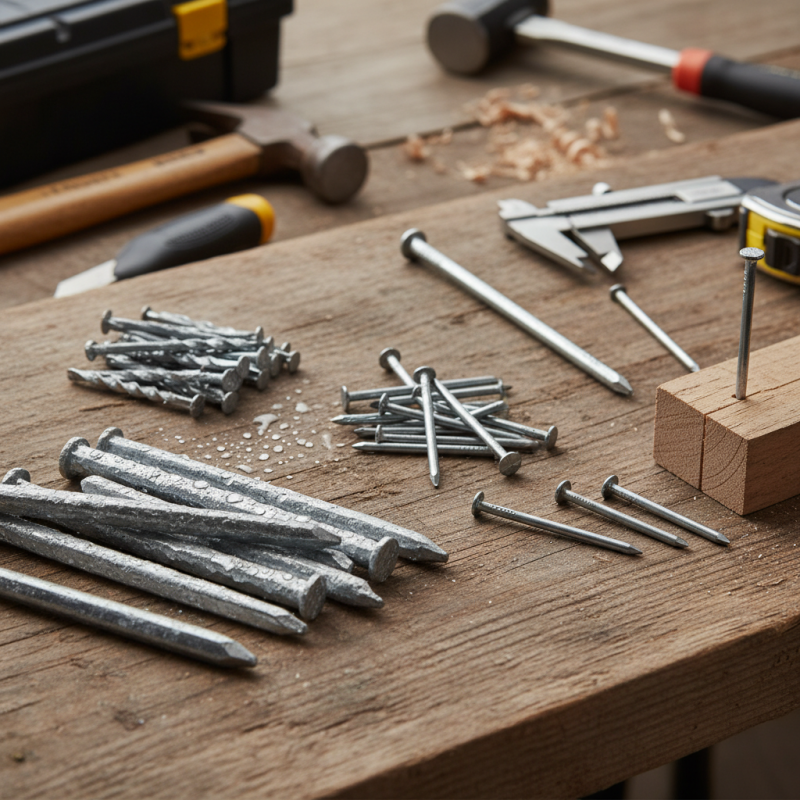
When selecting galvanized nails for your project, it's crucial to understand their types. Common varieties include smooth shank, ring shank, and spiral shank. Smooth shank nails are great for indoor projects like attaching trim. They offer ease of use but may lack holding power. Ring shank nails provide superior grip. They are ideal for outdoor and structural applications.
Consider the coating thickness as well. Thicker coatings are more resistant to rust, making them suitable for high-moisture environments. You might find yourself facing a dilemma: choosing the right balance between cost and durability. Heavy-duty projects often require more robust options. However, if your project is minor, lighter nails might suffice. Remember, choosing the wrong type can lead to project failure.
Examine your project's specific needs. Will it face extreme weather? Will aesthetics matter? Sometimes, the right nail choice may be overlooked for better pricing. Assess the potential for corrosion and structural integrity. A little reflection on these choices can make a big difference.
Evaluating Corrosion Resistance Ratings of Galvanized Nails
When selecting galvanized nails for a project, understanding corrosion resistance is crucial. Different environments can greatly affect the longevity of the fasteners. For example, nails exposed to coastal areas with saltwater may corrode faster than those used in dry conditions. According to industry reports, nails with a thicker galvanization layer often resist corrosion better.
The corrosion resistance rating is determined primarily by the thickness of the zinc coating. A typical rating for standard galvanized nails is G90, which indicates a zinc coating of 0.90 ounces per square foot. However, heavier coatings, such as G185, offer improved protection in harsher environments. Studies show that G185 nails can last up to twice as long in severe conditions compared to G90 nails.
In practice, choosing the right rating can be tricky. Some projects may only require temporary solutions while others demand durability. Evaluating the specific application is critical. It’s a common oversight to assume all galvanized nails are equal. This misunderstanding can lead to premature failures and costly repairs. Always consider the environment and load requirements before making a choice. Understanding these nuances can save time and resources.
Selecting the Appropriate Size and Length for Your Project Needs
Choosing the right size and length of galvanized nails is crucial for your project. It affects both strength and durability. For light-duty tasks, shorter nails may suffice. But they can fail under heavy stress. Measuring accurately is key. Consider the materials you will use. The thickness of the wood or other material greatly impacts your choice.
For wooden structures, a general rule is to use nails that are three times the thickness of the material. However, is it always true? Sometimes, specific designs call for shorter or longer nails. Experimentation can lead to better results. Using overly long nails can split the wood. Conversely, too short nails may not provide enough hold.
Pay attention to the application environment as well. If nails will face moisture, using appropriately sized galvanized nails prevents rust. Are you working indoors or outdoors? Different conditions demand different considerations. Always reflect on the intended use. Testing a few sizes before settling can help. Trial and error sometimes reveal unexpected insights.
How to Choose the Right Galvanized Nails for Your Project
Assessing Load-Bearing Capacities of Galvanized Nails in Construction
When selecting galvanized nails for construction, understanding their load-bearing capacities is crucial. Galvanized nails offer corrosion resistance, which is ideal for outdoor projects. However, not all nails are created equal. The size, length, and gauge of the nail can significantly affect its strength. For heavier materials, larger nails are often necessary to ensure stability.
It’s essential to assess the specific load each nail will carry. Many people overlook this step, resulting in inadequate support for structures. Overestimating a nail's strength can lead to failures. For example, a smaller gauge nail may bend under pressure, compromising the integrity of the entire project.
Remember that factors like the type of wood also play a role. Softer woods may not hold nails as securely as harder varieties. One potential mistake is using the same nail for various applications. Nails designed for lighter tasks may not perform well under heavy loads. Always evaluate your project requirements carefully before making a choice. This reflection can save time and resources in the long run.
How to Choose the Right Galvanized Nails for Your Project?
| Nail Type | Length (inches) | Diameter (gauge) | Load-Bearing Capacity (lbs) | Common Uses |
| Finish Nail | 2 | 16 | 40 | Trim, molding |
| Common Nail | 3 | 12 | 75 | Framing, decking |
| Box Nail | 2.5 | 15 | 60 | Light framing, sheathing |
| Roofing Nail | 1.5 | 11 | 30 | Roofing shingles |
| Decking Nail | 3.25 | 11 | 80 | Decking |
Identifying Industry Standards for Quality of Galvanized Nails
When selecting galvanized nails, it’s crucial to ensure they meet industry standards. Quality often varies significantly among manufacturers. One important standard is the coating thickness. A thicker coating generally indicates better corrosion resistance. This is essential for outdoor projects or areas with high humidity.
Look for nails that comply with ASTM or similar standards. These ensure that nails undergo rigorous testing. However, not all suppliers provide this information clearly. Some may make claims that sound impressive but lack certification. Inspecting the product details is necessary.
Consider the nail's intended use. Roofing, framing, or fencing each requires different specifications. The size and gauge also impact performance. Sometimes, a lower gauge means more strength, but it also includes weight. Balancing these factors is challenging. The wrong choice can lead to weak structures. Always ask questions before purchasing. Ignorance can lead to costly mistakes.