
Choosing the best Dehumidifier Controller begins with understanding the room, not chasing the most impressive specification. A basement, archive room, greenhouse, and laundry area need different humidity responses. The right controller should read relative humidity accurately, maintain a stable setpoint, and communicate clearly with the dehumidifier. A bright display helps, but sensor accuracy matters more.
Building-science expert Dr. Joseph Lstiburek has warned, “Moisture is a building’s worst enemy.” His point remains practical. Excess humidity can leave condensation on a cold window, create a damp smell, and gradually damage stored materials. A reliable controller helps prevent these problems through sensible automation. Look for adjustable humidity settings, sensor calibration, compressor delay protection, and compatibility with the equipment’s voltage and control signal. Drain-pump support can also prevent an overflowing collection bucket.
Small details matter.
In real installations, controller placement often receives less attention than brand selection. A sensor mounted beside a doorway may detect drafts instead of room conditions. One installed near a vent can produce misleading readings. That is an easy mistake, and an expensive one if comfort becomes unstable. Energy use, noise, wiring complexity, warranty support, and replacement availability deserve equal consideration. The most advanced controller is not always the best choice. Sometimes, a simple, well-calibrated device performs more reliably. This guide compares those practical factors, while acknowledging one uncomfortable truth: no Dehumidifier Controller can correct poor drainage, weak ventilation, or incorrect installation.
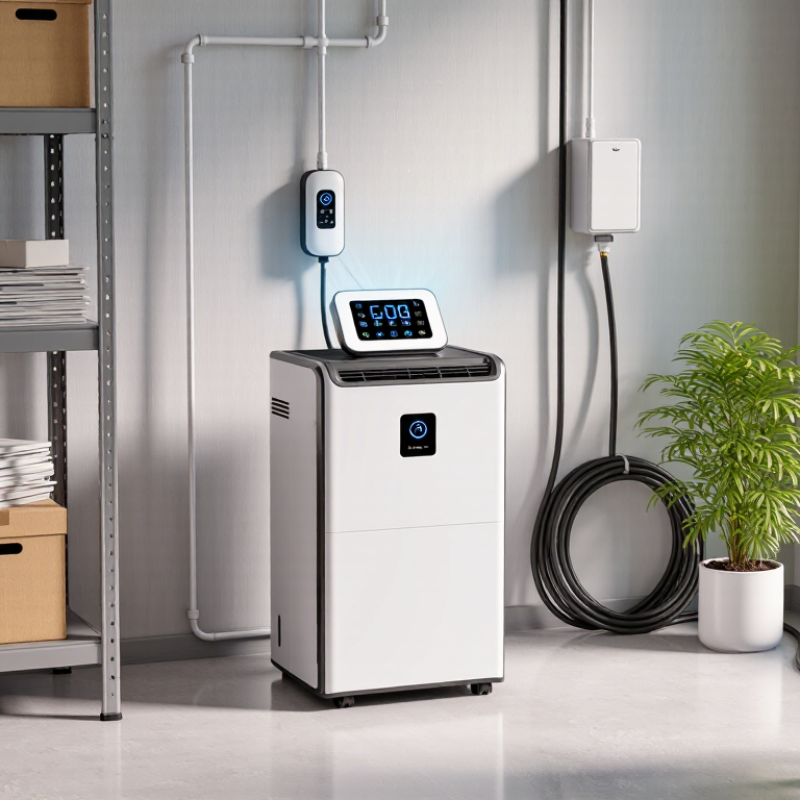
A dehumidifier controller is the system’s decision-maker. It measures indoor relative humidity and starts or stops the dehumidifier near a selected target. Without accurate control, a unit may run too long, waste electricity, or leave rooms damp.
The U.S. Environmental Protection Agency recommends maintaining indoor humidity between 30% and 50%.
It also warns that levels above 60% can encourage mold growth.
Choosing the right controller begins with sensor accuracy and placement. Look for a calibrated humidity sensor, adjustable setpoints, and a visible display.
A sensor near a bathroom door may react to a short shower instead of the whole room. Place it away from windows, vents, and direct airflow. The National Institute of Standards and Technology notes that sensor performance can change with temperature and aging. Regular checking matters. Small errors become expensive over time.
Control range is important, too. A narrow differential can cause frequent cycling, while a wide differential may create noticeable dampness.
Energy Star testing data shows that dehumidifier efficiency is commonly assessed through liters of water removed per kilowatt-hour.
The controller affects how often that efficiency is used. A drain-full switch, compressor delay, and alarm function add practical protection.
Smart connectivity sounds useful, but it should not replace a reliable local control.
No controller is perfect. I would still compare its reading with a separate hygrometer, especially during the first week.

How to Choose the Best Dehumidifier Controller?
Matching a controller with your dehumidifier starts with the unit’s control method. Check whether it accepts an external low-voltage signal or requires switched power. These systems are not interchangeable. Read the wiring diagram carefully. A controller designed for a 24-volt circuit can fail on a higher-voltage connection. The relay rating must also exceed the dehumidifier’s starting current, not only its running current.
Sensor placement affects accuracy. Install the humidity sensor away from supply air, windows, and direct sunlight. In a basement, place it about one meter above the floor. A practical target is usually 45% to 55% relative humidity. However, the best setting depends on temperature, building materials, and stored items. Use a separate reference hygrometer during setup. Small readings can still matter.
Compressor models need a short-cycle delay. This prevents rapid starts that may reduce service life. Confirm that the controller supports restart protection and remembers settings after a power interruption. Some portable units will not restart automatically, even when the controller sends power. That detail is easy to miss. I once focused on sensor accuracy and overlooked the restart function; the room became humid again overnight. Testing the complete system for several days is wiser than trusting a single reading. Keep the manual nearby. Installation practices can vary between otherwise similar units.
| Matching Dimension | What to Check on the Dehumidifier | Recommended Controller Specification | Why It Matters | Compatibility Guidance |
|---|---|---|---|---|
| Supply Voltage | Read the voltage and frequency shown on the rating label, such as 120 V / 60 Hz or 230 V / 50 Hz. | Choose a controller with the same nominal voltage and compatible frequency. A universal-input controller may accept a wider range, such as 100–240 V AC, if specified. | A voltage mismatch can cause malfunction, overheating, or electrical damage. | Must match |
| Load Type | Determine whether the controller will switch a compressor, fan motor, electronic power supply, or a complete appliance. | Use a relay or contactor interface rated for inductive loads when switching compressors or motors. Use a suitable solid-state output only when its load requirements are supported. | Motors and compressors create higher starting currents than their normal running current. | Must match the load |
| Maximum Switching Current | Check the appliance's rated current and, where available, its locked-rotor or starting-current information. | Select a switching device with a continuous current rating above the measured running current and an approved motor or inductive-load rating. Use a contactor for larger loads. | A relay rated only for resistive loads may fail prematurely when used with a compressor. | Do not size by watts alone |
| Control Method | Identify whether the dehumidifier accepts a dry contact, low-voltage signal, digital command, or only direct mains switching. | Match the controller output to the input method. A dry-contact controller is appropriate only when the appliance provides a compatible external-control terminal. | Connecting mains voltage to a low-voltage or dry-contact input can permanently damage the appliance. | Verify the wiring diagram |
| Humidity Measurement Range | Define the intended operating range, for example residential rooms, basements, storage areas, or process spaces. | Choose a controller with a suitable relative-humidity range, commonly 20–95% RH or wider, and an adjustable setpoint. | The controller must measure accurately across the humidity conditions where the appliance operates. | Match the application range |
| Humidity Setpoint and Differential | Check the dehumidifier's desired target humidity and whether frequent on/off cycling is a concern. | Use an adjustable setpoint and hysteresis, often with a differential of approximately 2–10% RH depending on the application. | A suitable differential prevents rapid switching and helps maintain stable humidity. | Adjustable is preferred |
| Sensor Type and Cable Length | Consider the installation location, air circulation, temperature, condensation risk, and distance from the controller. | Select a sensor designed for relative humidity measurement, with a cable length suitable for the installation. Keep the sensor away from direct airflow, heat sources, and water spray. | Poor sensor placement can produce inaccurate readings and unnecessary operation. | Match the environment |
| Compressor Protection Delay | Check whether the appliance uses a refrigeration compressor and whether it already includes restart protection. | Choose a controller with an adjustable anti-short-cycle delay, commonly around 3–10 minutes, unless the dehumidifier already provides this function. | A restart delay helps prevent rapid compressor cycling after power interruption or a change in humidity. | Recommended for compressor models |
| Minimum On/Off Time | Review the manufacturer's requirements for minimum compressor run time and rest time. | Use a controller with configurable minimum on-time and off-time when the appliance requires operational cycling limits. | Proper timing can reduce wear and improve moisture-removal performance. | Follow appliance instructions |
| Power-Failure Recovery | Determine whether the dehumidifier should resume its previous state after a power interruption. | Choose a controller with non-volatile memory or automatic restart if unattended operation is required. | Automatic recovery is useful in basements, vacation properties, and equipment rooms. | Useful for unattended systems |
| Operating Temperature | Identify the lowest and highest ambient temperatures at the installation site. | Select a controller and sensor with rated operating temperatures covering the complete site range. Many general-purpose units are designed for indoor ambient conditions, but the exact limits vary. | Operation outside the rated range can reduce accuracy or shorten service life. | Check the technical datasheet |
| Enclosure and Moisture Protection | Assess exposure to condensation, splashing water, dust, and high humidity. | Use an enclosure with an appropriate ingress-protection rating for the location, and install it according to the manufacturer's requirements. | The controller may be exposed to the same humid conditions as the dehumidifier. | Indoor dry locations are simplest |
| Alarm and Drainage Inputs | Check for a full-tank switch, condensate-pump alarm, overflow sensor, or fault output. | Choose a controller that supports an external interlock or alarm input when automatic shutdown is needed. | An interlock can stop operation when condensate cannot be safely removed. | Recommended for permanent drainage systems |
| Installation and Electrical Safety | Confirm the installation method, grounding arrangement, circuit protection, and local electrical requirements. | Use a controller with appropriate electrical approvals for the installation region and provide required overcurrent protection. Mains wiring should be completed by a qualified person. | Correct protection reduces shock, fire, and equipment-damage risks. | Safety requirements are mandatory |
| Final Compatibility Check | Compare the dehumidifier manual, rating label, terminal diagram, controller datasheet, and installation conditions. | Proceed only when voltage, output type, load rating, sensor range, timing functions, and environmental ratings are all compatible. | A controller is suitable only when the complete electrical and environmental system is compatible. | Verify every parameter before installation |
Note: The values shown are common selection ranges and technical considerations, not universal specifications. Always follow the dehumidifier and controller manufacturer's installation instructions and applicable electrical codes.
Choosing a dehumidifier controller starts with the humidity target, not the display. In real rooms, relative humidity changes near cold walls, windows, or wet laundry. Select a controller with an adjustable humidistat and a clear RH reading. A practical home range is often 45% to 55%, but the correct setting depends on temperature and building materials. Avoid controls offering only “low,” “medium,” and “high.” They hide important operating decisions. A compressor delay protects equipment after power interruptions. Auto-restart is useful, although I would not rely on it without checking the room afterward.
Tips: Place the humidity sensor away from exhaust air, windows, heaters, and direct sunlight. At chest height, it usually measures room conditions better than a floor-level position. Choose a sensor with stated accuracy and calibration guidance. A small error matters. A reading of 50% may actually be 55%. For basements, an external probe can improve control when the unit sits in a corner. Add a high-humidity alarm if stored materials or instruments matter. Test it with a separate meter.
Look for adjustable hysteresis, such as a two-to-five-point gap, to prevent rapid cycling. A washable filter reminder helps, but it does not replace maintenance. In my experience, remote monitoring sounds valuable, yet weak Wi-Fi can make it unreliable. Manual controls should still work. I would also check noise and sensor response time before installation. The best controller is not the most complicated one. It is the one that keeps conditions stable and gives trustworthy warnings.
Choosing the best dehumidifier controller starts with installation, not the display. Check whether it needs low-voltage terminals, a dedicated relay, or a separate power supply. Confirm the cabinet has enough space for wiring and sensor access. A controller may fit physically but fail electrically. That mistake is surprisingly common.
The U.S. Environmental Protection Agency recommends indoor relative humidity between 30% and 50%. Therefore, choose a sensor with clear calibration options and a visible humidity reading. The Air-Conditioning, Heating, and Refrigeration Institute’s AHAM DH-1 standard rates dehumidifier capacity at 80°F and 60% relative humidity. Real rooms vary widely, so test figures cannot predict every basement or bathroom. Compare controllers under the same conditions. Do not trust one number.
Compatibility also depends on communication. Some controllers use dry contacts, while others require proprietary signals. Verify voltage, maximum load, sensor type, and restart behavior before purchase. The U.S. Department of Energy’s appliance testing guidance shows why standardized conditions matter, but installation details still decide daily performance. Look for adjustable setpoints, alarm history, simple menus, and a manual override. Small screens matter. A complicated interface can cause incorrect settings. In field checks, installers often value accessible terminals more than extra features. That preference deserves attention, although it is not universal. Condensation drainage, cable length, and power recovery after an outage should be tested before final mounting.
How to Choose the Best Dehumidifier Controller?
Energy savings begin with accurate humidity control, not the lowest purchase price. A controller that starts too often can waste electricity and shorten compressor life. Look for adjustable humidity settings, narrow operating ranges, and a visible reading that responds quickly. In a storage room, maintaining 45–55% relative humidity may protect materials without excessive drying. Test the setup with a plug-in energy meter for one week. Real readings beat optimistic packaging claims.
Reliability depends on the sensor, relay, and recovery behavior. Choose a unit with a replaceable or calibratable sensor, clear alarm functions, and a relay rated above the dehumidifier’s operating load. It should restart safely after a power interruption. Dust and condensation can distort measurements, especially near doors or cold walls. Placement matters. A controller may seem accurate on a workbench but perform poorly in a damp corner.
Overall value includes electricity, maintenance, downtime, and replacement parts. A cheaper controller becomes expensive if its sensor drifts after one season. Check the warranty terms, technical documentation, and availability of compatible sensors before buying. Independent test data is useful, but it is not perfect. Room size, temperature, and door openings change results. Run a simple comparison under similar conditions, and record humidity, runtime, and energy use. The spreadsheet may reveal an uncomfortable result: the most advanced features are not always worth paying for.
3295 Cobb International Blvd.
Kennesaw, GA 30152
800-367-1377
sale@patiostools.com
© 2023 - Marsh Instruments