
Choosing the right Upvc Ball Valve can determine whether a fluid system runs quietly for years or develops costly leaks within months. Global buyers often compare price first, yet material grade, pressure rating, seal design, and production consistency deserve closer attention. A valve may look identical in a product photograph, but its body can feel different in the hand, and its stem may turn smoothly or stiffly.
Dr. Donald C. Rennie, author of the Valve Selection Handbook, emphasized a practical principle: “The correct valve is selected for the service, not merely for the pipe size.” That advice remains valuable for buyers evaluating international suppliers. An Upvc Ball Valve should match the medium, operating temperature, pressure range, connection standard, and expected cycling frequency. It should also include traceable test records and clear technical documentation.
Small details matter.
A reinforced handle, accurately molded socket, and dependable EPDM or FKM seal can improve field performance. However, no manufacturer should be judged by catalog language alone. Factory audits, sample testing, dimensional checks, and feedback from actual installations provide stronger evidence. Certifications also require careful review because approval scope may differ by market and application.
This guide examines leading Upvc Ball Valve manufacturers for global buyers. It considers product quality, manufacturing experience, customization capacity, testing practices, delivery reliability, and after-sales support. The comparison is not absolute. Supplier performance can change over time, and even a respected producer may not suit every project. Careful verification remains essential.
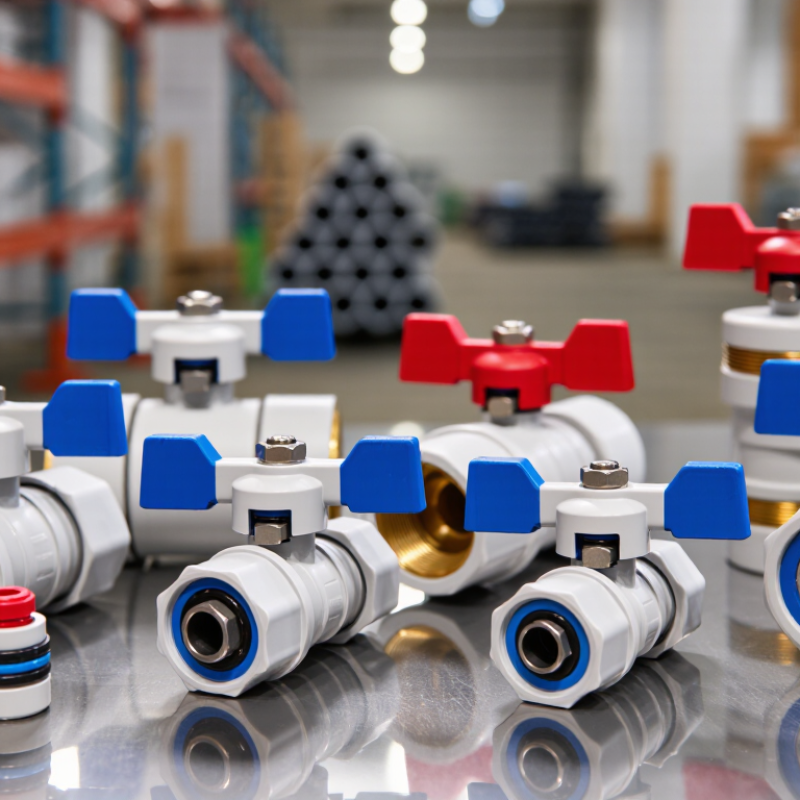
UPVC ball valves are shutoff devices made from unplasticized polyvinyl chloride. A polished ball turns inside the body. A quarter-turn handle opens or blocks the flow. The material resists rust, scale, and many diluted chemicals. It is also lightweight, which simplifies installation in crowded pump rooms. However, UPVC is not suitable for every temperature or pressure. Buyers must check the manufacturer’s pressure-temperature chart, seal material, and connection standard.
Common applications include cold-water distribution, irrigation, aquaculture, swimming pools, and wastewater systems. They also serve chemical dosing lines when chemical compatibility has been verified. The 2024 United Nations World Water Development Report highlights continuing pressure on global water resources. That pressure increases demand for dependable, low-maintenance flow-control equipment. The WHO and UNICEF Joint Monitoring Programme reported that 2.2 billion people lacked safely managed drinking water in 2022. This figure explains why simple, repairable valves remain important in developing infrastructure.
Installation details matter. Solvent-welded joints need clean, dry pipe surfaces. Threaded connections require careful alignment and suitable sealing tape. A valve may look identical but perform differently under heat, vibration, or abrasive water. That is an easy point to underestimate. Global buyers should request test records, material certificates, dimensional drawings, and compliance evidence for the target market. Standards such as ISO 1452 and NSF/ANSI 61 may be relevant, depending on the application. UPVC is practical, but only when its limits are respected.
Top UPVC Ball Valve Manufacturers for Global Buyers
How to Evaluate UPVC Ball Valve Manufacturers
A reliable manufacturer should explain resin selection, molding control, and final inspection without vague promises. Ask for material data, pressure ratings, dimensional drawings, and batch traceability records. Test the details. Request samples from current production, not only polished display units. Inspect thread accuracy, handle movement, sealing surfaces, and body consistency under light.
Experienced suppliers can describe how UPVC valves perform with water, mild chemicals, and changing temperatures. Their technical team should explain compatibility limits clearly. Review pressure testing methods, inspection frequency, and equipment calibration records. Ask whether tests follow recognized international standards applicable to your destination market. A certificate alone proves little if nobody can explain its scope.
Production capacity matters, but process stability matters more. Visit the facility when practical, or request dated inspection videos and independent audit reports. Check packaging, storage conditions, lead times, and replacement procedures for defective goods. I have learned that fast quotations can hide slow technical replies. That warning is easy to overlook. Evaluate communication across several weeks, including one difficult question. A dependable supplier admits limitations, documents corrective actions, and keeps specifications consistent after the order is placed.
A practical evaluation framework for comparing UPVC ball valve manufacturers without relying on brand reputation alone.
| Evaluation Dimension | What to Check | Recommended Benchmark | Documents or Evidence to Request | Suggested Weight |
|---|---|---|---|---|
| Material Composition | Virgin PVC-U or UPVC resin, stabilizers, pigments, seals, and compatibility with the intended fluid. | Material specification should clearly identify UPVC/PVC-U body material and sealing compound. | Material datasheet, resin declaration, seal material specification, and compliance statement. | 12% |
| Pressure Rating | Nominal pressure at the intended operating temperature, connection type, and valve size. | Pressure rating must be stated by size and temperature; do not compare pressure values without checking the test basis. | Technical catalogue, pressure-temperature chart, and product test report. | 14% |
| Temperature Range | Operating temperature limits for the valve body, seats, and seals. | The stated range should match the application and the chemical resistance of all wetted components. | Temperature chart, seal specification, and application suitability declaration. | 8% |
| Dimensional Compatibility | Socket, threaded, flanged, or union-end dimensions; pipe standards; face-to-face length; and actuator interface. | Dimensions should be documented against a recognized piping or connection standard applicable to the target market. | Dimension drawings, CAD files, connection standard reference, and sample inspection report. | 10% |
| Leakage Performance | Shell integrity, seat sealing, stem sealing, and performance after repeated opening and closing. | Every production batch should follow a documented pressure and leakage test procedure. | Inspection and test plan, sample test records, and third-party laboratory results when required. | 14% |
| Chemical Resistance | Resistance to acids, alkalis, salts, treated water, irrigation chemicals, and other specified media. | Suitability must be confirmed for the exact concentration, temperature, and exposure time of the application. | Chemical-resistance chart, technical recommendation, and written application confirmation. | 10% |
| Manufacturing Quality Control | Incoming material inspection, injection-molding control, assembly checks, traceability, and final inspection. | A documented quality system should cover raw materials, in-process checks, final testing, and corrective actions. | Quality manual, process flow, inspection records, calibration certificates, and audit report. | 12% |
| Product Certification | Certifications or approvals required for the destination country, industry, drinking-water use, or fire-related application. | Certificates must apply to the exact product, material, size range, and manufacturing site being offered. | Valid certificates, scope pages, test reports, certificate-holder details, and expiry dates. | 8% |
| Customization Capability | Private labeling, actuator mounting, connection options, color, packaging, drawings, and small design changes. | Customization should be supported by engineering drawings, approval samples, and controlled change procedures. | Sample approval process, customization catalogue, tooling policy, and engineering change records. | 6% |
| Supply Capacity | Monthly production capability, tooling availability, raw-material supply, lead time, and peak-season planning. | Capacity claims should be supported by production records and a realistic delivery schedule. | Capacity statement, production plan, lead-time commitment, and business continuity plan. | 6% |
| Export and Packaging Readiness | Export documentation, carton protection, palletization, labeling, spare parts, and shipping marks. | Packaging should protect threaded, socket, flange, and union components during international transport. | Packing specification, export document sample, carton test information, and loading photographs. | 4% |
| After-Sales Support | Technical response time, installation guidance, warranty terms, replacement parts, and complaint handling. | Warranty coverage and response procedures should be written, measurable, and applicable to the purchasing contract. | Warranty policy, service-level commitment, spare-parts list, and complaint-resolution procedure. | 4% |
Buyer guidance: score each manufacturer from 1 to 5 for every dimension, multiply the score by the suggested weight, and verify all critical claims with product-specific documents and pre-shipment inspection results.
Choosing top UPVC ball valve manufacturers for global buyers requires more than comparing unit prices. Experienced suppliers show clear material specifications, pressure ratings, temperature limits, and production records. Their valves should use consistent UPVC compounds, clean machining, and dependable sealing seats. Small details matter, especially thread accuracy and handle strength.
Ask for sample valves before placing a large order. Test them with water, inspect the body for molding defects, and rotate the handle repeatedly. A reliable manufacturer can provide batch numbers, dimensional reports, pressure-test results, and packing details. Certificates should match the actual product, not merely decorate a sales file. This point is often missed.
Global projects also need stable communication and practical logistics. Check minimum order quantities, spare-part availability, export packaging, and delivery performance. The best manufacturer is not always the cheapest. A low quotation may hide weak inspection or inconsistent raw materials. No supplier is perfect. Even strong factories can make mistakes when specifications are vague. Share pipe sizes, media, pressure, temperature, connection standards, and installation conditions in writing. Then review the drawings carefully. That extra step can prevent leaks, delays, and costly replacement work.
When comparing UPVC ball valve manufacturers, start with product quality, not the lowest quotation. Check the valve body for even wall thickness, clean molding, and accurate threads. The handle should turn smoothly without excessive looseness. Ask for pressure-test records, cycle-test results, and material traceability for every production batch.
Certifications need careful review. ISO 9001 indicates a quality management system, but it does not prove that every valve performs well. For industrial applications, request compliance evidence for relevant standards, such as ISO 16135 or applicable ASTM specifications. Potable-water projects may require additional approvals, including NSF/ANSI 61 or equivalent local certification. Confirm the certificate holder, product range, testing laboratory, and validity date. A copied certificate is not enough.
Pricing should include more than the unit cost. Compare valve size, pressure rating, seal material, packaging, inspection fees, shipping, and replacement support. Request samples from the intended production batch. A sample may perform perfectly while later batches show uneven seats or weak handles. That risk deserves attention. Ask how rejected valves are recorded and corrected. I have found that clear inspection photos and batch reports often reveal more than polished sales language. Low pricing can be useful, but unexplained discounts deserve a second look. A reliable supplier explains both strengths and limitations without promising perfection.
Before placing an order, importers should verify the valve’s actual specifications, not just its catalog images. Confirm the UPVC grade, connection size, pressure rating, operating temperature, and sealing material. These details must match the fluid, piping system, and installation environment. A bright finish proves little.
Request technical drawings with tolerances, material declarations, test procedures, and batch traceability records. Ask whether each valve receives pressure and leakage testing before shipment. Independent inspection can be useful for large orders. However, inspection cannot replace a clear purchase specification.
Order samples from the same production line planned for mass manufacturing. Check handle movement, thread accuracy, socket depth, and body thickness. Test several cycles after installation. A sample may pass while later batches vary; this risk deserves written controls. I have seen importers focus on unit price and overlook spare seals, carton strength, or labeling. That mistake becomes expensive.
Review the manufacturer’s production experience, quality system, export history, and response time. Request references from comparable industrial applications when possible. Confirm packaging details, delivery terms, warranty limits, and the process for handling defective units. Keep every approved drawing and change record. Small changes matter. Also verify that product documentation supports the destination market’s current technical and safety requirements. Supplier claims should be measurable, documented, and easy to audit.
3295 Cobb International Blvd.
Kennesaw, GA 30152
800-367-1377
sale@patiostools.com
© 2023 - Marsh Instruments