What are Liquid Filled Gauges and How Do They Work?
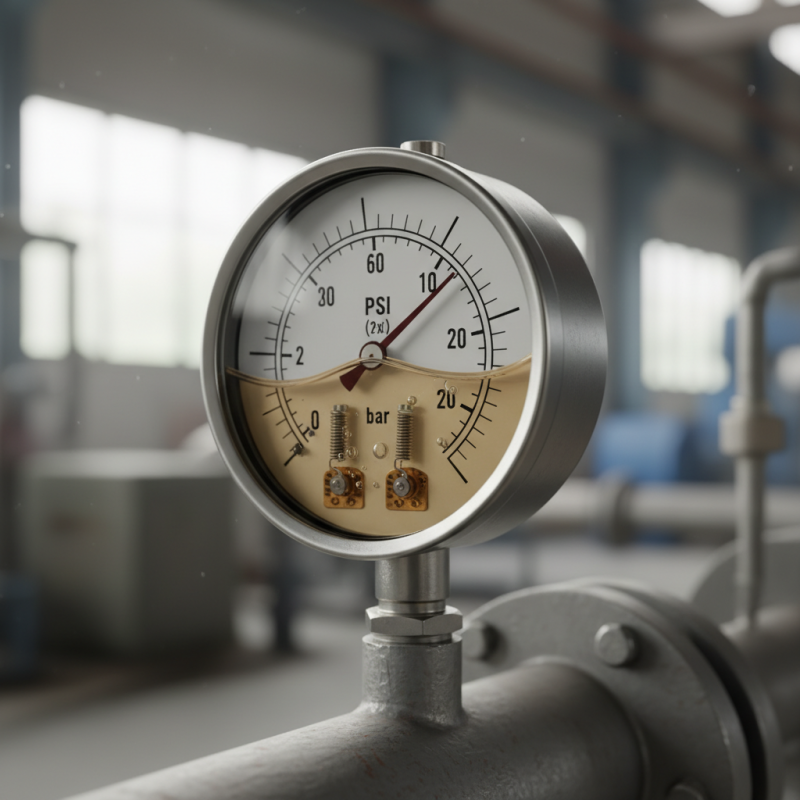
Liquid filled gauges are essential tools in various industries. They measure pressure accurately, even in tough environments. These gauges contain a liquid, often glycerin or silicone, that dampens vibrations. This helps maintain accuracy and extends their lifespan.
The design of liquid filled gauges also improves readability. The liquid stabilizes the needle movement, providing a steady reading. These gauges perform well in high-temperature and high-vibration situations. They can face challenges, such as overfilling or improper calibration. Users should regularly check and maintain their gauges for optimal performance.
In summary, understanding liquid filled gauges is crucial for reliable measurements. Their unique construction balances durability and precision. Investing in quality options can prevent costly errors in industries where accuracy is key.
What Are Liquid Filled Gauges?
Liquid filled gauges are essential tools used to measure pressure in various industrial applications. They contain liquid, often glycerin or silicone oil, which dampens vibrations and protects the internal components. This design enhances accuracy and prolongs the gauge's lifespan. According to a market study, the global pressure gauge market is projected to grow at a CAGR of 5.2% between 2022 and 2029. This growth highlights the increasing reliance on accurate pressure measurements in sectors like oil and gas, pharmaceuticals, and food processing.
The liquid filling in these gauges also helps in temperature control. They can withstand temperature fluctuations, which is crucial for consistent readings. However, not all applications benefit from this design. In high-temperature environments, the liquid may expand or evaporate, leading to inaccurate measurements. Engineers must evaluate their specific needs before choosing liquid-filled gauges.
**Tip:** Regularly check the calibration of your liquid-filled gauge for optimal performance. This ensures the readability and reliability of your measurements.
Improper installation can lead to challenges. If the gauge is not correctly aligned, it may give false readings. Pressure fluctuations in the system can also affect the accuracy. It’s important to consider the environment where the gauge will be used. This way, you can avoid common pitfalls and ensure reliable pressure readings.
Liquid Filled Gauges Pressure Measurement
Principles of Functionality in Liquid Filled Gauges
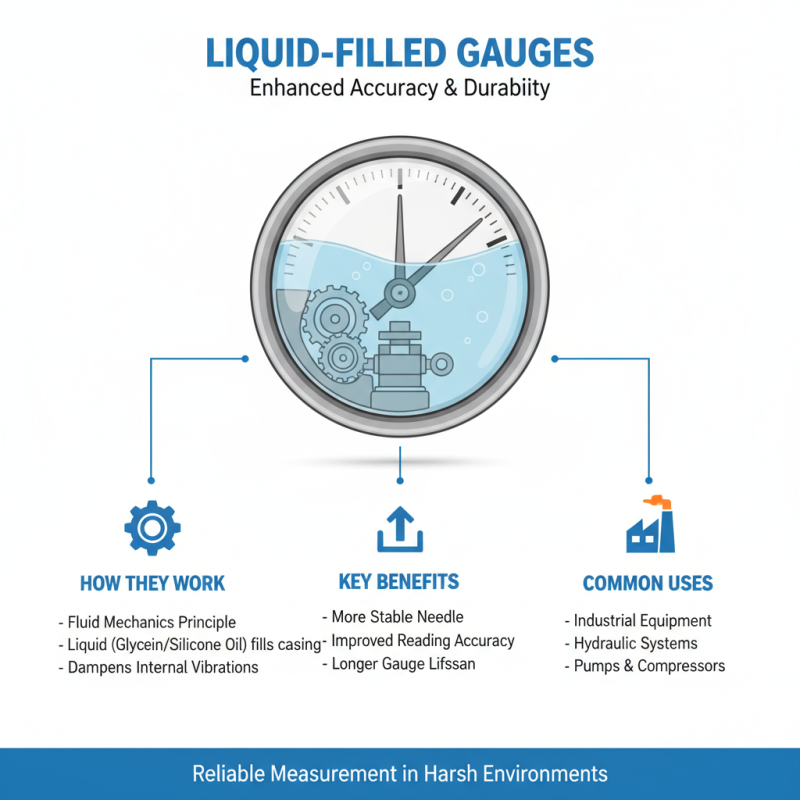
Liquid filled gauges are instruments designed to measure pressure or temperature in various applications. Their functionality hinges on the principle of fluid mechanics. The liquid inside the gauge absorbs and dampens vibrations. This leads to more accurate readings. Common liquids used are glycerin or silicone oil. These liquids provide a cushioning effect that stabilizes the needle position.
When external pressure changes occur, the liquid moves. This movement then translates to the gauge's needle, providing a visual readout. The design also minimizes the effects of temperature fluctuation. However, challenges persist. Some users report issues with the fluid leaking over time. This can impact the gauge's accuracy. Moreover, high temperatures can degrade the liquid, affecting performance. Regular maintenance checks are essential to ensure reliable functionality.
Understanding the principles of liquid filled gauges helps users utilize them effectively. Familiarity with their operation enhances accuracy in various applications. Yet, recognizing the limitations of these devices is equally crucial. Continuous monitoring and maintenance can prevent potential problems. This ultimately ensures that the gauges provide precise and reliable measurements.
Types of Liquid Fill Used in Gauges
Liquid-filled gauges are essential instruments in various industries. They rely on different types of liquid fills to provide accuracy and reliability. The type of liquid used can significantly influence the gauge's performance.
One common liquid fill is glycerin. It offers high viscosity, which dampens vibrations and enhances accuracy. A report from the American Society of Mechanical Engineers found that glycerin-filled gauges can extend service life by up to 50%.
Another popular option is silicone oil. This liquid is non-toxic and maintains performance at extreme temperatures. Many sectors, including pharmaceuticals and food processing, prefer silicone for this reason.
However, it’s not without challenges. Factors like temperature changes can cause liquid evaporation. This can lead to pressure differences and inaccurate readings.
Some gauges may also require maintenance more frequently in harsh environments. Understanding the pros and cons of each liquid fill is vital for effective gauge selection. Each industry has unique needs, and the choice of liquid can greatly impact operational efficiency.
Applications and Benefits of Liquid Filled Gauges
Liquid filled gauges are widely used in various industries. They accurately measure pressure, temperature, and other parameters in challenging conditions. The liquid inside the gauge dampens vibrations and reduces wear. This feature makes them ideal for high-vibration environments. They prevent damage and help maintain accurate readings over time.
Applications of liquid filled gauges are diverse. They are often seen in hydraulic systems, oil and gas environments, and industrial processes. In construction, these gauges ensure equipment operates safely under pressure. Their reliable readings can enhance operational efficiency. However, one must consider the potential for liquid leaks. Regular maintenance is crucial to spot any signs of wear.
Benefits of liquid filled gauges include enhanced durability and readability. The liquid boosts the gauge's lifespan, reducing replacement costs. It also provides clear readings, even in difficult conditions. However, it's essential to choose the appropriate fluid for the application. This choice can affect performance and safety. Users should weigh options carefully to avoid pitfalls.
Maintenance and Troubleshooting Tips for Liquid Filled Gauges
Liquid filled gauges are designed to measure pressure under various conditions. They are commonly used in situations where vibrations could lead to inaccurate readings. The liquid inside dampens the effect of these vibrations. However, like any tool, they can face issues.
Regular maintenance is crucial for optimal performance. Check the gauge for leaks or visible damage. Tightening connections can help prevent fluid loss. Inspecting the liquid level is also important. Low fluid levels can lead to incorrect readings. Sometimes, the liquid may evaporate or leak.
Keep an eye on temperature changes. Extreme conditions can affect the gauge’s accuracy. If the gauge is malfunctioning, it might need recalibration. Dust and debris can accumulate and disrupt its function. Cleaning regularly can mitigate this risk.
If you notice erratic readings, consider replacing the gauge. A faulty gauge can lead to costly errors. Testing gauges before critical use is wise. Sometimes, the best approach is to consult a professional.
What are Liquid Filled Gauges and How Do They Work? - Maintenance and Troubleshooting Tips for Liquid Filled Gauges
| Feature |
Description |
Common Applications |
Maintenance Tips |
| Pressure Measurement |
Liquid filled gauges measure pressure via a Bourdon tube which moves with the pressure of the liquid inside. |
Hydraulic systems, pumps, and compressor applications. |
Regularly check the gauge for any signs of fluid leakage or internal damage. |
| Temperature Range |
The liquid inside helps dampen vibration and temperature fluctuations for more accurate readings. |
Oil and gas extraction, food processing, and HVAC systems. |
Ensure the gauge is suitable for the temperature of the application to avoid fluid expansion or contraction affecting readings. |
| Damping |
Liquid filling provides a damping effect to the pointer, stabilizing readings during fluctuation. |
Industrial equipment and machinery monitoring, automotive diagnostics. |
If readings are fluctuating, inspect for trapped air or bubbles in the gauge. |
| Material Compatibility |
Select gauges with materials compatible with the liquid and application to prevent degradation. |
Chemical processing and water treatment facilities. |
Review chemical compatibility of the gauge fluid and the process fluid regularly. |