Why Choose Liquid Filled Pressure Gauges for Accurate Readings?
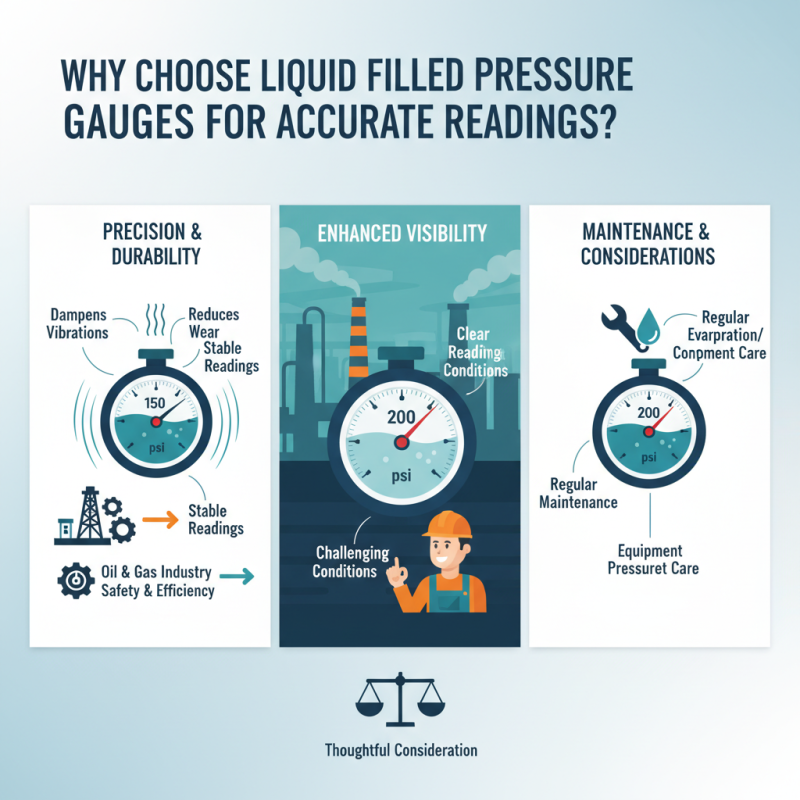
When it comes to precision in measuring pressure, liquid filled pressure gauges stand out. These gauges use a filling liquid to dampen vibrations and reduce wear. This feature is essential for environments with fluctuating pressures. In industries like oil and gas, accurate readings are crucial for safety and efficiency.
The filled liquid also provides better visibility. It enhances the readability of the gauge, even in challenging conditions. Imagine a busy factory floor where clear readings are vital. Liquid filled pressure gauges allow operators to make quick assessments. However, not all applications require these gauges. One must consider the specific conditions and pressures involved.
While these gauges offer many advantages, they also demand regular maintenance. Over time, the liquid can evaporate or become contaminated. It’s a reminder of the importance of care in equipment management. Choosing liquid filled pressure gauges is not just about accuracy; it's about thoughtful consideration of the environment.
Understanding Liquid Filled Pressure Gauges: Definition and Components
Liquid filled pressure gauges are essential tools for measuring pressure in various industrial applications. They contain a liquid, often glycerin or silicone oil, which dampens vibrations. This damping helps provide stable and accurate readings. The liquid inside the gauge also protects the delicate internal components from dust and moisture. This feature enhances the durability and lifespan of the gauge.
The primary components of a liquid filled pressure gauge include the Bourdon tube, the dial, and the connection port. The Bourdon tube is the heart of the gauge. As pressure enters the tube, it causes it to bend. This bending motion drives the pointer on the dial, displaying the pressure reading. Even minor inaccuracies can influence overall measurements. If the liquid level is too low or there are air bubbles, readings may become faulty. Regular checks are necessary to ensure reliable performance and accuracy.
Users often overlook the importance of maintaining liquid filled pressure gauges. Common issues like leakage or evaporation of the filling liquid can go undetected. Monitoring these gauges regularly is crucial. A slight change in the liquid can lead to misinterpretation of pressure levels, which could have significant consequences in critical applications. Keeping a close watch on these gauges ensures efficiency and safety in operations.
The Role of Liquid Filling in Enhancing Accuracy and Stability
Liquid filling in pressure gauges is a game-changer for accuracy. The liquid dampens vibrations and fluctuations. This means that readings become more stable. When there are rapid changes in pressure, a liquid-filled gauge responds better. The liquid acts like a shock absorber, helping to protect the internal mechanism.
Another key point is temperature variation. Liquid-filled gauges are less sensitive to thermal changes. This can lead to better performance in fluctuating environments. For instance, in outdoor settings, temperatures can shift quickly. Having a liquid-filled gauge helps maintain accuracy despite these environmental challenges.
Yet, it's important to consider maintenance. Liquid filling can sometimes trap gas or bubbles. This can interfere with readings. Regular checks are necessary to ensure everything operates smoothly. It's a reminder that even advanced technology requires attention for optimal performance.
Comparison of Liquid Filled and Dry Pressure Gauges in Industrial Applications
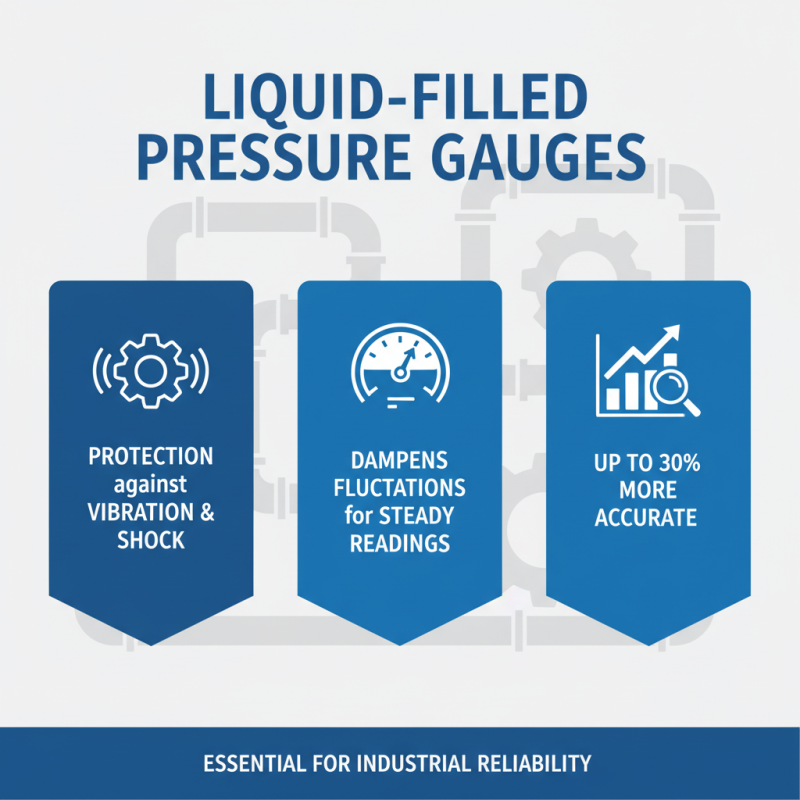
Liquid filled pressure gauges are essential in industrial settings. They provide enhanced protection against vibrations and shock. The liquid dampens fluctuations, allowing for steady readings. According to a recent industry report, liquid filled gauges can improve measurement accuracy by up to 30% compared to dry gauges.
On the other hand, dry pressure gauges are simpler and less expensive. They perform adequately in stable environments. However, in high-pressure situations or with continuous vibration, they often fail to deliver precise readings. Around 25% of industries report encountering issues with dry gauges under such conditions. This inconsistency can lead to operational risks and increased costs.
In extreme temperatures or corrosive environments, liquid filled gauges perform better. They resist temperature changes better than their dry counterparts. Industry data shows that 40% of users reported higher lifespan when choosing liquid filled options. Yet, liquid filled gauges may require more maintenance. This factors into long-term budgeting for operations. The choice between liquid filled and dry gauges impacts not just accuracy, but also overall system reliability.
Data on Performance: Error Margins and Calibration of Liquid Filled Gauges
Liquid filled pressure gauges are known for their accuracy. They minimize the effects of vibrations and shock. This is crucial in industrial settings where precision matters. According to a study by the American Society of Mechanical Engineers, liquid filled gauges have lower error margins. Typically, they show an error margin of 0.5% compared to 1% for dry gauges.
Calibration is vital to ensure reliable readings. Regularly calibrating liquid filled gauges helps maintain accuracy over time. Some data suggest that inaccurate calibration can lead to significant errors, sometimes exceeding 10% in pressure readings. This can affect safety and efficiency in operations. Liquid filled gauges often require less frequent recalibration. This is an advantage that can save time and reduce costs.
Despite their benefits, reliance on liquid filled gauges must be cautious. Environmental conditions can affect their performance. For instance, temperature changes can cause liquid expansion or contraction. This may skew readings. Thus, awareness of potential calibration issues is essential. Operators should routinely check for proper functioning to avoid misinterpretations.
Common Applications of Liquid Filled Pressure Gauges in Various Industries
Liquid filled pressure gauges are essential tools in many industries. They provide accurate readings, even in harsh conditions. This attribute makes them perfect for industries like oil and gas. These sectors often deal with extreme temperatures and vibrations. In such environments, liquid filled gauges can withstand shocks that traditional gauges can’t handle.
In manufacturing, these gauges find applications in hydraulic systems. Operators rely on their accuracy daily. Liquid filling helps dampen the effects of pulsation, leading to steadier readings. This is crucial, especially when precise pressure control is necessary. Without it, machinery may face malfunctions.
Food and beverage industries also benefit from these gauges. They ensure that pressure levels in processing equipment are consistently monitored. Any fluctuations can compromise quality. Liquid filled pressure gauges contribute to safer and more reliable operations. However, there's a risk of liquid leakage due to pressure changes. Regular maintenance is required to avoid potential issues. This can lead to operational disruptions if overlooked.
Common Applications of Liquid Filled Pressure Gauges in Various Industries