
Rccb Meaning refers to Residual Current Circuit Breaker, a device that monitors the electrical current flowing through a circuit. If some current leaks away from its intended path, the RCCB can disconnect the supply. That response may reduce the risk of electric shock and electrical fires. It is a safeguard, not a guarantee. An RCCB does not usually protect against overloads or short circuits, so it commonly works alongside a suitable circuit breaker or fuse.
Look inside a consumer unit and you may see several switches serving different circuits. Their labels can look similar, but their functions are not interchangeable. The right RCCB type depends on the current a device can produce during a fault. Type AC is intended for sinusoidal alternating residual current, while Type A also detects certain pulsating direct-current faults. Type F or Type B may be appropriate for some variable-speed appliances, electric-vehicle equipment, or other specialist loads. Details matter.
So, which type is best in 2026? There is no single answer for every home or installation. Appliance instructions, the existing protection, and local electrical requirements all affect the choice. A device that seems suitable on a product page may not match the actual circuit. That is easy to overlook. A qualified electrician can assess the installation and confirm the correct rating and type. This guide explains the key differences, common applications, and practical checks to consider before choosing an RCCB.
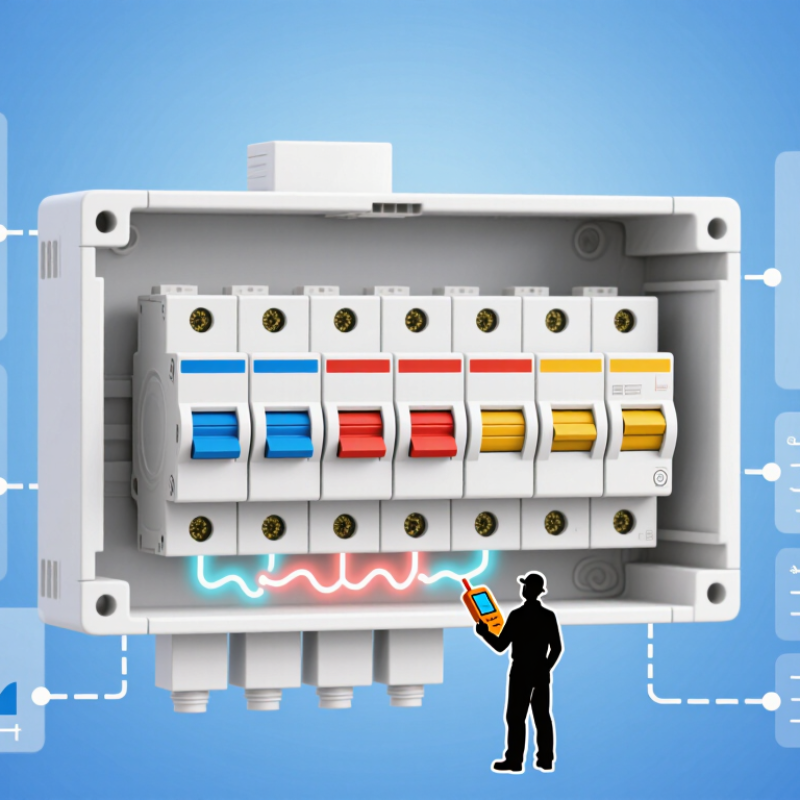
RCCB means Residual Current Circuit Breaker. It compares the current flowing through the live and neutral wires. Under normal conditions, those currents are nearly equal. If some current leaks to earth, the balance changes. The RCCB detects this difference and disconnects the circuit when it exceeds its rated threshold.
This can reduce the risk of electric shock and electrical fires caused by leakage faults. It does not prevent every shock or detect every dangerous condition.
An RCCB usually does not protect against overloads or short circuits. It needs suitable overcurrent protection, or those functions can be combined in an RCBO. Not a complete shield.
RCCB types also differ in the residual currents they can detect. Type AC responds to sinusoidal AC leakage; Type A also detects pulsating DC, which can occur with common electronic equipment. Other types serve particular equipment and should be selected with a qualified electrician.
Real installations vary. Choosing the right type can be less straightforward than a diagram suggests, especially with inverter-driven appliances. Check the device rating and follow its test-button instructions. The test button checks the mechanism, not the entire installation.

An RCCB, or residual current circuit breaker, compares the current flowing through live and neutral wires. If some current escapes to earth, it can disconnect the circuit and help reduce electric-shock risk. It does not protect against overloads or short circuits. That distinction matters.
An MCB handles those overcurrents. It trips when a circuit carries too much current or a short circuit occurs, but it generally does not detect small leakage currents. An RCCB and MCB therefore provide different protections, often in combination. An RCBO combines both functions in one device, protecting an individual circuit from residual-current faults and overcurrents. This can make fault finding simpler, though it may cost more and require suitable panel space.
Which RCCB type is best in 2026 depends on the equipment connected. Type AC detects alternating residual currents, while Type A also detects pulsating direct currents common in many appliances with electronic controls. For equipment such as some variable-speed drives or electric-vehicle charging systems, Type F or Type B may be specified. Check the equipment instructions and local electrical requirements. The label alone can mislead. A qualified electrician can assess the actual loads and installation; choosing a type from a short online list is not always enough.
| Device or Type | What It Detects or Protects Against | What It Does Not Provide | Typical Applications | Practical Selection Guidance |
|---|---|---|---|---|
| RCCB Residual Current Circuit Breaker | Detects an imbalance between the current flowing through the live conductors, indicating residual current such as current leaking to earth. | Does not provide overload or short-circuit protection. It generally needs coordinated overcurrent protection, such as an MCB or fuse. | Circuits or installations requiring residual-current protection, including protection against certain electric-shock and earth-leakage hazards. | Choose the required residual-current type, sensitivity, rated current, pole count, and coordination with upstream overcurrent protection. Follow local regulations and the installation design. |
| MCB Miniature Circuit Breaker | Protects a circuit against overload current and short circuits. | Does not detect ordinary earth-leakage or residual current as an RCCB does. | Branch-circuit overcurrent protection in homes and other buildings. | Size it for the circuit conductors, load, and prospective fault conditions. Use separate residual-current protection where required. |
| RCBO Residual Current Circuit Breaker with Overcurrent Protection | Combines residual-current protection with overload and short-circuit protection in one device. | Does not remove the need to select the correct residual-current waveform type, sensitivity, rating, and installation arrangement. | Individual circuits where combined protection and circuit-by-circuit isolation are desired. | Can help limit the circuits affected by a trip compared with one shared RCCB, but suitability depends on the design, available equipment, and local rules. |
| Type AC RCCB | Detects sinusoidal alternating residual current. | Is not intended for residual currents containing pulsating DC or smooth DC components. | Some simple AC loads where the equipment and applicable rules confirm that only sinusoidal AC residual current is expected. | Do not assume it is suitable for modern electronic loads. Check appliance instructions and local requirements; a different type may be necessary. |
| Type A RCCB | Detects sinusoidal AC and pulsating DC residual current. | Does not cover every smooth-DC or higher-frequency residual-current condition. | Many circuits with electronic equipment, such as appliances using rectifiers or certain variable-speed controls, where the manufacturer permits Type A. | Often a practical general choice for compatible modern loads, but it is not a universal solution. Verify equipment requirements and local standards. |
| Type F RCCB | Detects AC and pulsating DC residual currents, including specified composite-frequency residual currents associated with certain single-phase inverter loads. | Is not a substitute for Type B where smooth DC residual-current detection is required. | Some single-phase variable-speed appliances, such as inverter-driven equipment, when specified by the manufacturer. | Use only when the load and its instructions call for or permit Type F. Confirm the device’s stated frequency and performance characteristics. |
| Type B RCCB | Detects AC, pulsating DC, and smooth DC residual currents, as well as specified composite-frequency residual currents within its rated characteristics. | Does not automatically make an installation compliant; correct selection, coordination, and installation are still required. | Some three-phase drives, photovoltaic systems, and EV charging arrangements where smooth DC residual current may occur and the equipment design requires Type B. | Choose it when required by the connected equipment or installation standard. Some EV charging equipment uses an alternative arrangement, such as Type A with an appropriate 6 mA DC detection device; follow its instructions and local rules. |
| 30 mA residual-current sensitivity | A common sensitivity used for additional protection against electric shock on many final circuits, subject to local requirements. | Does not guarantee that electric shock or injury cannot occur, and is not a replacement for basic insulation, earthing, or safe work practices. | Many residential final circuits and other applications where additional protection is required. | Confirm the required sensitivity and circuit coverage under the applicable electrical code. Avoid treating 30 mA as a universal requirement for every circuit. |
| 100 mA or 300 mA sensitivity | Provides residual-current protection at a higher operating threshold than a 30 mA device; the precise protective purpose depends on the installation design. | Is not generally equivalent to 30 mA additional protection for people. | Some upstream, equipment, or fire-risk protection arrangements where permitted and appropriately coordinated. | Use only where the design and regulations support it. Consider selectivity with downstream devices and the installation’s earthing system. |
Best choice in 2026: There is no single best RCCB type for every installation. Type A is commonly suitable for compatible electronic loads; Type F may suit certain single-phase inverter loads; and Type B may be needed where smooth DC residual current is possible. Always check equipment instructions, local electrical regulations, and advice from a qualified electrician.
An RCCB, or residual current circuit breaker, disconnects power when current leaks from its intended path. Type AC responds to sinusoidal alternating residual current. It may suit simple circuits, but electronic loads can produce other waveforms. Type A also detects pulsating direct current, which can occur in circuits serving appliances with electronic controls, such as washing machines. Check the equipment instructions. A letter alone does not tell you everything.
Type F is designed for certain mixed-frequency residual currents, including those associated with some single-phase variable-speed equipment. Type B detects smooth direct current as well as a wider range of residual-current waveforms, so it may be specified for equipment such as some inverters or charging systems. Requirements vary by device. There is no universally best type in 2026. I would not choose one by label alone; the actual leakage waveform matters, and that detail is easy to overlook. RCCBs do not normally provide overload or short-circuit protection, so the circuit also needs suitable overcurrent protection. Have a qualified electrician check the equipment documentation, installation conditions, and applicable standards before selecting or testing a device.
How to Choose the Right RCCB for Your Application in 2026
An RCCB, or residual current circuit breaker, disconnects power when it detects current leaking from a circuit. It helps reduce electric-shock risk, but it does not protect against overloads or short circuits. Pair it with correctly rated overcurrent protection.
Choose the RCCB’s current rating, pole count, and trip sensitivity to suit the circuit and installation—not just the panel label. For many final circuits, 30 mA protection is commonly specified; confirm local requirements and equipment instructions.
Type AC detects sinusoidal AC residual current, while Type A also detects pulsating DC. Type F can suit some single-phase variable-speed equipment, and Type B detects smooth DC and broader residual-current forms. IEC 61008-1 and IEC 62423 describe relevant RCCB requirements and types.
The IEA’s Global EV Outlook 2024 reported nearly 14 million electric-car sales in 2023, about 18% of global car sales. EV charging equipment may need Type B protection or a Type A device with suitable DC detection; check the charger specifications. Conditions vary, and the neatest diagram may not reflect a real site.
What Does RCCB Mean and Which Type Is Best in 2026?
RCCB Installation, Testing, and Safety Requirements
An RCCB detects current leaking from a circuit and disconnects power to reduce shock risk. It does not provide overload or short-circuit protection, so it must be coordinated with suitable overcurrent protection. Installation should be performed by a qualified electrician, with the supply isolated and absence of voltage verified. Select Type AC, A, F, or B according to the equipment’s residual-current waveform and applicable local requirements; there is no single best type for every circuit. Labels matter. So does access.
Testing should include an instrument-based check of trip current and operating time, following the device instructions and relevant verification rules, such as IEC 60364-6. The test button checks the RCCB’s internal mechanism, but it does not confirm every aspect of circuit protection. UK Health and Safety Executive guidance says an RCD can reduce the risk of fatal electric shock by up to 70%. Protection still depends on correct selection, installation, and maintenance. A tidy panel alone proves very little.
Tips: Press the test button at the interval stated by the manufacturer, and arrange professional testing after installation or major electrical changes. Record results and investigate unexplained trips; repeatedly resetting a device without finding the cause is not a safe fix.
RCCB means Residual Current Circuit Breaker. It disconnects a circuit when it detects residual current, helping reduce electric-shock and leakage-fire risks. The chart shows common rated residual operating currents (IΔn); these are device ratings, not measured trip times.
Which type is best? It depends on the loads and the equipment manufacturer’s instructions. Type AC detects sinusoidal AC residual current; Type A also detects pulsating DC and is commonly suitable for circuits with many electronic appliances. Types F and B cover additional residual-current waveforms; Type B is needed for some equipment that can produce smooth DC residual current. Follow local electrical rules and have selection and installation checked by a qualified electrician.
A 30 mA RCCB is commonly used for additional protection against electric shock, where required by local rules. An RCCB does not provide overload or short-circuit protection, so it must be coordinated with suitable overcurrent protection. Use the built-in test button at the interval specified by the manufacturer, and arrange instrument testing as required by local regulations.
The values shown are common rated residual operating current settings used in RCCB product standards. The appropriate rating and type depend on the circuit, installation, and applicable regulations.
3295 Cobb International Blvd.
Kennesaw, GA 30152
800-367-1377
sale@patiostools.com
© 2023 - Marsh Instruments