What Are the Top 10 Types of Differential Pressure Gauges?
Choosing the right differential pressure gauges begins with the application, not the catalog page. A filter skid, cleanroom, boiler, and wastewater line demand different measurement priorities. Accuracy matters, but so do rangeability, temperature limits, wetted materials, pulsation, and maintenance access.
The broader pressure-sensor market illustrates the sector’s importance. MarketsandMarkets estimated its value at about USD 14.5 billion in 2023, with growth toward USD 21.9 billion by 2028. That figure includes electronic sensors, so it does not represent mechanical gauges alone. Still, it signals expanding demand for reliable pressure measurement across process industries. The scope is easy to overlook.
Gregory K. McMillan, an ISA Life Fellow and recognized process-control author, repeatedly stresses the practical value of measurement: “The quality of control depends on the quality of measurement.” His principle applies directly here. A gauge with a clear dial, stable zero, and suitable diaphragm can prevent a small pressure change from becoming a production failure.
This guide examines ten important types of differential pressure gauges. It considers diaphragm, piston, bellows, Bourdon-tube, liquid-column, magnetic, digital, sanitary, high-temperature, and intrinsically safe designs. Each type has a useful operating window. None is perfect.
For example, a compact magnetic gauge may suit filter monitoring, while a sanitary diaphragm model better protects hygienic processes. Installation errors can still undermine both. Impulse lines may clog, freeze, or collect condensate. Calibration can also drift quietly.
The ranking is therefore practical, not absolute. Site conditions should challenge every recommendation.
Operating Principles Behind Differential Pressure Gauge Designs
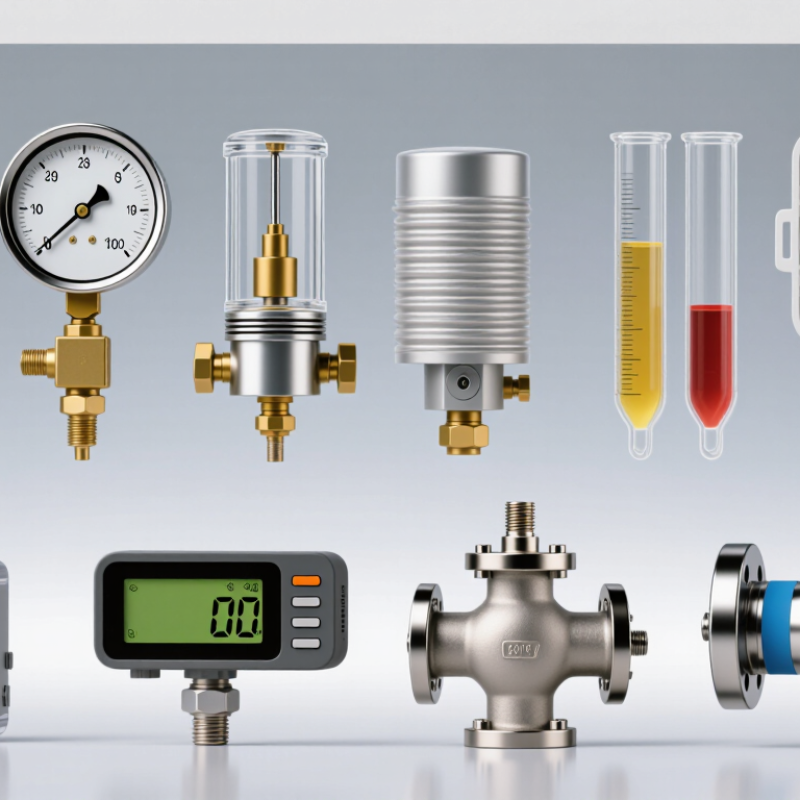
Differential pressure gauges compare two pressure points rather than measuring either pressure alone. Their designs respond to this difference in distinct ways. Liquid-column gauges balance pressure through a visible fluid height. Inclined-tube gauges magnify small changes. Diaphragm gauges use a flexible membrane that deflects against a calibrated spring. Capsule gauges join two diaphragms, improving sensitivity at low pressure. Bellows gauges expand or contract as differential force changes.
Mechanical movement matters. Piston gauges convert pressure difference into controlled piston travel. High-static-pressure gauges protect the sensing element while measuring a smaller differential. Remote-seal gauges transmit pressure through filled capillaries when process fluids are hot, corrosive, or likely to clog connections. Digital differential gauges use strain-gauge sensors, while capacitive gauges detect changes in electrical capacitance as a membrane moves. Differential pressure switches use the same force comparison but trigger an electrical contact at a set point.
In field inspections, I check impulse lines before blaming the gauge. Blocked tubing can imitate sensor failure. Temperature shifts can also move the zero point. A clean reading is not always a trustworthy reading. Static pressure, vibration, mounting direction, and fluid compatibility deserve attention. I prefer comparing the instrument with a certified reference at several pressure points. Small errors often appear only near the upper range. Sometimes the installation is the real problem, not the gauge. That distinction requires patience, records, and a willingness to question the first diagnosis.
Mechanical Types: Bourdon Tube, Diaphragm, Bellows, and Capsule Gauges
What Are the Top 10 Types of Differential Pressure Gauges?
Mechanical differential pressure gauges remain useful where operators need direct readings without external power. Among the top ten types, Bourdon tube, diaphragm, bellows, and capsule gauges cover many industrial measurement needs. A Bourdon tube gauge uses elastic tube movement to compare two pressure connections. It suits moderate or high differential pressures, but vibration can affect pointer stability.
Diaphragm gauges use a flexible membrane between the high- and low-pressure sides. They respond well to low differential pressure and can handle dirty fluids with suitable diaphragm materials. Bellows gauges provide strong sensitivity at low pressure differences. However, excessive pressure may permanently distort the bellows. Capsule gauges combine two joined diaphragms and often measure very small gas pressure differences. Their response is delicate. Sometimes too delicate.
Tips: Check the specified range before installation, not only the expected operating pressure. Keep both impulse lines similar in length and avoid trapped liquid or air. Confirm zero at equal pressure. Temperature changes, pulsation, and chemical compatibility can shift readings. In field work, I have found that a perfectly selected gauge still performs poorly when pipe connections are misaligned. That detail deserves more attention. Regularly compare the reading with a trusted reference, especially after maintenance or unusual pressure events.
Column and Piston Types: U-Tube, Inclined-Tube, and Piston Gauges
Differential pressure gauges compare pressure at two points, often across filters, pipes, or process equipment. Among the ten common gauge types, column and piston designs remain practical choices. They are simple to inspect and useful when power is unavailable.
A U-tube gauge uses liquid displacement between two connected legs. Its reading is direct, but temperature changes can alter liquid density. I have seen small installation errors create surprisingly large differences. Small details matter. An inclined-tube gauge extends the liquid scale, improving visibility at low differential pressures. It suits laboratories and clean process areas, although vibration can make the meniscus difficult to read. The liquid must also match the expected pressure range.
Piston gauges use pressure to move a piston against a spring or calibrated force. They are compact and often easier to mount than tall liquid columns. Their performance depends on seal condition, friction, and contamination control. A sticky piston can produce a delayed reading. That sounds simple, but it is frequently missed during routine checks. Technicians should verify zero position, inspect connections, and compare readings with a traceable reference. Material compatibility matters when the measured fluid is corrosive or unusually hot. No gauge is perfect, and field conditions may expose weaknesses that a clean workshop test never reveals.
What Are the Top 10 Types of Differential Pressure Gauges?
Representative full-scale differential-pressure ranges for common column, mechanical, and electronic gauge designs.
U-tube and inclined-tube gauges are widely used for low-pressure measurement, while diaphragm, capsule, piston, and Bourdon-tube designs cover progressively higher ranges. Electronic strain-gauge and capacitive instruments provide broad ranges with electrical output. Actual limits vary with sensing fluid, materials, temperature, accuracy class, and instrument construction.
Choosing Among the Ten Types for Accuracy, Range, and Service
Choosing among the ten main differential pressure gauge types requires more than comparing dial sizes.
Diaphragm, piston, bellows, capsule, liquid-column, inclined-tube, digital, magnetic-movement, switch-equipped, and remote-seal gauges serve different conditions. Accuracy begins with the process fluid. A clean air line may suit a capsule gauge, while dirty water can damage a narrow passage. I have seen a reliable gauge give poor readings after a blocked impulse line. The instrument was not always the problem.
Range matters just as much.
Liquid-column and inclined-tube gauges provide clear, direct readings at low pressure differences. Bellows and diaphragm designs handle broader industrial ranges. Piston gauges suit higher pressures but may respond poorly to contamination. Digital gauges offer fine resolution, yet their batteries and sensors need attention. A large display helps. It does not replace calibration. Select a range where normal operation stays near the middle of the scale, not at its limit.
Service conditions can change the decision.
Remote-seal gauges help when heat, corrosion, or thick fluids could reach the sensing element. Switch-equipped models support alarms, but their contacts require careful adjustment. Magnetic-movement designs resist some vibration, although severe pulsation may still create unstable readings. Check wetted materials, temperature limits, overpressure protection, and access for zero adjustment. I sometimes favor a simpler mechanical gauge because technicians can inspect it quickly. That choice can be imperfect when data logging or remote monitoring is essential.
A documented calibration check after installation remains more valuable than an impressive specification sheet.