
3295 Cobb International Blvd. Kennesaw, GA 30152 800-367-1377 sale@patiostools.com

Product Variation:

China Top 10 HDPE Welding Equipment Manufacturers in 2026

Choosing the right Hdpe Welding Equipment manufacturer can affect joint quality, project timing, and long-term maintenance. In 2026, buyers may compare suppliers across several practical factors: machine range, welding methods, temperature control, data records, operator support, and access to replacement parts. A compact butt fusion machine may suit a utility crew working in narrow trenches, while larger projects may need high-capacity equipment for wider pipes. Details matter.

This guide introduces ten manufacturers associated with HDPE welding equipment and outlines what buyers should examine before requesting a quotation. Product specifications, service coverage, training, and documented quality processes can help distinguish a capable supplier from one with a polished catalogue. Still, a manufacturer’s reputation alone is not enough. Confirm that a model fits the pipe diameters, materials, and site conditions your project actually involves.

Some information changes quickly. Model availability, technical support, and regional distribution can shift during the year, so verify current details directly with each company. Ask for manuals, test records, warranty terms, and clear answers about calibration and repairs. A neat brochure is useful, but it cannot prove how a machine performs after months on a dusty jobsite. This comparison is a starting point, not a substitute for technical review. Even experienced buyers can overlook small differences, and that deserves a second look.
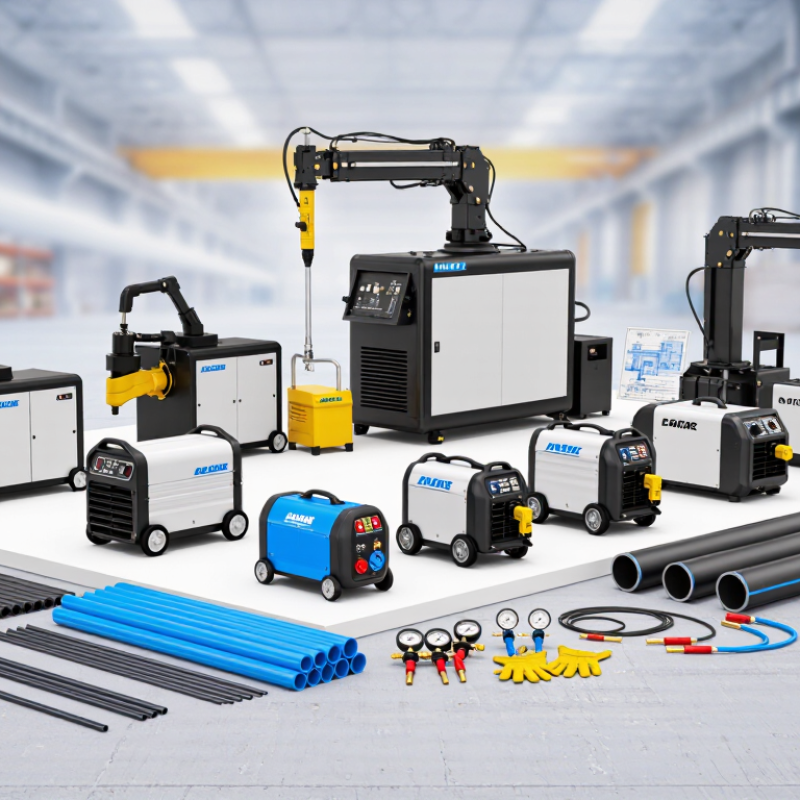
China Top 10 HDPE Welding Equipment Manufacturers in 2026

China’s HDPE Welding Equipment Industry in 2026

China’s HDPE welding equipment industry in 2026 serves infrastructure, agriculture, mining, and industrial piping projects. Manufacturers supply butt-fusion machines, electrofusion tools, and related accessories for different pipe sizes and site conditions. Demand is supported by water networks and pipeline upgrades, but purchasing decisions involve more than price. Buyers often compare temperature control, pressure consistency, alignment systems, and the availability of technical support. Small details matter. A stable heating plate and clear controls can reduce operator errors during field work.

Equipment design is also adapting to varied job sites. Compact machines help crews working in narrow trenches, while larger units suit workshop fabrication. Digital displays and data-recording functions can improve process checks, though they do not replace trained operators or sound procedures. Quality may vary between suppliers, so buyers should review test records, inspect workmanship, and confirm service arrangements. A specification sheet is useful, but real operating feedback is better. Not every feature proves useful in daily work.

Tips:Match the machine’s capacity to pipe diameter and project volume. Check calibration, clamping stability, and spare-part access before ordering. Ask for a practical demonstration using representative pipe, and record the welding parameters during commissioning. A rushed evaluation can miss inconvenient issues.


How the Manufacturers Were Evaluated

For a 2026 comparison, manufacturers were assessed against the needs of real HDPE pipe and fabrication work. The review considered equipment range, including butt fusion, electrofusion, and extrusion welding systems. Product specifications were checked for pipe-size capacity, temperature control, pressure adjustment, and compatibility with common job-site power supplies. Clear, usable documentation mattered too. A machine can look impressive on paper, but operators need settings they can understand beside a trench or workshop bench.

Build quality and process control received close attention. Where available, manuals, technical data, inspection records, and independent test information were compared rather than relying on promotional claims alone. Practical factors included frame rigidity, heating-plate consistency, clamp design, data logging, portability, and access to replacement parts and service support. Small details count. A misaligned clamp or an unclear temperature display can slow a crew and compromise repeatability. Claims were treated cautiously when supporting evidence was limited.

The evaluation also considered the experience a manufacturer could demonstrate through published application guidance, training resources, and documented use across different working conditions. No single source proves long-term reliability, and public information is uneven. That is a limitation. Scores therefore reflect the evidence available, not a guarantee of performance on every project. Buyers should confirm current specifications and test equipment against their own pipe materials, site conditions, and operator requirements before making a decision.

China Top 10 HDPE Welding Equipment Manufacturers in 2026 - How the Manufacturers Were Evaluated

Evaluation framework for comparing manufacturers of HDPE pipe-welding equipment. The criteria and weights below are a proposed editorial methodology, not verified ratings or results for specific companies. A defensible manufacturer ranking requires current, independently checked company-level evidence.

Evaluation dimension Weight Evidence to verify How it is assessed
Welding performance and process control 14% Documented operating ranges, temperature control, pressure management, cycle records, and repeatability test results. Review technical documentation and, where possible, test representative equipment under comparable conditions.
Product range and application coverage 12% Current catalogs for butt-fusion, electrofusion, and related pipe-preparation equipment, including supported pipe sizes and configurations. Check whether published specifications cover the intended pipe materials, diameters, job-site conditions, and use cases.
Standards and technical conformity 12% Applicable test reports, declarations, and documentation referencing relevant standards, such as ISO 21307, ISO 12176-1, or ISO 12176-2 where applicable. Verify the edition, scope, issuing body, and model coverage of each document; do not treat an unsupported standards reference as certification.
Quality management and manufacturing controls 12% Quality-system documentation, incoming-material checks, production inspection records, calibration controls, and traceability practices. Confirm that evidence is current and relevant to the equipment manufacturing site and product range being assessed.
Safety and equipment protection 10% User instructions, electrical protection details, emergency controls, guarding, and documented operating and maintenance precautions. Assess the completeness of safety information and verify relevant requirements for the destination market and equipment type.
After-sales service and spare-parts support 10% Warranty terms, service procedures, spare-parts lists, repair arrangements, and stated response or delivery commitments. Check the written terms and confirm support availability for the buyer’s location rather than relying on general claims.
Automation and data functions 8% Documented process guidance, data logging, traceability features, operator controls, and exportable weld records where offered. Distinguish available, tested functions from optional features or claims that are not supported by product documentation.
Export documentation and market readiness 8% Product documentation, shipping and customs paperwork capability, language support, and market-specific conformity documents when required. Evaluate documented experience and verify that each required document applies to the product and destination market.
Technical support and operator training 7% User manuals, troubleshooting guidance, training materials, commissioning support, and access to technical assistance. Check the availability, clarity, language, and practical usefulness of support resources for the intended users.
Operating history and customer evidence 7% Dated installation or delivery records, verifiable project references, and customer feedback that can be independently checked. Prioritize specific, attributable evidence; treat anonymous testimonials and unverified volume claims cautiously.
Total proposed weighting 100% Weights should be adjusted to match the project’s technical requirements, destination market, and service needs.

Suggested scoring and ranking procedure

Score Evidence level Scoring guidance
0 No evidence No relevant information could be verified.
1 Limited General claims are available, but supporting documentation is incomplete or unclear.
2 Basic Some relevant documents or specifications are available, with notable gaps.
3 Adequate Relevant, reasonably complete evidence supports the main requirements.
4 Strong Detailed, current evidence is available and key claims have been independently checked.
5 Excellent Comprehensive, current, and independently verifiable evidence demonstrates consistently strong performance.

Weighted total = sum of (criterion score ÷ 5 × criterion weight). Rank only manufacturers for which comparable, current evidence has been collected; identify unverified information and the evaluation date alongside any published results.

Profiles of China’s Top 10 HDPE Welding Equipment Manufacturers

Profiles of China’s Top 10 HDPE Welding Equipment Manufacturers

China’s HDPE welding equipment manufacturers serve pipeline contractors, utilities, and industrial fabricators. Their product ranges may include butt-fusion machines, electrofusion tools, and workshop fittings. A useful profile looks beyond catalog claims. It checks pipe-diameter range, heating-plate control, clamping stability, and the availability of replacement parts.

Across ten manufacturer profiles, differences often emerge in production focus. Some makers emphasize compact machines for repair crews working beside trenches. Others build larger units with hydraulic controls for repeated field use. Several focus on workshop equipment, where alignment and cycle consistency matter. Details matter. Buyers should ask for operating manuals, test records, and clear guidance on compatible pipe sizes. A polished brochure alone proves little.

Service capability deserves equal attention. Ask how technicians handle calibration questions, spare-part requests, and equipment faults during a project. Response times can be difficult to compare, and published specifications may not reflect daily site conditions. A hands-on trial with representative pipe can reveal awkward controls or uneven clamping. Not every manufacturer publishes comparable performance data. That gap deserves scrutiny. The most useful profile is therefore not a simple ranking; it connects equipment design, support, and documented testing to the buyer’s actual workload.

Key Differences in Products, Technologies, and Services

Among China’s HDPE welding equipment manufacturers in 2026, key differences begin with product range. Some concentrate on butt fusion machines for large-diameter pipe, while others offer compact units for repair crews and confined sites. A broader catalog may include electrofusion controllers and extrusion welders, but range alone says little about build quality. Check the stated pipe diameter range, clamping stability, and whether the machine can maintain even pressure during a full weld cycle.

Technology choices affect consistency and the records available after a job. Digital temperature control can reduce heating swings, while pressure displays and weld-data storage help operators review process settings. These features are useful only when sensors are calibrated and instructions are clear. That matters. Service also separates suppliers: ask about operator training, replacement heating elements, calibration support, and response times for remote troubleshooting. Test welds on the pipe sizes used in the field can reveal practical issues that a specification sheet misses. A polished brochure is not proof of reliable support. Comparisons can remain imperfect, since local service quality may vary even within one manufacturer’s network.

Factors to Consider When Choosing a Manufacturer

Choosing an HDPE welding equipment manufacturer requires more than comparing clamp sizes or quoted prices. Match the machine’s documented pipe-diameter and wall-thickness range to the projects you actually handle. For butt fusion, ISO 21307:2017 describes three procedures; confirm that the equipment can control the procedure your team uses. ASTM F2620-20 and the Plastics Pipe Institute’s Handbook of Polyethylene Pipe are useful references for checking whether manuals and training materials align with accepted fusion practices. Ask for proof.

Look closely at temperature and pressure controls, carriage alignment, and data records. A heater that drifts from its set temperature, or clamps that do not hold pipe square, can undermine repeatable joints. Request calibration records and a sample weld log, then check whether it records key cycle details. The PPI handbook discusses the importance of controlled fusion steps, not simply the machine’s rated capacity. Details matter. A polished demonstration is useful, but it cannot replace service records or a clear maintenance schedule.

Also assess technical support, spare-part availability, operator training, and warranty terms. Ask how quickly the supplier can troubleshoot a field failure and whether technicians can explain the answer in plain language. Compare like-for-like quotations, including installation, calibration, and training costs. One weakness in this evaluation is that paperwork can look complete while real support remains untested. Speak with users handling similar pipe sizes, and ask what happened when equipment needed repair.