
Choosing among the top CNC Multifunctional Side Hole Drill suppliers requires more than comparing spindle speed or catalog prices. A reliable supplier understands how side drilling affects panel alignment, hole depth, tool life, and production flow. These details become visible on the factory floor, especially when a 1.5-millimeter deviation causes cabinet parts to miss their connectors.
Mike Lynch, a recognized CNC programming educator, puts the issue plainly: “A CNC machine is only as accurate as the setup allows.” His observation matters here. Even an advanced CNC Multifunctional Side Hole Drill needs a rigid frame, calibrated workholding, stable software, and trained operators. A supplier should explain these relationships clearly, not hide them behind impressive brochures.
This guide examines suppliers through practical evidence. It considers drilling accuracy, multi-axis flexibility, dust control, service response, spare-part availability, and operator training. It also looks at real production conditions, such as repeated side holes in dense wood panels, narrow workshop layouts, and changing batch sizes. The best supplier may not offer the cheapest machine. It may offer the clearest commissioning plan.
Some claims remain difficult to verify. Factory demonstrations can look perfect. Long-term maintenance is less visible. That is where buyers must ask harder questions. Request sample results, tolerance records, installation references, and a realistic breakdown of operating costs. A minor weakness may not matter for occasional work. It can become expensive during continuous production.
The following supplier overview aims to support careful decisions. It is not a substitute for testing. CNC equipment deserves evidence, patience, and a little skepticism.
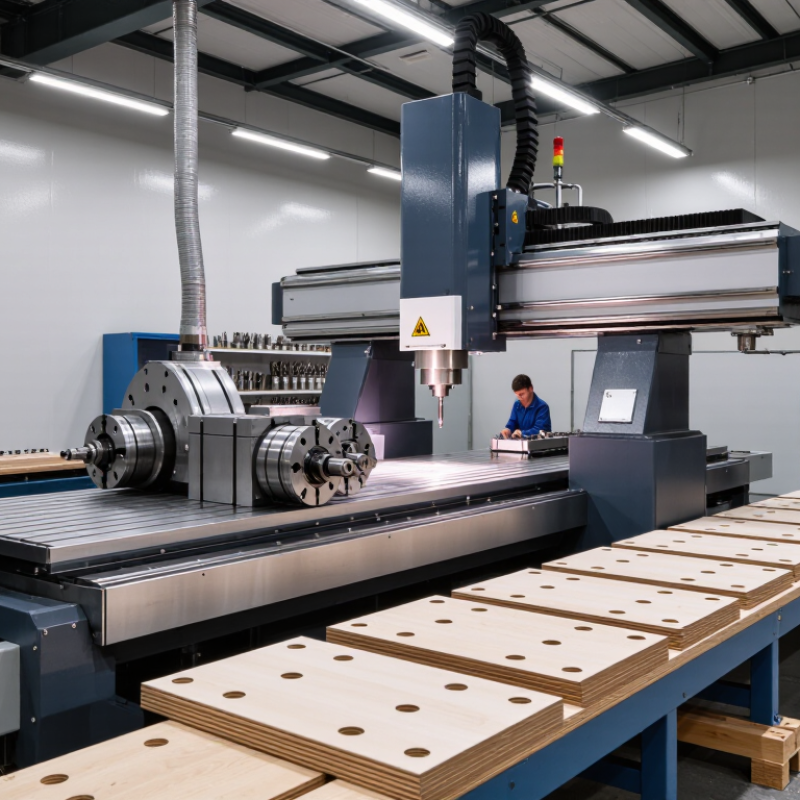
A CNC multifunctional side hole drill is a computer-controlled machine for drilling holes into panel edges and side faces. It can position the workpiece, select tools, and complete several hole patterns with limited manual handling. Many models combine vertical drilling, horizontal drilling, routing, and grooving functions. The exact combination varies by machine design.
Its value comes from controlled positioning and repeatable production. Operators usually load a panel, import machining data, and verify the clamping points before drilling. Servo-driven axes move the spindle along programmed coordinates. A tool changer may handle different diameters without frequent setup changes. The International Federation of Robotics reported 541,302 industrial robots installed worldwide in 2023, showing the wider shift toward automated production. Yet automation does not remove quality risks. Incorrect panel thickness, dust, or weak clamping can still produce misaligned holes. That distinction matters.
Tips: Check the machine’s working dimensions against your largest panels. Confirm spindle speed, drilling depth, and tool compatibility before production. Use measurement records for first-piece inspection. ISO 230-2 provides methods for testing machine-tool positioning accuracy, while ISO 16090-1 addresses safety for machining centres. These standards support disciplined evaluation, but they do not replace practical trials. A supplier should demonstrate edge drilling accuracy on your actual material. Ask for repeatability data, maintenance requirements, and software training details. Marketing language can sound precise. Test the machine anyway.

Side hole drilling machines create accurate horizontal bores for dowels, connectors, hinges, and cabinet fittings. Their main advantage is process consistency. A servo-controlled spindle can position the bit across multiple axes, while automatic tool changing reduces manual setup. Vacuum clamping holds panels firmly, although thin boards may still shift under pressure.
According to Grand View Research, the global CNC machine market was valued at about USD 83.99 billion in 2023. It is projected to expand at roughly 10.3% annually through 2030. This growth reflects demand for automated, repeatable production. Suppliers should therefore provide more than a drilling head. Look for programmable depth control, barcode compatibility, dust extraction, safety interlocks, and clear diagnostic software. Small details matter.
In furniture and cabinet production, side drilling machines process particleboard, MDF, plywood, and laminated panels. They support dowel joints, cam-lock fittings, shelf-pin holes, and concealed connectors. The Freedonia Group has identified continuing automation investment in woodworking machinery, driven by labor shortages and customized furniture demand. However, productivity claims need careful testing. A fast cycle is not useful if hole spacing varies or edges chip. Request sample panels, measure repeatability, and inspect dust control during continuous operation. No machine is perfect. Operator training still affects final quality.
Top CNC Multifunctional Side Hole Drill Suppliers
Evaluating CNC side hole drill suppliers requires more than comparing prices. Check spindle accuracy, drilling depth, tool compatibility, and control-system stability. A machine may look impressive, yet produce inconsistent holes after several hours. Request sample parts from your own material. Inspect hole position, edge quality, cycle time, and repeatability.
According to the 2024 Fortune Business Insights report, the global CNC machine market was valued at approximately USD 86.83 billion in 2023. This growth increases supplier choices, but also creates uneven quality. Ask suppliers for documented testing methods and calibration records. ISO 230-based geometric accuracy checks can reveal alignment problems before installation. Confirm service response times, spare-part availability, operator training, and remote troubleshooting. These details often matter more than a polished sales presentation.
Tips: Compare three suppliers using the same checklist. Require a written acceptance standard. Visit a working installation if possible. Ask how the machine performs after one year, not only on delivery day. Review warranty exclusions carefully. A low quote can become expensive when downtime, rejected panels, and delayed tooling are included. The 2024 Deloitte Smart Manufacturing survey found that 86% of manufacturers expect smart manufacturing to become a major competitiveness factor within five years. However, digital features are not automatically useful. I would test data export, alarm history, and program recovery personally. Supplier claims can be incomplete, and even a careful evaluation may miss maintenance weaknesses.
A practical procurement-weighting model for comparing CNC multifunctional side hole drilling solutions.
The recommended evaluation focuses on measurable purchasing factors rather than company size or brand recognition. Accuracy and repeatability receive the highest weight because they directly affect machining quality, rework, and production consistency. Buyers should verify each criterion through test cuts, technical documentation, safety certifications, warranty terms, and after-sales response records.
Top CNC Multifunctional Side Hole Drill Suppliers
Choosing among top CNC multifunctional side hole drill suppliers requires more than comparing prices. A reliable supplier should explain drilling capacity, spindle speed, positioning accuracy, and compatible materials. Ask for measured test results, not vague promises. In practical workshops, small alignment errors can create visible gaps during cabinet assembly. That detail matters.
Experienced suppliers usually provide sample machining before purchase. Request holes drilled in your actual panel thickness and surface material. Check edge quality, cycle time, tool changes, and dust collection performance. A strong supplier also explains maintenance intervals and replacement-part availability. Clear manuals help. On-site training is better.
Supplier credibility should include traceable quality procedures, skilled technicians, and responsive technical support. Review installation records from similar production environments. Speak with users who operate the equipment daily. Their feedback may reveal noise, calibration delays, or software weaknesses. These issues are easy to miss during a showroom demonstration. No supplier is flawless. I would still test the machine under a full production schedule before approving it. Confirm electrical compatibility, safety guarding, emergency controls, and operator access. Reliable communication after delivery often matters as much as the machine itself.
| Supplier Category | Typical Machine Configuration | Spindle Arrangement | Typical Drilling Diameter | Typical Spindle Speed | Common Workpiece Materials | Best-Fit Applications | Key Purchasing Requirement |
|---|---|---|---|---|---|---|---|
| Entry-Level General-Purpose Supplier | 3-axis CNC drilling and routing center with side-drilling capability | Single vertical spindle with 90-degree side-drilling unit | Approximately 3–20 mm, depending on tooling and material | Approximately 8,000–18,000 rpm | Wood, MDF, particleboard, plastics, and composite panels | Cabinet components, furniture panels, and small-batch joinery | Simple programming, low setup time, and accessible maintenance |
| Mid-Range Production Supplier | 4-axis or multi-process CNC center with automatic tool changing | Vertical spindle plus one or more horizontal side-drilling spindles | Approximately 3–30 mm for standard panel and solid-wood work | Approximately 12,000–24,000 rpm | Solid wood, engineered wood, plastics, and non-ferrous materials | Medium-volume furniture, doors, shelving, and modular components | Tool-change speed, positioning repeatability, and dust or chip extraction |
| High-Throughput Industrial Supplier | Multi-axis machining center with automated loading and unloading | Multiple vertical and horizontal drilling units with independent control | Approximately 3–35 mm, subject to spindle power and tool selection | Approximately 15,000–30,000 rpm | Wood products, composite panels, plastics, and selected aluminum parts | Continuous production, standardized components, and high-volume panel processing | Cycle time, automation compatibility, uptime, and production monitoring |
| Custom-Engineered Solution Supplier | Application-specific CNC cell configured for unusual dimensions or processes | Custom vertical, horizontal, angled, or opposing spindle layout | Specified according to material, hole geometry, and production requirements | Selected according to cutting tools, material, and required surface finish | Wood, plastics, composites, aluminum, and other approved materials | Specialty furniture, engineered panels, prototypes, and integrated production lines | Engineering capability, validation testing, integration, and documentation |
| Compact Workshop Supplier | Small-footprint CNC router or drilling center with integrated side drilling | Compact spindle assembly with limited horizontal drilling capacity | Approximately 3–16 mm for light-duty production | Approximately 10,000–20,000 rpm | Wood panels, softwood, MDF, plastics, and lightweight composites | Job shops, educational facilities, repair work, and customized products | Floor-space requirements, electrical supply, operator training, and affordability |
| Export-Oriented Full-Service Supplier | Standard or customized CNC multifunctional side-hole drilling system | Vertical and horizontal drilling configuration selected by application | Defined in the quotation according to tool diameter and material requirements | Specified by spindle type, motor rating, and cutting process | Wood products, plastics, composites, and selected non-ferrous materials | International projects requiring installation, training, and spare-parts support | Technical documentation, shipment terms, remote support, and spare-parts availability |
Note: The performance figures shown are typical industry specification ranges for CNC multifunctional side-hole drilling equipment. Actual capabilities vary by machine design, spindle power, tooling, workpiece material, and configuration; buyers should confirm final specifications in the supplier’s technical quotation.
Buying a CNC side hole drilling machine requires more than comparing spindle speed and price. A 2024 MarketsandMarkets report estimates the CNC machine market will grow from about USD 88 billion in 2023. This growth increases supplier choices, but specifications still need practical verification.
During shop-floor trials, I check hole position, repeatability, chip evacuation, and fixture stability. A machine should hold the required tolerance across a full production shift. Ask for measured test results, not only catalog claims.
ISO 230-2 testing can clarify positioning accuracy and repeatability. Also inspect spindle runout with a test bar. Small errors become visible on deep side holes.
Automation deserves careful attention. The International Federation of Robotics reported 541,302 industrial robot installations worldwide in 2023. A compatible drilling center should support reliable loading, probing, and communication systems.
Review cycle time with real panels, not ideal samples. Confirm tooling access, coolant control, dust extraction, and emergency protection. Service response matters as much as machine capability.
Ask about spare-part availability, operator training, and remote diagnostics. I once overvalued maximum spindle speed and underestimated fixture changeover time. That mistake increased labor costs.
A slower machine with stable workholding may produce more useful parts. Energy consumption, floor space, and maintenance access should enter the quotation. The cheapest offer is rarely the lowest operating cost.
3295 Cobb International Blvd.
Kennesaw, GA 30152
800-367-1377
sale@patiostools.com
© 2023 - Marsh Instruments