Top 10 Precision Instruments for Accurate Measurements?
In the realm of science and engineering, precision instruments play a pivotal role. Accurate measurements can significantly impact research outcomes and industrial processes. According to a report by the National Institute of Standards and Technology (NIST), a mere 1% error in measurements can lead to substantial financial losses in manufacturing.
These instruments range from simple calipers to advanced laser measuring systems. Each device has its own specific purpose and accuracy level. Industries increasingly rely on high-performance precision instruments to meet strict quality standards. For example, in the aerospace sector, a report from the International Society for Precision Engineering states that precision errors can cause mission-critical failures, emphasizing the importance of reliability.
Despite their significance, many users overlook calibration and maintenance. A lack of regular checks can introduce unexpected inaccuracies. It raises questions about how much trust we place in these instruments. In a world obsessed with precision, it's vital to reflect on our reliance on technology. The continuous improvement of measurement tools is essential for progress, yet we must balance this with rigorous oversight to ensure accuracy in all applications.
Overview of Precision Instruments in Measurement
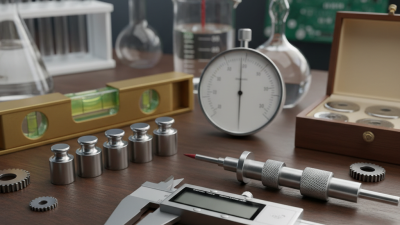
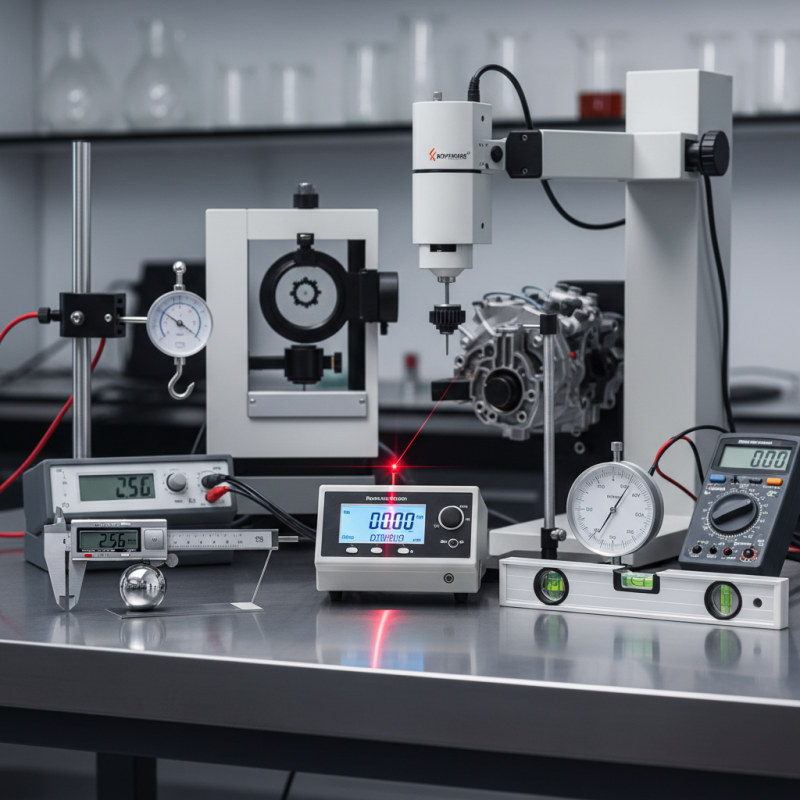
Precision instruments play a crucial role in various fields, ensuring measurements are accurate and reliable. They are essential in scientific research, engineering, and manufacturing. Devices like calipers, micrometers, and digital scales help achieve this accuracy. Their calibration is vital; even small errors can lead to significant discrepancies.
Tips: Always check the calibration of your instruments regularly. An uncalibrated tool can produce faulty measurements.
The design of precision instruments often focuses on enhancing usability. Features like ergonomic grips and clear display screens can improve user experience. However, it's easy to overlook how even minor factors, like temperature and humidity, can affect measurements. Awareness of these elements is key.
Tips: Store instruments in a controlled environment to minimize measurement errors. This simple step can save you time and resources in the long run.
In summary, precision instruments are indispensable. Their effectiveness hinges on proper care, calibration, and understanding environmental influences. A hands-on approach will lead to better accuracy and outcomes.
Key Characteristics of Accurate Measurement Tools
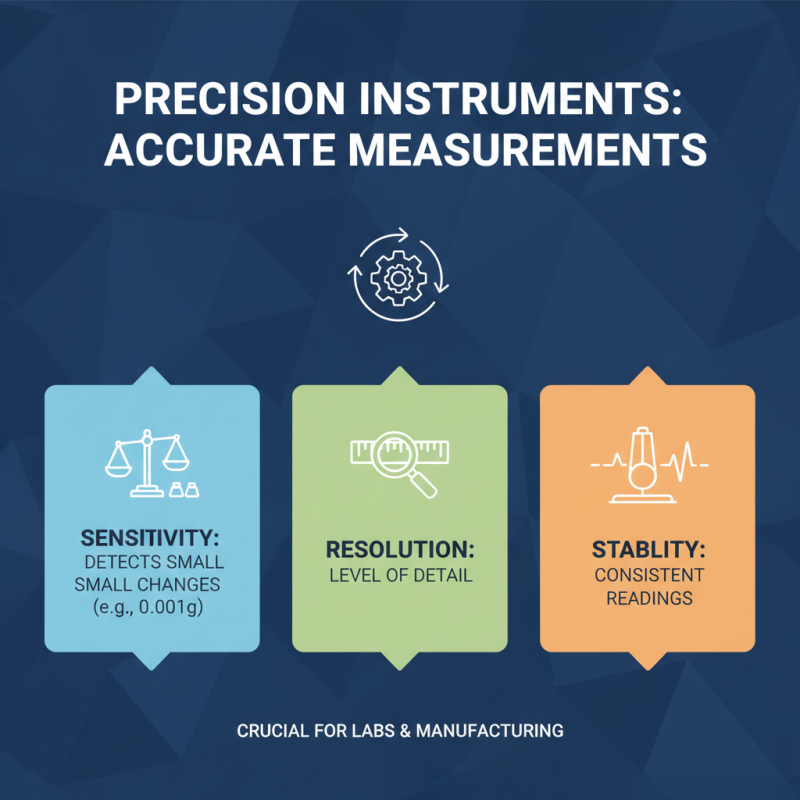
Precision instruments play a crucial role in accurate measurements across various industries. When choosing measurement tools, key characteristics include sensitivity, resolution, and stability. Sensitivity determines how small a change can be detected. For instance, precision scales can measure weight changes as little as 0.001 grams. This sensitivity is crucial in laboratories and manufacturing.
Resolution refers to the smallest increment of measurement a device can show. High-resolution devices, like digital calipers, typically display measurements in increments of 0.01 mm. Stability is also essential. Instruments should maintain accuracy over time, even under varying environmental conditions. According to a 2021 industry report, tools with good thermal stability can operate effectively between temperatures of -10°C and 50°C.
Tips: Regular calibration is vital for ensuring accuracy. Instruments should be tested periodically. Keep tools clean and free from contaminants. This greatly impacts results. Always read the manual for specific guidelines on usage and maintenance.
Yet, even the best instruments can produce errors. Factors like operator skill and environmental effects can lead to less accurate results. For example, humidity can impact weight measurements on sensitive balances. Understanding these influences is important for effective use.
Top 10 Precision Instruments for Various Applications
Accurate measurements are essential in various fields. Industries like manufacturing, pharmaceuticals, and civil engineering rely on precision instruments. According to a recent industry report, up to 70% of manufacturing errors come from inaccurate measurements. This can lead to significant financial losses and safety risks.
In the medical field, precision instruments are crucial for diagnostics. A study indicates that 90% of lab errors can be traced back to measurement inaccuracies. This puts patients' lives at risk. For civil engineers, tools like laser levels and measurement tapes ensure structural integrity. Yet, not all instruments provide the same level of accuracy. The variability between devices is often overlooked, leading to flawed outcomes.
Different applications call for specialized instruments. A simple ruler might suffice for basic tasks, but advanced projects demand digital calipers or micrometers. Workers frequently underestimate the impact of minuscule errors. In many cases, calibration issues arise due to neglect. This highlights an ongoing need for education on proper usage and maintenance of precision tools.
Comparative Analysis of Measurement Accuracy
Precision instruments are essential for accuracy in various fields.
A recent industry report highlights that up to 75% of laboratory errors stem from measurement inaccuracies.
This statistic emphasizes the critical need for reliable instruments. Among common tools,
micrometers and digital calipers serve as basic examples.
However, even these can have limitations, as slight user errors may affect overall precision.
In high-stakes environments, like aerospace or medical labs, a margin of error can lead to significant consequences.
According to the National Institute of Standards and Technology, even a 1% inaccuracy in measurements can result in safety issues.
Specialized equipment, such as laser distance meters, shows promise for precise readings
over traditional methods. Yet, they require proper calibration and careful handling, reminding us that instruments alone can't ensure accuracy.
Regular calibration could prevent issues, but it's often neglected. Many companies overlook this aspect, leading to data discrepancies.
Training staff on instrument usage is vital yet frequently underprioritized. Inadequate training can contribute to errors, even with the best tools.
The pursuit of precision demands attention to detail and continual improvement in measurement practices.
Maintenance and Calibration for Precision Instruments
Maintenance and calibration are critical for precision instruments. Regular checks ensure accuracy, which directly influences results. A 2022 industry report cited that 42% of measurement errors stem from improper calibration. This highlights the importance of routine procedures.
Cleaning instruments regularly is essential. Dust and contaminants can skew readings. One study revealed that unclean gauges lost 8% accuracy over time. Additionally, calibrating tools at least once a year is recommended. This keeps measurements within strict tolerances. Ignoring these steps may lead to costly errors.
Adjustments may be needed based on findings. Not every instrument remains within specification. Revisiting calibration protocols helps pinpoint recurring issues. Often, resting instruments showed unexpected shifts, needing attention. This underscores the necessity for constant vigilance in precision instrument maintenance. Each detail matters in preserving reliable measurements.
Top 10 Precision Instruments for Accurate Measurements
This chart displays the precision levels of the top 10 precision instruments used for accurate measurements. The instruments range from calipers to spectrophotometers, each showing their effectiveness through a precision level percentage.