
A Refrigeration Unit is more than a cold metal box. It is a controlled heat-transfer system that removes heat from a space, product, or process. You may find one behind a supermarket display, inside a restaurant cold room, or mounted on a refrigerated truck. Its work is quiet, but its purpose is critical: keeping food safe, medicines stable, and industrial materials within precise temperature limits.
Willis Haviland Carrier, a pioneering engineer in cooling technology, described air conditioning as “the control of the purity, humidity, movement, and temperature of air.” His words help explain the wider responsibility of modern refrigeration. A dependable Refrigeration Unit must manage temperature, airflow, pressure, moisture, and energy use together. It usually relies on a compressor, condenser, expansion device, and evaporator. Refrigerant circulates through these components, absorbing indoor heat and releasing it outside. The cycle repeats.
The process sounds simple. It is not always simple. A blocked condenser can raise operating pressure, while a damaged door seal may force the compressor to run constantly. Small faults become expensive problems. I have seen how a few degrees of temperature drift can damage an entire storage batch. That reality deserves attention. This guide explains how a Refrigeration Unit works, what each component does, and which practical signs suggest trouble. It also considers efficiency, maintenance, and safe professional servicing. No system is perfect. Even a well-designed unit needs inspection, accurate measurements, and honest judgment.
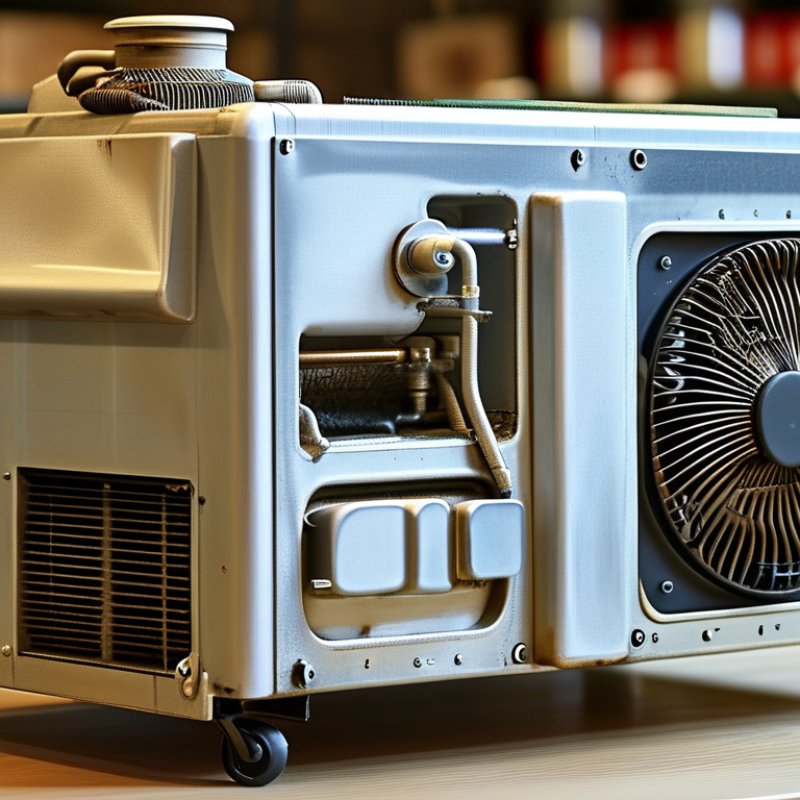
What Is a Refrigeration Unit and How Does It Work?
A refrigeration unit is a mechanical system that removes heat from an enclosed space. Its core purpose is temperature control, not the creation of cold. The unit absorbs unwanted heat and releases it into another area, usually the surrounding air. This process protects food, medicine, equipment, and other temperature-sensitive materials.
The system moves refrigerant through several working parts. The evaporator absorbs heat inside the cabinet or room. The compressor raises the refrigerant’s pressure and temperature. The condenser then releases heat outside the cooled space. An expansion device lowers the refrigerant’s pressure before the cycle begins again. Small details matter here. Poor airflow can reduce performance, even when the compressor operates normally.
In practical service work, technicians check temperatures, pressure readings, electrical connections, airflow, and unusual sounds. A warm door seal may allow moisture to enter and force longer running cycles. Dust on the condenser can create similar problems. The phrase “making cold” sounds simple, but it can hide these operating conditions. Correct sizing also matters; an oversized unit may cycle too often, while an undersized unit may run continuously. Some assessments remain uncertain without measured data, so reliable diagnosis should follow the unit’s specifications and actual site conditions.
| Data Dimension | System Element or Topic | Definition and Function | Typical Information |
|---|---|---|---|
| Basic Definition | Refrigeration unit | A mechanical system that removes heat from a controlled space, product, or process and rejects that heat to a warmer surrounding environment. | Transfers heat; it does not create cold. |
| Core Purpose | Temperature control | Maintains a target temperature to preserve food, protect equipment, support manufacturing processes, or provide conditioned air. | Target temperature depends on the application. |
| Heat-Absorbing Component | Evaporator | The refrigerant absorbs heat from the refrigerated space while evaporating at a low pressure and low temperature. | Located inside or near the cooled space. |
| Pressure-Raising Component | Compressor | Draws in low-pressure refrigerant vapor, compresses it, and delivers high-pressure, high-temperature vapor to the condenser. | Requires electrical or mechanical energy. |
| Heat-Rejecting Component | Condenser | Releases heat from the refrigerant to air or water, causing the high-pressure vapor to condense into a high-pressure liquid. | May be air-cooled or water-cooled. |
| Pressure-Reducing Component | Expansion device | Reduces the pressure of the liquid refrigerant and meters its flow into the evaporator. | Common forms include thermostatic expansion valves and electronic expansion valves. |
| Operating Cycle | Vapor-compression cycle | The refrigerant repeatedly evaporates, is compressed, condenses, and expands to move heat from the cold side to the warm side. | The cycle is continuous while cooling is required. |
| Refrigerant | Working fluid | A fluid selected for its pressure-temperature characteristics so it can absorb and reject heat efficiently through phase changes. | Selection depends on safety, efficiency, operating range, and environmental requirements. |
| Typical Temperature Range | Medium- and low-temperature applications | Medium-temperature systems commonly maintain chilled spaces near 0–5°C, while frozen-storage systems are often designed around −18°C or lower. | Actual settings vary by product, load, humidity, and design. |
| Control System | Thermostat and sensors | Monitors temperature and controls compressor operation, fan operation, defrost cycles, and safety functions. | Helps maintain stable conditions and reduce unnecessary energy use. |
| Heat Rejection | Air or water discharge | The unit rejects the heat absorbed from the refrigerated space plus the compressor’s input energy. | The condenser must have adequate airflow or water flow. |
| Common Applications | Cold rooms, display cases, transport, and process cooling | Used wherever products, spaces, or industrial processes must remain below ambient temperature. | Examples include food storage, laboratories, data equipment, and manufacturing. |
| Energy Performance | Coefficient of Performance (COP) | COP compares the useful cooling capacity to the energy input. A higher COP generally indicates greater cooling efficiency under the tested conditions. | Performance changes with outdoor temperature, load, set point, and maintenance. |

A refrigeration unit removes heat from an enclosed space and releases it outside. Its performance depends on several connected components, not one powerful machine. The compressor raises refrigerant pressure and temperature. Then, the condenser coil rejects heat, often with help from a fan. The refrigerant becomes a high-pressure liquid.
The expansion valve controls refrigerant flow into the evaporator. Pressure drops there, and the refrigerant becomes cold. The evaporator coil absorbs heat from air, liquid, or stored products. A fan then moves cooled air across the space. The controller monitors temperature and starts or stops the compressor when needed. Small errors matter. A loose sensor can create unstable temperatures.
The International Energy Agency’s The Future of Cooling report projects global space-cooling electricity demand could more than triple by 2050, reaching about 6,200 TWh annually. This highlights why component efficiency and maintenance deserve close attention. The U.S. Department of Energy also identifies airflow, coil cleanliness, and correct refrigerant charge as important efficiency factors.
In field inspections, a blocked condenser often feels surprisingly hot, while the evaporator shows uneven frost. That visual clue helps technicians investigate airflow, sensors, and pressure readings. Yet frost alone does not prove low refrigerant. That assumption can lead to the wrong repair. Controls, insulation, door seals, and defrost systems also influence reliable operation.
What Is a Refrigeration Unit and How Does It Work?
A refrigeration unit moves heat rather than creating cold. Its sealed system circulates refrigerant through four main stages. The cycle starts in the evaporator, where low-pressure refrigerant absorbs heat from air, food, or stored products. As the refrigerant warms, it changes from a liquid into a vapor.
The compressor then draws in this vapor and raises its pressure. Pressure increases temperature too. The hot vapor travels to the condenser, where fans or surrounding air remove heat. The vapor condenses into a high-pressure liquid. This heat may feel surprisingly strong near the condenser coil.
Next, the liquid passes through an expansion device. Its pressure drops suddenly, and its temperature falls. The cold refrigerant returns to the evaporator, ready to absorb heat again. This repeated movement forms the refrigeration cycle.
Airflow matters. Dusty coils, blocked vents, or a loose door seal can reduce heat transfer and increase running time. In practical maintenance work, surface temperature alone can mislead technicians. Pressure readings, airflow, coil condition, and product temperature should be checked together. Small errors matter. A system may appear cold while operating inefficiently. I once underestimated the effect of restricted airflow during a routine inspection; the cabinet temperature looked acceptable, but the compressor ran almost continuously. Refrigeration performance depends on balanced components, correct refrigerant charge, and careful measurement.
A vapor-compression refrigeration cycle absorbs heat in the evaporator, adds compressor work, and rejects the combined energy in the condenser. The representative values below are expressed per kilogram of refrigerant and satisfy the energy balance: 150 + 35 = 185 kJ/kg.
A refrigeration unit removes heat from an enclosed space and releases it outdoors. Most systems circulate refrigerant through four stages: compression, condensation, expansion, and evaporation. The evaporator absorbs heat, while the condenser rejects it. Simple in theory. Installation is not.
Different refrigeration units suit different applications. Household and small commercial units commonly use compact vapor-compression systems for cabinets, display cases, and under-counter storage. Walk-in coolers use larger condensing units and insulated panels, supporting restaurants, laboratories, and food distribution sites. Transport refrigeration units maintain temperatures inside trucks and containers, despite door openings, vibration, and changing weather. Industrial facilities may use ammonia or carbon dioxide systems for cold storage and process cooling. Absorption units, powered mainly by heat, can serve sites with available waste heat or limited electricity.
The International Institute of Refrigeration reported that refrigeration accounts for approximately 17% of global electricity consumption (The Role of Refrigeration in the Global Economy, 2019). The UNEP and IEA estimated that space-cooling energy demand could more than triple by 2050 (Cooling Emissions and Policy Synthesis Report, 2020). These figures make unit selection important, but efficiency ratings alone can mislead. A smaller system may struggle during peak loading. An oversized system may cycle poorly and waste energy. Field measurements, door-use patterns, ambient temperature, and maintenance records should guide the decision. There is no universal best type. Performance depends on the site.
A refrigeration unit removes heat from an insulated space and releases it outdoors. Its compressor raises refrigerant pressure, while the condenser rejects heat. The expansion device then lowers pressure, and the evaporator absorbs heat again. This cycle seems simple. Efficiency is not.
Poor airflow, dirty condenser fins, damaged door seals, and excessive frost force longer compressor operation. The International Energy Agency reports that space cooling used about 2,000 TWh of electricity in 2018. Its Future of Cooling report projects demand could more than triple by 2050. Small losses, repeated across facilities, become significant. Technicians should record suction pressure, discharge pressure, coil temperatures, and power consumption during service. Temperature logs also reveal problems before stored products warm noticeably. A forgotten door can matter.
Maintenance must include coil cleaning, fan inspection, drain checks, seal testing, and calibrated sensor verification. The U.S. Department of Energy identifies airflow and control performance as important contributors to refrigeration efficiency. Yet a clean coil does not guarantee a safe system. Refrigerant leaks can reduce cooling and create pressure or exposure hazards. The UNEP 2022 Assessment Report notes that improved cooling efficiency can substantially reduce future refrigerant-related emissions. Technicians need suitable recovery equipment, ventilation, and documented procedures. Many food-safety standards use 5°C as a chilled-storage benchmark, but local requirements may differ. No checklist is perfect. Human judgment still matters.
3295 Cobb International Blvd.
Kennesaw, GA 30152
800-367-1377
sale@patiostools.com
© 2023 - Marsh Instruments