Why Choose 10G SFP Copper Modules?
Choosing a 10g Sfp Copper module can make a 10-gigabit link easier to connect to existing twisted-pair cabling. It uses a familiar RJ45 port. That can simplify upgrades in offices, server rooms, and test environments where copper cabling is already installed. Instead of replacing every cable, teams may be able to reuse suitable runs and connect compatible network equipment.
The appeal is practical, but performance depends on the details. A 10GBASE-T SFP+ module can draw more power and produce more heat than some optical alternatives. Supported cable type, cable length, switch compatibility, and airflow all matter. Many modules are designed for links up to 30 meters, but the exact limit depends on the module and cabling specification. Check the manufacturer’s documentation before deployment. A link that works on a short bench cable may behave differently in a crowded rack.
There is no universal best choice. Copper modules can be useful for short connections, while fiber may suit longer distances or tighter power budgets. The trade-off is not always obvious. This guide examines where 10g Sfp Copper modules fit, what to verify before buying, and which constraints can affect daily operation. Readers should compare specifications carefully and test the intended equipment combination when possible. Even a small compatibility mismatch can turn a simple upgrade into a frustrating troubleshooting session.
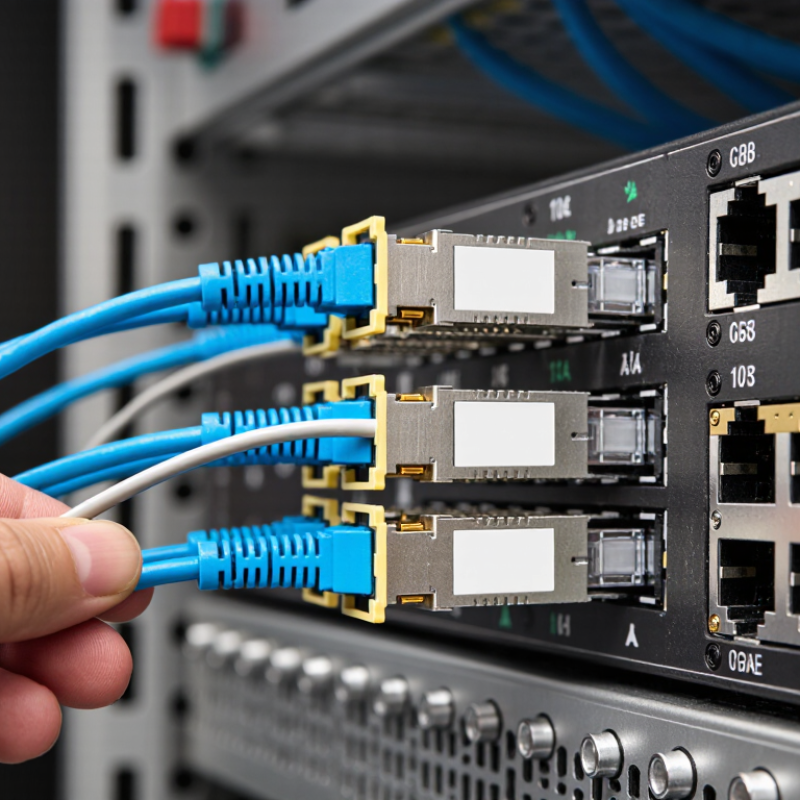
10GBASE-T SFP+ Modules: 10 Gb/s Ethernet over an RJ45 Interface
10GBASE-T SFP+ modules deliver 10 Gb/s Ethernet through an RJ45 interface. They let compatible switches connect to copper Ethernet cabling instead of fiber. That can simplify upgrades when a rack already has copper runs and nearby equipment uses standard network ports. The connection feels familiar. The performance is not automatic, though: cable quality, distance, and port support all matter.
Many modules are designed for shorter links than native 10GBASE-T ports. Check the module’s rated reach before using it; some models support up to 30 meters, not the 100 meters often associated with 10GBASE-T cabling. Cat6A cabling is a sensible choice for reliable 10-gigabit links, but the module’s own specification remains decisive. A patch lead that looks fine at 1 Gb/s may expose problems at 10 Gb/s. Small details matter.
These modules are useful for connecting servers, storage, or switches where RJ45 wiring is already installed. They can also simplify moves and changes, since copper ports are common in offices and equipment rooms. The trade-off is heat and power: an SFP+ copper module may run warmer than a short DAC or optical option. Check the switch’s compatibility list and airflow, then test the actual link under load. Convenience helps, but it is not a substitute for checking limits.
IEEE 802.3an and Cat 6A: The Standard’s 100 m 10GBASE-T Reach
Why Choose 10G SFP Copper Modules?
IEEE 802.3an defines 10GBASE-T, delivering 10 Gb/s over balanced copper cabling for distances up to 100 metres when paired with Category 6A. That reach can connect a server rack to a nearby room without adding an optical-fibre run. The figure refers to the complete channel, not just the permanent cable. Patch cords, connectors, and installation quality matter.
The standard sets the target. Real rooms add complications. ANSI/TIA-568.2-D specifies Category 6A cabling performance up to 500 MHz, providing the cabling foundation for 10GBASE-T channels. For a practical check, measure the full route, including slack loops and patch-panel connections. A cable run that looks short on a floor plan may not be. Small detail.
A 10G SFP copper module can make an existing switch port useful with familiar twisted-pair infrastructure, but verify host compatibility and thermal limits before deployment. IEEE reach figures do not promise identical results in every installation. Dense bundles, poor terminations, or unsuitable patch cords can undermine performance. I would not treat “100 m” as a substitute for testing the finished link; that assumption is tempting, and sometimes wrong.
Copper’s Advantage: Reusing Existing RJ45 Cabling and Network Ports
A 10G SFP+ copper module can connect a compatible SFP+ switch port to familiar RJ45 Ethernet cabling. That can make an upgrade simpler. Instead of replacing every cable run with fiber, a team may reuse installed copper and connect existing RJ45 endpoints. In a rack, this can mean fewer changes to patch panels and less disruption during a staged network refresh.
The fit depends on the cable, distance, and equipment. Cat6a cabling can support 10GBASE-T links up to 100 meters under suitable conditions; older Cat6 runs may have shorter practical limits. A cable that worked well at 1 Gbps is not automatically ready for 10 Gbps. Check the module’s supported standard, the switch’s compatibility guidance, and its power and temperature limits. Copper modules can draw more power and run warmer than some optical options.
There is a useful distinction: the module goes into an SFP+ cage, not a standard RJ45 switch port. It provides an RJ45 socket for the existing cable. That detail is easy to miss. Before changing a whole floor, test a representative link and inspect its error counters under normal traffic. A quick test may expose a weak termination or an aging cable. Reuse is valuable, but it should be verified rather than assumed.
SFP+ Module Reach: Why Many 10GBASE-T Transceivers Top Out at 30 m
Why Choose 10G SFP Copper Modules?
SFP+ Module Reach: Why Many 10GBASE-T Transceivers Top Out at 30 m
A 10GBASE-T SFP+ module brings an RJ45 copper connection to a compact SFP+ port. Its short reach often surprises people. Many modules are rated for links up to 30 meters, even when the cable itself can support longer distances. The constraint is usually inside the module: converting electrical signals at 10 gigabits per second creates heat and uses power. A small SFP+ housing has limited room to dissipate both. In a crowded switch, warm neighboring ports can make thermal conditions less forgiving.
That 30-meter figure is a practical limit, not a promise for every installation. Cable category, connector quality, host-device compatibility, and airflow all matter. Check the module’s specifications and the switch’s supported power and temperature limits before deployment. For a short rack-to-rack link, copper can be convenient: plug in a suitable cable and avoid separate optical components. For longer runs, fiber or a purpose-built 10GBASE-T port may be a better fit. Measure the actual route, not just the straight-line distance. A little slack helps, but extra cable does not extend the rated reach. I’ve seen “close enough” planning become a frustrating link issue. Better to verify first.
Choosing a Module: Check Host Compatibility, Power, and Operating Temperature
A 10G SFP copper module can connect an SFP+ port to twisted-pair Ethernet, but the label alone does not guarantee a working link. Check the host’s compatibility list and confirm that its firmware supports the module type. Some ports limit module power or reject unsupported transceivers. A link that repeatedly drops may point to a compatibility or heat issue, not a bad cable.
Tips: Check the cage. Compare the module’s power draw with the host’s limit, then verify its rated temperature range. Heat adds up. A crowded switch with poor airflow can run hotter than an open test bench.
Also match the module’s distance and cable requirements to the actual run. Many 10GBASE-T SFP+ modules support shorter distances than fixed copper ports, and the exact limit depends on the module and cable category. Read the specification sheet before installation, especially for a long Cat6A run. I still double-check airflow and host support together; checking only one can miss the real constraint. After fitting the module, monitor link stability and temperature under normal traffic, not just at idle.