
3295 Cobb International Blvd. Kennesaw, GA 30152 800-367-1377 sale@patiostools.com

Product Variation:

Why Do Global Buyers Choose Power Tool Accessories?

When global buyers evaluate power tools, they often look beyond the machine itself. The right Power Tool Accessories can determine cutting speed, surface quality, battery life, and operator confidence. A drill bit that stays sharp through dense hardwood saves time on a busy construction site. A compatible grinding wheel can reduce vibration and produce a cleaner edge. These details matter in workshops, factories, maintenance teams, and home renovation projects worldwide. Buyers also expect stable supply, clear specifications, and packaging that survives long-distance transport. They want accessories that fit recognized tool platforms without forcing unnecessary replacements. Trust is built through evidence. Product datasheets, material information, batch control, and practical testing help purchasing teams compare suppliers responsibly. Certifications can add confidence, but they should support real performance rather than replace it.

Experienced distributors often test accessories under actual working conditions. They check heat, wear, balance, noise, and consistency across repeated jobs. Small differences become expensive at scale. A poorly matched blade may damage material, delay delivery, or frustrate skilled workers. Global buyers therefore value suppliers who understand technical requirements and local working habits. Still, no accessory is perfect. Results can change with pressure, material density, tool age, and user technique. That point deserves honesty. Reliable brands explain limitations, offer suitable alternatives, and respond when field feedback reveals a weakness. Power Tool Accessories are chosen not only for price, but for dependable results, safer operation, and long-term purchasing confidence. The strongest decisions combine measurable performance with real experience. They leave room for questions.
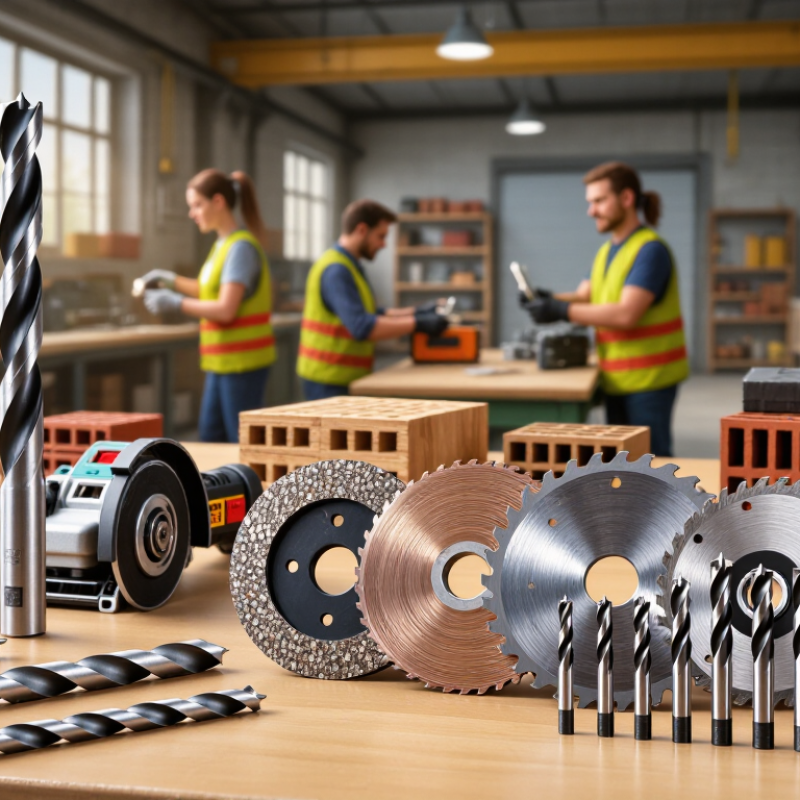
Why Do Global Buyers Choose Power Tool Accessories?

Global Accessory Demand: 18V–20V Cordless Tool Platform Growth

Why Do Global Buyers Choose Power Tool Accessories?

Global Accessory Demand: 18V–20V Cordless Tool Platform Growth

Demand for 18V–20V cordless tool accessories is rising across construction, maintenance, and home improvement markets. Buyers value one battery platform that supports drills, saws, grinders, and outdoor equipment. This reduces downtime and simplifies inventory. A contractor can carry fewer batteries between a workshop and a job site. That matters.

Accessory quality also affects productivity. A sharp cutting disc, durable drill bit, or balanced sanding pad can improve control and extend working time. Experienced buyers usually check fit, material strength, heat resistance, and tested performance before purchasing. They also review safety instructions and regional compliance requirements. Low prices alone can create expensive replacements.

Tips: Match the accessory with the tool’s voltage range, speed rating, and connection type. Check packaging details carefully. Test a small quantity first. In my experience, compatibility claims are sometimes unclear, especially across different markets. A product may fit physically but perform poorly under heavy loads. That is an easy detail to miss. Buyers should record failure rates, user feedback, and service response before placing larger orders. They should also consider dust, humidity, and temperature at the worksite. These conditions can shorten accessory life. Growth in the 18V–20V segment is strong, but practical testing still matters more than optimistic specifications.


Accessory Compatibility: 1/4-Inch Hex, SDS-Plus, and 115–230 mm Discs

Global buyers often choose power tool accessories for one practical reason: compatibility reduces wasted time. A correct fit helps workers change accessories quickly and maintain steady output. A 1/4-inch hex accessory suits many compact drills and impact drivers. It is useful for fastening, pilot holes, and light installation work. The bit should seat fully, without visible wobble. That small check matters.

SDS-Plus accessories serve rotary hammers with matching chuck systems. Their grooved shanks transfer impact energy more effectively than ordinary round shanks. In field use, masonry bits and chisels must match the tool’s capacity. Excessive pressure can damage both the accessory and the machine.

A compatible shank is not enough. Length, diameter, and operating mode also require attention. This is where product descriptions can be misleading.

Disc accessories from 115 to 230 mm support different cutting and grinding tasks. Buyers should verify diameter, bore size, rated speed, and guard clearance. A 115 mm disc may suit compact work, while a 230 mm disc generally requires a larger machine and firmer control. Never assume a larger disc delivers better results. Material, disc type, and tool speed change the outcome. Practical testing should include a short, unloaded run and a careful inspection for cracks or uneven rotation. Small details reveal poor compatibility early.

Performance Metrics: RPM, Torque, Grit, and 0.8–1.6 mm Disc Profiles

Why Do Global Buyers Choose Power Tool Accessories?

Global buyers often judge power tool accessories by measurable performance, not attractive packaging. RPM shows how quickly an accessory moves, while torque indicates its resistance under load. In practical workshop testing, a cutting disc may run smoothly at rated RPM but slow sharply against dense steel. That difference matters. I once assumed higher RPM always meant better productivity. It did not. Excessive speed can create heat, vibration, and uneven cutting when the tool or material is unsuitable. Reliable buyers compare the accessory rating with the tool’s operating limits.

Grit controls surface texture and material removal. Coarse grit removes material quickly, while fine grit leaves a cleaner finish. The correct choice depends on pressure, material hardness, and the desired result. Disc thickness also changes handling. Profiles from 0.8 to 1.6 mm can offer faster cuts, reduced resistance, or improved stability. Thin discs often feel responsive, but they demand controlled pressure. Thicker discs may tolerate heavier use, yet they can remove material more slowly. Small differences become obvious when cutting stainless steel, tile, or hardened surfaces.

Tips: Check the accessory’s rated RPM before use. Match grit to the finishing stage. Hold the tool steadily, and let the disc work without forcing it. Inspect for cracks, warping, or unusual wear. Keep brief notes on heat, vibration, and cutting time. Those records improve future purchasing decisions, although my own first test results were not always consistent. Temperature, operator technique, and material variation can change the outcome.

Why Do Global Buyers Choose Power Tool Accessories? - Performance Metrics: RPM, Torque, Grit, and 0.8–1.6 mm Disc Profiles

Accessory / Application Typical Operating Speed Torque Relevance Grit / Tooth Specification Common Profile / Size Typical Performance Consideration
Metal twist drill bits 600–3,000 RPM Low to medium; avoid stalling Point angle commonly 118° or 135° 1–13 mm diameter Lower speed and cutting lubricant generally help control heat when drilling steel.
Masonry drill bits 800–2,500 RPM Medium; impact mode may be used Carbide tip; no grit rating 4–16 mm diameter Tip geometry and carbide retention affect drilling speed in brick, block, and concrete.
Wood cutting blades 3,000–7,000 RPM Medium; feed pressure is critical 24–80 teeth, depending on finish 115–235 mm diameter Fewer teeth favor faster rough cuts; more teeth generally produce cleaner cuts.
Flap discs for steel finishing 6,000–12,250 RPM Medium to high contact load 40, 60, 80, 120 115–125 mm; typically 10–15 mm flap height Coarser grits remove material faster; finer grits improve surface finish.
Thin cutting discs for steel 8,000–13,300 RPM High sensitivity to side loading A30–A60, commonly 0.8–1.0 mm thickness; 115–125 mm diameter Thin profiles reduce kerf width and material loss; use only at the marked maximum RPM.
General-purpose grinding discs 6,600–12,250 RPM High normal load; no twisting A24–A36, commonly 4–6 mm thickness; 115–230 mm diameter Thicker wheels tolerate heavier stock removal but remove more material than cutting discs.
Stainless-steel cutting discs 8,000–13,300 RPM Medium to high; steady feed required A30–A60, often contaminant-controlled 0.8–1.6 mm thickness; 115–125 mm diameter Low-iron formulations help reduce surface contamination on stainless steel.
Diamond masonry cutting blades 3,800–13,300 RPM Medium; avoid lateral force Diamond concentration and segment design 1.2–2.5 mm segment or rim thickness Wet cutting can improve dust control and blade life where the tool and material permit it.
Sanding discs and sheets 4,000–12,000 RPM Low to medium; excessive pressure reduces life P40–P240 common range 75–150 mm backing diameter Lower P values remove material faster, while higher P values are used for finer finishing.
Technical note: RPM values are representative operating ranges for commonly sized accessories and must not replace the maximum speed marked on the accessory or specified by the tool manufacturer. Actual torque demand varies with material, diameter, depth of cut, feed pressure, and tool power.

Safety Compliance: EN 12413, EN 13236, and ANSI B7.1 Standards

Why Do Global Buyers Choose Power Tool Accessories?

Safety Compliance: EN 12413, EN 13236, and ANSI B7.1 Standards

Global buyers examine safety standards before comparing price or delivery time. EN 12413 covers bonded abrasive products, including many grinding and cutting wheels. EN 13236 addresses superabrasive products, such as diamond and cubic boron nitride tools. ANSI B7.1 provides safety requirements for abrasive wheels, machines, guards, and operating practices.

These standards influence product design, testing, labeling, and technical documentation. Buyers should check the wheel type, maximum operating speed, dimensions, and batch traceability. A clear label matters on a noisy workshop floor. So does a matching test report. During supplier reviews, practical details often reveal more than attractive packaging. Storage instructions, expiry information, and user guidance deserve careful attention.

Compliance is not a substitute for risk assessment. A wheel meeting a recognized standard can still fail under incorrect speed, impact, mounting, or storage. That point is easy to overlook. A certificate file may look complete, yet the product marking can remain unclear. Buyers should verify current requirements, inspection records, and compatibility with the intended tool. They should also confirm that operators understand guards, protective equipment, and pre-use checks. Small gaps remain possible, even in organized supply chains. That is where careful technical review protects people and reduces costly interruptions.

Buyer Economics: Service Life, Cost per Use, and Total Ownership Cost

Global buyers often choose power tool accessories by looking beyond the purchase price. Service life matters because replacement interrupts work, shipping, and scheduling. A cutting disc that lasts through 40 cuts may outperform a cheaper disc that fails after 10. The difference becomes visible on a busy workshop floor.

Cost per use offers a clearer comparison. For example, an 8-dollar accessory used 40 times costs 20 cents per use. A 5-dollar option used 10 times costs 50 cents per use. Simple math, but real conditions can change it. Hard materials, pressure, dust, and poor alignment may shorten service life. Operators should record actual usage instead of trusting packaging claims.

Total ownership cost includes more than accessories. Buyers should consider machine compatibility, setup time, rejected work, disposal, storage, and delivery delays. A reliable accessory can reduce vibration and produce cleaner results, but performance depends on correct installation and operating technique. The calculation is not perfect. Different users create different results. A practical review should test the same accessory across several jobs, record failures, and compare time saved against the purchase price. Even a small logbook can expose hidden costs that invoices miss.