3295 Cobb International Blvd. Kennesaw, GA 30152 800-367-1377 sale@patiostools.com

Product Variation:

10 Best Home Power Generation Systems for 2026?

A home power generation system can keep essential appliances running when the grid goes down, reduce reliance on utility electricity, or support a more resilient home. But the best choice depends on your roof, budget, local weather, and backup needs. A family that needs to power a refrigerator and medical equipment overnight has different priorities from one seeking to offset daytime energy use.

As energy expert Amory Lovins, co-founder of the Rocky Mountain Institute, is often quoted: “The cheapest energy is the energy you don’t use.” That is a useful starting point, not a complete buying guide. Efficiency matters, but so do equipment costs, installation, maintenance, and how a system performs during several cloudy days. Real homes are messier than product charts suggest.

This guide to the 10 best home power generation systems for 2026 compares options such as rooftop solar with battery storage, portable power stations, and standby generators. It considers practical details: inverter capacity, battery runtime, fuel or sunlight availability, noise, and the appliances each system can support. We also distinguish everyday energy savings from emergency backup, since one product may not do both well. No system fits every house. Prices and product specifications can change, so verify current details with manufacturers and qualified installers before making a decision. A neat ranking helps. It cannot replace a careful look at your own home.
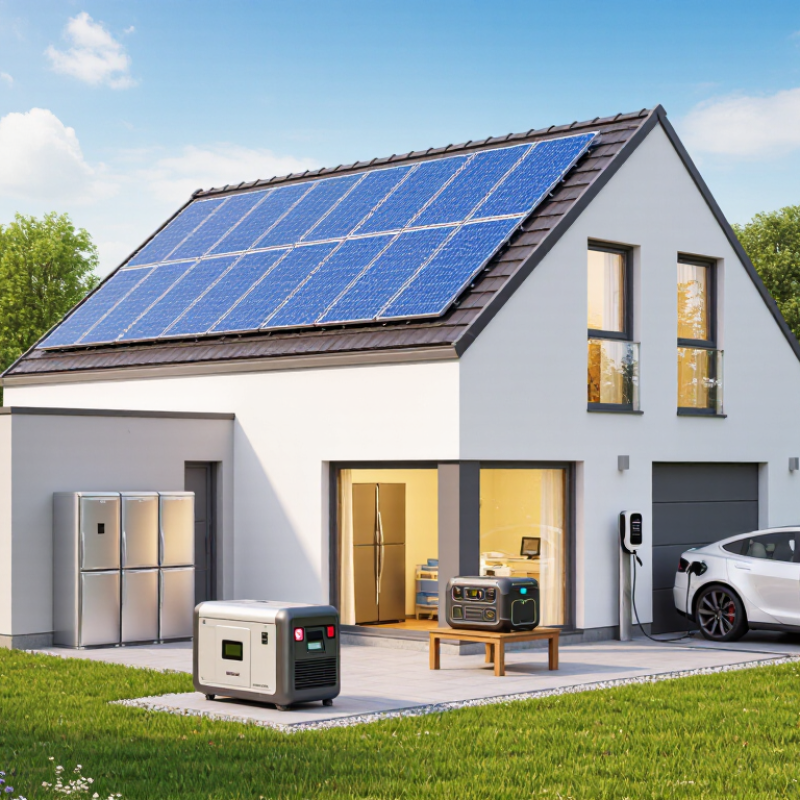
10 Best Home Power Generation Systems for 2026?

How Home Power Generation Systems Produce Electricity

Home power systems turn different energy flows into electricity. Rooftop solar cells release electrons when sunlight strikes semiconductor layers, producing direct current. An inverter converts that current into household alternating current. Batteries store surplus energy for later use, but storage does not create electricity; it shifts when electricity is available.

Wind systems use moving air to spin blades connected to a generator. Small hydro systems use flowing water in a similar way, while fuel-powered generators burn fuel to rotate an alternator. The U.S. Energy Information Administration reports that an average U.S. residential customer used about 10,791 kilowatt-hours in 2022. That benchmark helps frame system sizing, though household demand varies widely. A cloudy roof or a shaded turbine site changes the calculation.

NREL’s PVWatts model accounts for location, panel direction, tilt, and system losses when estimating solar output. Those details matter more than a headline capacity rating. The International Energy Agency’s Renewables 2024 report forecasts about 5,500 gigawatts of renewable capacity additions worldwide from 2024 to 2030, with solar photovoltaics providing nearly 80% of that growth. Still, a sunny global outlook cannot promise steady power at one home. Actual production fluctuates, and estimates can be imperfect.

What to Consider When Choosing a System for 2026

Choosing a home power system for 2026 starts with the loads you need to keep running. The U.S. Energy Information Administration reported average residential electricity use of 10,791 kilowatt-hours per customer in 2022. That national figure is only a rough reference. Your winter heating, well pump, or evening cooking may create very different peaks.

Write down essential appliances and their wattage, then estimate how long each must run during an outage. A battery can provide quiet, instant backup, but its usable capacity and recharge options matter more than its headline size. Solar output varies with roof direction, shade, and season. Shading matters. NREL’s PVWatts calculator can estimate local production, but its result is not a guarantee; cloudy weeks still happen.

Compare installed cost, maintenance, fuel availability, noise, and replacement needs across solar-plus-storage, generators, and hybrid setups. Check whether the system can start motor-driven equipment, such as a refrigerator or sump pump, whose startup demand can exceed its running load. The EIA’s consumption data and NREL’s solar modeling tools are useful planning references, not substitutes for a site assessment. I would be cautious about choosing from annual savings alone. A spreadsheet can miss the value of a warm room, or the cost of fuel during a long outage.

10 Best Home Power Generation Systems for 2026? — What to Consider When Choosing a System Options are compared by typical scale, strengths, and practical limitations. Output varies with site conditions, equipment sizing, and local requirements.
System Typical scale Energy source Best suited for Key advantages What to consider
Rooftop solar with battery storage Common residential arrays are about 5–15 kW; batteries often store roughly 5–20 kWh each. Sunlight Homes seeking daytime generation, backup power, or greater self-consumption. Produces electricity without on-site fuel; a suitably configured battery can provide backup during outages. Production depends on roof orientation, shading, weather, and season. Backup usually requires compatible equipment and a properly sized battery.
Grid-connected rooftop solar Common residential arrays are about 5–15 kW. Sunlight, with the utility grid as the supply when solar output is insufficient. Homes with a suitable roof and reliable grid service that want to reduce grid electricity use. Can generate substantial electricity during daylight without requiring on-site fuel storage. Standard grid-tied inverters generally shut down during a grid outage unless the system includes approved backup equipment and storage.
Ground-mounted solar with battery storage Often about 5–20 kW for a home; storage capacity depends on backup goals. Sunlight Properties with usable land, limited roof space, or a need for flexible array placement. Panels can be oriented and tilted independently of the roof; access for maintenance may be easier. Needs suitable land, permits, and site preparation. Trenching, foundations, and wiring can add project complexity.
Portable power station with solar panels Common units provide roughly 1–5 kWh of stored energy and around 1–3 kW of AC output. Stored electricity, rechargeable from the grid or compatible solar panels. Essential devices, short outages, renters, camping, or a small backup setup. Portable, quiet in operation, and does not produce exhaust while supplying stored power. Runtime is limited by battery capacity and appliance load. Solar recharging speed depends on panel capacity and sunlight; it is not equivalent to whole-home backup.
Automatic standby generator Residential units commonly range from about 7–26 kW. Usually natural gas or propane. Homes that need automatic backup for selected circuits or, with suitable sizing, much of the home. Can start automatically after an outage when paired with the required transfer equipment and fuel supply. Requires outdoor placement, professional installation, maintenance, and an available fuel supply. Produces exhaust and noise while running.
Diesel standby generator Residential and small-property units vary widely; sizing depends on the loads to be supported. Diesel fuel Properties where diesel storage and servicing are practical, including some remote locations. Can provide sustained backup when properly sized and supplied with fuel. Needs safe fuel storage, regular servicing, and attention to emissions and noise. Fuel quality and storage conditions affect reliability.
Portable inverter generator Many household-oriented models provide approximately 1–7 kW of rated output. Typically gasoline; some models also support propane. Short outages, essential appliances, or occasional use where a permanently installed system is unnecessary. Portable and generally quieter than conventional portable generators of similar output. Must be operated outdoors, well away from doors and windows, because exhaust contains carbon monoxide. It requires fuel and manual setup; never connect it to home wiring without approved transfer equipment.
Small wind turbine Residential-scale turbines are often rated from about 1–10 kW, but actual energy production depends strongly on wind conditions. Wind Open, consistently windy sites with adequate space and permission for a tower. May generate electricity at times when solar output is low, depending on local wind patterns. Average wind speed, tower height, turbulence, setbacks, permits, and maintenance are critical. A rated power figure does not indicate typical annual output.
Microhydropower Small systems may range from hundreds of watts to several kilowatts; output can be continuous where flow is dependable. Flowing water Properties with a suitable stream, sufficient flow and elevation drop, and water-use approval. Can provide steady generation day and night when water conditions remain consistent. Feasibility depends on measured flow and head, seasonal variation, water rights, environmental rules, and site-specific civil works.
Residential fuel-cell system Small building systems are commonly in the low-kilowatt electrical range; exact ratings vary by technology. Often natural gas or another hydrogen-rich fuel; some designs use hydrogen. Homes with a compatible fuel supply seeking steady on-site electricity and, in some systems, usable heat. Can provide continuous electricity while fuel is available; combined heat and power designs can make use of recovered heat. Fuel availability, installation cost, service requirements, emissions, and local permitting should be checked. Electricity output and efficiency depend on the specific system.

Choosing a system: compare the loads you need to run, outage duration, local climate, fuel availability, installation and maintenance requirements, permits, and total lifecycle cost. Generator ratings, solar capacity, battery energy, and renewable-resource output measure different things and should not be compared as if they were equivalent.

The Main Types of Residential Power Generation Systems

Residential power generation systems differ in how they produce electricity, store it, and respond to outages. Rooftop solar panels convert sunlight into power, while a battery can keep selected circuits running after sunset. Without storage or suitable backup controls, a grid-connected solar system may shut down during an outage. Roof shade matters. So does winter daylight.

Combustion generators are another common option. Portable units can supply temporary power, but they must operate outdoors, well away from windows and doors, because exhaust contains carbon monoxide. Permanently installed standby systems can start automatically and support more household circuits. Their capacity, fuel supply, and transfer equipment should be assessed by qualified professionals. A small detail can matter: a refrigerator, well pump, and heating equipment may draw more power together than expected.

Wind and microhydropower are site-specific choices. A small wind turbine needs consistent wind and suitable space; nearby buildings can reduce output. Microhydropower may provide steadier electricity, but it depends on reliable water flow and site conditions. Neither is a universal shortcut. In practice, the most useful comparison starts with essential loads, local weather, installation limits, and how long backup power is needed. Estimates can still miss real-world usage, so leave room to reassess.

10 Home Power Generation Systems: Typical Electrical Output

Approximate rated output ranges for residential-scale systems, in kilowatts (kW). Bars show the low-to-high range; they are not a ranking.

Actual output depends on system size, fuel, equipment, and local conditions. Solar, wind, and hydro output varies with available resources; microhydro is especially site-dependent. Fuel cells and micro-CHP are less common residential options.

How the 10 Leading Home Power Systems Compare

Comparing ten leading home power systems means looking beyond headline capacity. Solar panels paired with a battery can supply everyday loads quietly, but cloudy weather limits recharging. A standby generator can run longer during an extended outage, provided fuel remains available. Portable battery units are easier to move and set up. Their smaller reserves may not support large appliances for long. Quiet matters.

The practical comparison starts with the circuits you need to keep running. A refrigerator, router, and a few lights require less power than an electric water heater or central air conditioner. Check both continuous output and surge capacity; motors often draw extra power when starting. Installation also changes the picture. Some systems need a transfer switch, electrical work, or a safe outdoor location. Those details affect cost and convenience.

For a fair review, compare usable storage, recharge options, runtime, noise, maintenance, and warranty terms. A hybrid setup may combine rooftop generation with stored energy or a backup generator, but added components bring added complexity. I would not choose by advertised capacity alone. It is easy to overestimate how many circuits a system can carry, especially during cold or hot weather. A simple load list, based on actual appliances and their running times, makes the trade-offs clearer.

Installation, Maintenance, and Backup Power Planning

Home power generation systems perform best when installation matches a home’s actual needs. List essential loads: the refrigerator, lights, internet equipment, medical devices, and heating controls. Check running and startup wattage; a small motor may briefly draw much more than expected. Ask a qualified electrician to assess wiring, transfer equipment, grounding, and applicable local requirements. Never improvise a connection to household circuits.

Placement matters. Keep fuel-burning generators outdoors, away from doors and windows, and follow the clearance instructions. Battery systems need a suitable location that meets ventilation and temperature requirements. Check structural support and service access before delivery. A system that is difficult to reach can become an expensive annoyance. The perfect spot rarely exists.

Maintenance is modest, but easy to neglect. Test the system regularly, inspect cables and terminals, and clear vents. Follow the equipment’s service and fuel-storage guidance. For batteries, check alerts, charge levels, and backup settings. Record test dates in a notebook. It feels old-fashioned, but it helps reveal missed checks.

Plan for realistic outages: decide which circuits matter, how long they need power, and what can be switched off. Rehearse the changeover safely, then revise the plan after an outage. Overnight heating and charging needs are often underestimated. That deserves a second look.