3295 Cobb International Blvd. Kennesaw, GA 30152 800-367-1377 sale@patiostools.com

Product Variation:

What Are the Best Pressure Gauges in 2026?

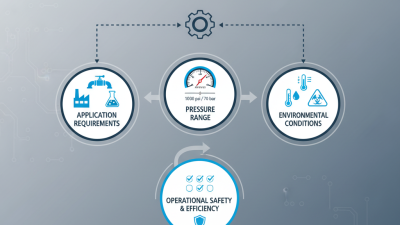
What makes a pressure gauge the best choice in 2026? It is rarely the most expensive model or the one with the largest dial. The right instrument matches the process, measurement range, environment, and accuracy requirements. A gauge on a clean water line faces different demands from one mounted beside a vibrating pump or exposed to temperature swings.

This guide compares pressure gauges by practical features: accuracy class, dial readability, case material, connection type, pressure range, and resistance to vibration or corrosion. It also considers analog and digital designs, including liquid-filled cases and remote seals. Small details matter. A 0–300 psi gauge may be a poor fit when normal readings cluster near 20 psi, because small changes can be hard to see. Selection should follow system specifications and manufacturer documentation, not marketing claims alone. Check units, connection dimensions, and operating limits before installation. For critical processes, consult a qualified instrument technician and follow applicable site procedures.

There is no universal winner. A stainless-steel gauge may suit a washdown area, while a compact digital model can help when readings need to be logged. Even a well-made gauge can drift, and price alone does not prove accuracy. That is easy to overlook. The sections ahead explain what to compare, where different gauge types perform well, and how to choose a dependable model for your application.
What Are the Best Pressure Gauges in 2026?

What Pressure Gauges Measure and How They Work

A pressure gauge measures force per unit area, usually relative to the surrounding air. Gauge pressure reads zero when exposed to ambient conditions; absolute pressure uses a perfect vacuum as its reference. Differential gauges compare pressure at two points, such as across a filter. The distinction matters. A reading of 200 kPa means different things depending on its reference.

In a mechanical gauge, pressure flexes a Bourdon tube or diaphragm. A linkage transfers that movement to a pointer on the dial. Digital models commonly convert sensor deformation into an electrical signal. NIST Special Publication 811 gives standard atmospheric pressure as 101.325 kPa, a useful reference when comparing pressure units—not a substitute for calibration. At the bench, a technician checks a gauge against a known pressure source and notes its range, accuracy class, and operating conditions. Small details matter. Pulsation, vibration, and temperature can shift readings over time. A gauge may look precise and still mislead. For 2026 applications, match the measurement type and range to the process, then verify performance periodically using a traceable reference.

What Pressure Gauges Measure and How They Work

Pressure gauges measure pressure and display it in units such as kilopascals (kPa), pounds per square inch (psi), atmospheres (atm), or millimeters of mercury (mmHg). The chart shows equivalent values for a pressure of 1 bar.

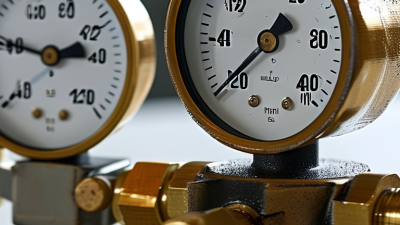
A typical mechanical gauge uses pressure to move an internal element, such as a curved Bourdon tube, which moves a pointer across a calibrated scale. Many gauges display gauge pressure—the difference between the measured pressure and ambient atmospheric pressure.

The Main Types of Pressure Gauges Available in 2026

What Are the Best Pressure Gauges in 2026?

The Main Types of Pressure Gauges Available in 2026

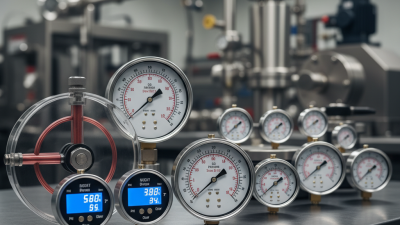
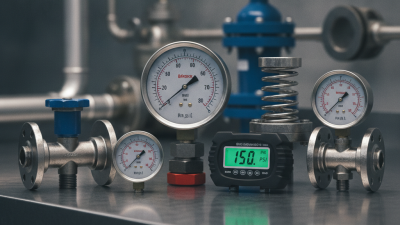
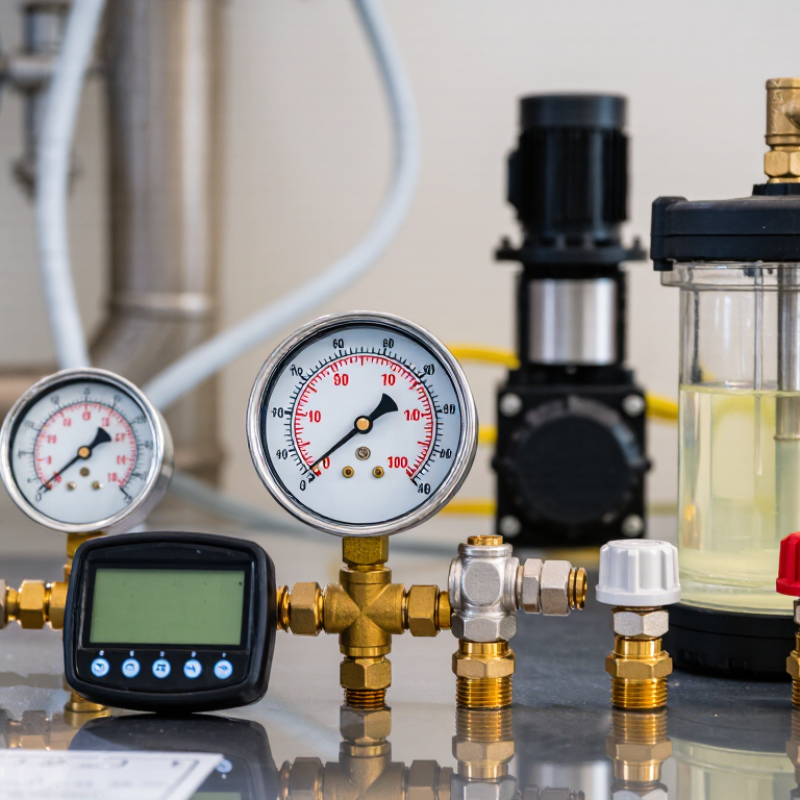
The best gauge depends on the pressure range, fluid, vibration, and required accuracy. Bourdon-tube gauges suit many general-purpose jobs, such as checking a pump line. Diaphragm gauges work well with low pressures or corrosive media when paired with suitable materials. Differential gauges compare pressure across filters and help flag blockage. Digital gauges display readings clearly and may offer logging, but batteries and calibration still matter.

For compressed-air systems, gauge selection supports practical energy checks. The U.S. Department of Energy’s Improving Compressed Air System Performance guide reports that compressed air can account for about 10% of industrial electricity use. ASME B40.100-2022 defines analog gauge accuracy grades, including 0.5% and 1% of span. A narrow operating range can make readings easier to interpret, though choosing one is sometimes less straightforward than it sounds.

Tips: Match the gauge’s wetted materials to the process fluid. Keep normal readings near the middle of the scale, and check calibration against a traceable reference. For pulsating lines, consider a suitable dampener; otherwise, the pointer may jitter and wear faster.

How to Compare Pressure Gauges for Accuracy and Durability

What Are the Best Pressure Gauges in 2026?

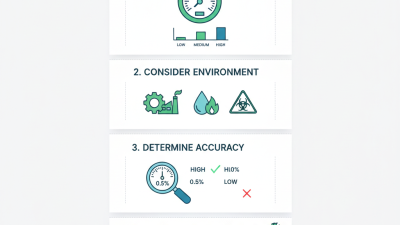
Compare gauges by how accurately they read under your actual operating conditions, not by dial size alone. Check the stated accuracy as a percentage of full scale, then match the gauge range to normal working pressure. A gauge that runs near its maximum can wear sooner; one with an unnecessarily wide range may make small changes hard to see. Small details matter. Look for clear graduations, readable units, and a pointer that settles without sticking. Verify calibration requirements and keep records, especially where readings guide maintenance or process decisions. A perfect specification sheet can still mislead if installation and use differ from the test conditions.

Durability depends on the environment around the instrument. Consider pressure spikes, vibration, temperature swings, moisture, and contact with corrosive media. Select wetted materials and seals that suit the measured fluid, and check whether the case offers suitable protection from dust or water. Not just the dial. Inspect the connection size and mounting position too; awkward fittings can add strain or make readings difficult to check. During routine checks, compare the gauge with a trusted reference and look for fogging, corrosion, loose fittings, or a pointer that fails to return to zero. Check it again after a harsh season. No single feature guarantees long service, and the right trade-off may be less obvious than a product table suggests.

What Are the Best Pressure Gauges in 2026? How to Compare Pressure Gauges for Accuracy and Durability

The best choice depends on pressure range, accuracy needs, environment, and maintenance requirements. The figures below are typical selection guidance; actual specifications vary by design, range, materials, and calibration.

Gauge Type Typical Applications Common Pressure Ranges Typical Accuracy Durability Considerations Best Fit
Bourdon Tube General industrial service, hydraulic systems, compressors, and process lines Available from low vacuum ranges to very high pressures; many industrial models cover roughly 0–1,000 bar (0–15,000 psi) Commonly around ±1% to ±2.5% of full scale; higher-grade models can be more accurate Robust and widely used. Pulsation, vibration, corrosion, and pressure shocks can shorten service life; a liquid-filled case can help with vibration. A versatile, cost-conscious choice for ordinary process and equipment monitoring
Diaphragm Low-pressure measurement, corrosive or viscous media, and applications where a separating diaphragm is useful Often selected for low pressures, from a few millibar or inches of water column upward; available ranges depend strongly on design Typically about ±1% to ±2.5% of full scale, depending on range and construction A diaphragm can isolate the measuring mechanism from the process fluid. Material compatibility and overpressure limits are important. Low-pressure service or processes that may clog or damage a conventional sensing element
Capsule Very low gas pressure, ventilation, air handling, and clean, non-corrosive gas systems Designed for low pressures, commonly measured in pascals, millibar, or inches of water column Often around ±1% to ±2.5% of full scale; confirm the specified range and accuracy class Sensitive to contamination, shock, and overpressure. Generally better suited to clean gases than harsh liquid service. Low-pressure gas measurement where a small pressure change must be readable
Digital Field checks, equipment testing, maintenance, and applications needing easy-to-read values or additional functions Available across low-pressure, compound, and high-pressure ranges; select a range close to the expected operating pressure Many general-purpose models specify approximately ±0.1% to ±0.5% of full scale; specifications differ by model No pointer mechanism, but batteries, electronics, seals, and temperature limits require consideration. Check ingress protection and shock ratings. Users who need clear readings, selectable units, or recorded measurements
Differential Filter monitoring, flow-related pressure drop, cleanroom systems, and HVAC applications Often available in low differential ranges, including pascals and inches of water column; higher ranges are also available Varies by sensing technology and range; low-range units should be selected by their stated accuracy and resolution Both pressure connections and the sensing element must suit the media. Keep differential pressure within the rated limit. Measuring the pressure difference between two points rather than pressure at one point

Choosing the Best Pressure Gauge for Different Applications

What Are the Best Pressure Gauges in 2026?
Choosing the Best Pressure Gauge for Different Applications

The best gauge depends on the process, not a single headline accuracy figure. For water lines and general plant service, a mechanical gauge with a range that keeps normal readings near the middle of the dial is often practical. For pulsating pump discharge, a damped movement can steady the pointer and make readings easier to interpret. Fit matters. ASME B40.100 assigns accuracy grades including Grade 2A at ±0.5% of span, Grade 1A at ±1%, and Grade A at ±2%. These figures describe instrument performance, not the accuracy of the entire measurement system.

For low-pressure gas, a suitably scaled digital gauge may make small changes easier to read, while clean, dry air can often use a standard mechanical model. Corrosive fluids or sticky media may require a diaphragm seal to isolate the sensing element; check compatibility with the actual fluid and temperature. Not always. ASME’s accuracy grades help compare instruments, but vibration, temperature shifts, poor installation, and overdue calibration can erode real-world performance. Specify the pressure range, connection, wetted materials, and expected pressure spikes before purchase. A gauge that looks precise on a datasheet may still be the wrong choice beside a hot, vibrating compressor.

Installation, Calibration, and Maintenance of Pressure Gauges

What Are the Best Pressure Gauges in 2026?

The best pressure gauge is only as dependable as its installation. Choose a range that keeps normal operating pressure near the middle of the dial, not at its limit. Check that wetted materials suit the process fluid, and confirm the connection matches the system. Mount the gauge where it can be read without stretching or leaning over hot equipment. Small details matter. Use a suitable seal, tighten the connection correctly, and support the instrument if vibration is present. A gauge installed on a pulsing line may need a snubber or other protection. Do not force it. Once installed, pressurize the system gradually and inspect the connection for leaks.

Calibration should follow the instrument’s importance, operating conditions, and site procedures. Compare readings with a suitable reference across several points, including zero, and record the results. If the pointer sticks or returns slowly, investigate before trusting the display. A clean dial does not prove accuracy. Maintenance can include checking the lens, case, pointer movement, and connection for damage, corrosion, or leakage. Keep records of adjustments and service dates; they help reveal drift over time. In practice, a spotless gauge may still be unreliable after repeated vibration, and inspection alone can miss that. Keep records. Replace a gauge when damage or poor repeatability makes its readings uncertain.