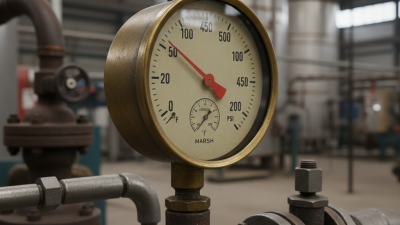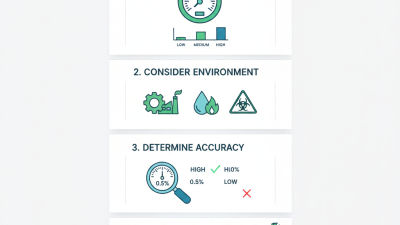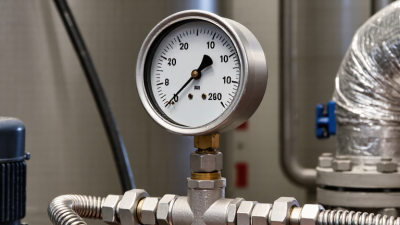
Choosing the right marsh gauges begins with understanding the site, not chasing the lowest price. Tidal wetlands, freshwater marshes, and restored habitats create different measurement demands. Water levels can change quickly after heavy rain, while saltwater can attack exposed components.
This guide examines the top marsh gauges for global buyers through practical performance criteria. We consider measurement range, resolution, sensor stability, housing materials, battery life, and data access. Installation depth also matters. A compact gauge may suit a shallow reed bed, but a larger station may perform better in tidal mud. Small errors matter.
Reliable purchasing requires more than a polished product page. Buyers should review calibration procedures, test results, warranty terms, spare-part availability, and technical support. Suppliers should explain how their gauges perform during sediment buildup, changing temperatures, and unreliable network coverage. Clear documentation is essential for environmental surveys and long-term monitoring.
No gauge fits every marsh. That is easy to overlook. Some systems offer impressive remote reporting but require complex setup. Others are simple, durable, and less flexible. A careful comparison should match the instrument with local water conditions, maintenance skills, reporting requirements, and available infrastructure. This article highlights reputable selection paths without treating one specification as universally superior. It also recognizes an important limitation: published accuracy may not reflect real performance in muddy, vegetation-heavy environments. Field verification remains necessary.
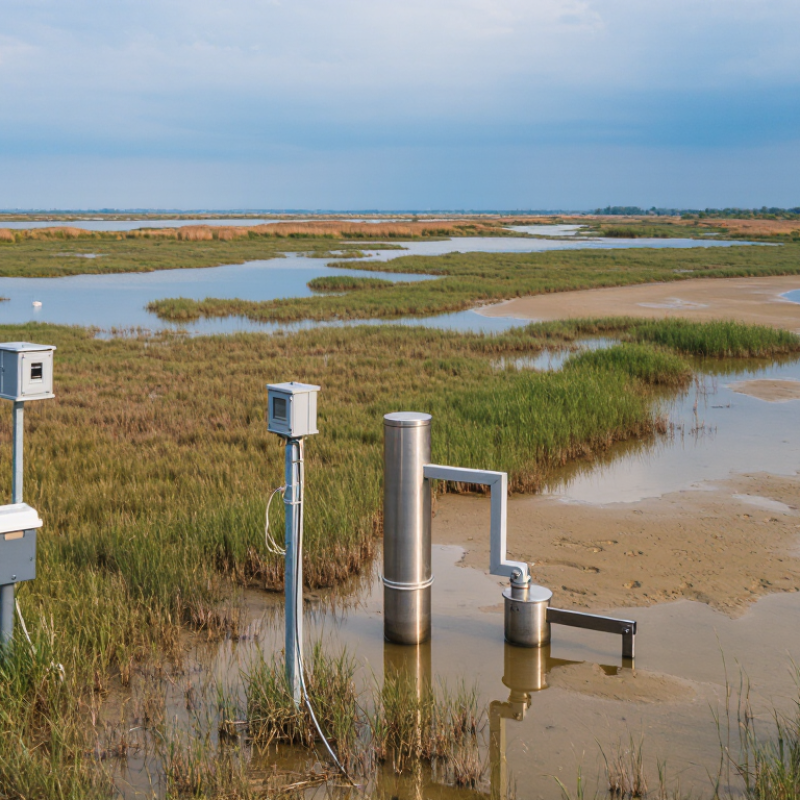
Marsh gauges are instruments used to measure water levels in wetlands, tidal marshes, and flood-prone grasslands. They show how high the water stands against a fixed reference point. That reference matters. Without it, readings from different sites cannot be compared reliably.
A float gauge uses a buoyant float inside a protected stilling well. As water rises, the float moves and records the change mechanically or electronically. A pressure gauge sits underwater and measures pressure created by the water above it. More pressure usually means a deeper water column. Radar gauges work from above the surface. They send microwave signals downward and calculate distance from the return time. A staff gauge is simpler: field workers read a marked scale directly. It needs no battery, but observations can be missed during storms.
For global buyers, the best marsh gauge depends on water chemistry, wave action, sediment, and maintenance access. In salty marshes, corrosion-resistant housings and sealed connectors are essential. In muddy locations, a protected sensor face reduces fouling. Data loggers should support common units, time zones, and easy data export. Solar power can help remote stations, although cloudy seasons may expose weak battery planning.
In practice, installation quality often matters more than sensor type. Mount the gauge firmly, check its vertical reference, and compare readings with a manual staff gauge. No instrument is perfect. Small errors can appear when vegetation, bubbles, ice, or debris interfere. Regular calibration and clear maintenance records make the measurements more trustworthy.
Marsh gauge selection should follow water, sediment, and vegetation conditions. The Ramsar Convention’s Global Wetland Outlook 2021 estimates that wetlands cover about 12.1 million square kilometres worldwide. It also reports a 35% decline since 1970. That loss makes dependable level records increasingly important for restoration and flood planning.
For shallow, open marshes, a graduated staff gauge is practical and inexpensive. It gives a visible reference during field visits, even when power is unavailable. However, readings remain manual and may miss sudden tidal peaks.
A vented pressure transducer suits remote pools and channels with regular inundation. Install it inside a perforated stilling tube to reduce wave noise. Sediment can block the tube, though. That weakness is easy to underestimate.
Radar gauges work well above deep water, especially where submerged equipment faces corrosion or biofouling. They need a clear downward path, so dense reeds can produce unstable readings. Ultrasonic sensors face similar problems during wind, rain, or heavy plant growth. Bubbler gauges are useful where sensors must stay above muddy water, but their air lines require careful maintenance. NOAA’s 2022 Sea Level Rise Technical Report projects 0.25 to 0.30 metres of average rise along the contiguous United States by 2050. In tidal marshes, pairing a pressure sensor with a staff gauge provides a useful cross-check. It is not perfect, but field teams can catch drift before it damages a long-term dataset.
A high-quality Marsh gauge begins with accurate, repeatable measurement. Its funnel or cup should hold a consistent sample volume, while the outlet must maintain a precise opening. Small changes can distort flow-time readings. This matters when buyers compare drilling fluids, coatings, or other liquid mixtures across different sites.
Material selection also deserves careful attention. Stainless steel resists corrosion and supports frequent cleaning. Smooth internal surfaces reduce residue that could affect the next test. Clear graduations and a stable base make readings easier in busy laboratories or field cabins. A well-designed handle helps users pour safely without touching the test area. These details seem minor. They are not.
From practical testing, temperature control often separates useful data from misleading data. A sample that feels slightly warmer may flow noticeably faster. Reliable gauges should support simple temperature checks and consistent timing methods. Buyers should also examine calibration records, dimensional tolerances, and replacement-part availability before ordering. However, even a precise gauge cannot correct poor sampling or rushed operation. I have seen clean equipment produce questionable results because the sample was not mixed evenly. That weakness should be acknowledged, not hidden. Clear instructions, easy maintenance, and documented quality checks build trust over time.
Global buyers compare marsh gauges by measurement accuracy, field endurance, and total ownership cost. A clear staff gauge supports quick visual checks during wetland surveys. Digital gauges offer automated records, but sensors require careful installation and regular calibration. Accuracy should be verified against a traceable reference, not accepted from a sales sheet alone. Small installation errors can distort readings by several millimetres.
Durability matters in saltwater, mud, heavy rain, and strong sunlight. Look for corrosion-resistant materials, sealed housings, readable markings, and stable mounting hardware. Battery life also affects operating costs in remote marshes. A cheaper gauge may become expensive after repeated cleaning, replacement parts, or lost data. However, the most expensive model is not automatically the best choice. Some buyers overestimate advanced features that their monitoring program never uses.
Tips: Compare five-year costs, not only purchase prices. Request calibration evidence and test readings before large orders. Inspect the gauge after simulated flooding and sediment exposure. Keep spare mounting parts available. We once considered low maintenance a minor issue, but field access proved costly. That assumption needed correction. Also, data resolution is not the same as accuracy. A display showing more decimal places may still produce unreliable results. Global buyers should match gauge design with local tides, water chemistry, maintenance skills, and reporting requirements.
Before ordering marsh gauges internationally, verify the measurement task, not just the quoted price. Confirm pressure range, dial size, connection thread, wetted materials, accuracy class, temperature limits, and required process fluid. A gauge rated for dry air may fail quickly in wet, corrosive service. Ask for a calibration certificate with traceability, serial number, test points, and stated uncertainty. NIST Technical Note 1297 explains that measurement uncertainty must include relevant sources, not only the instrument’s advertised accuracy. That detail is often overlooked.
Export documents also deserve careful review. Request the correct HS classification, country of origin, packing dimensions, net and gross weight, warranty terms, and replacement-part availability. The World Bank’s Logistics Performance Index 2023 assessed 4,090 logistics professionals across 139 economies, highlighting customs, tracking, and delivery timeliness as separate supply-chain factors. A low-cost gauge can become expensive when customs descriptions are vague or shock protection is poor. Use sealed packaging, protective caps, and a visible “calibration instrument” handling note where appropriate.
Check the supplier’s quality system and inspection records. ISO 9001 certification supports process control, but it does not prove every gauge is accurate. Ask for sample test data. Better still, require an independent inspection before shipment. I would also confirm whether local technicians can recalibrate the instrument; international returns are slow and sometimes unrealistic. One practical weakness remains: buyers often specify accuracy without defining the actual operating conditions. That gap can invalidate an otherwise careful purchase.
Typical functional characteristics to compare before ordering marsh water-level gauges internationally
Pressure transducers and radar gauges support continuous monitoring, while radar provides non-contact measurement and avoids submerged sensor maintenance. Ultrasonic gauges are also non-contact but can be influenced by temperature, vegetation, and surface conditions. Staff gauges require no external power but normally depend on manual readings. Before ordering internationally, check measurement range, accuracy, environmental protection, data logging, communications, battery life, mounting requirements, calibration, documentation, and import compliance.
3295 Cobb International Blvd.
Kennesaw, GA 30152
800-367-1377
sale@patiostools.com
© 2023 - Marsh Instruments