3295 Cobb International Blvd. Kennesaw, GA 30152 800-367-1377 sale@patiostools.com

Product Variation:

Why Choose Refrigeration Gauges for HVAC Systems?

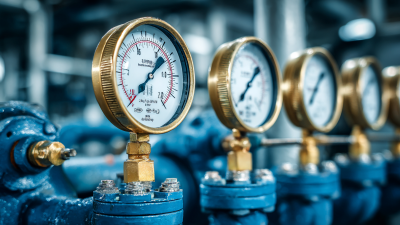
Choosing the right refrigeration gauges can change the quality of an HVAC service call. These instruments help technicians read system pressure, compare operating conditions, and identify faults before replacing expensive components. A gauge set becomes especially valuable when a compressor sounds strained, a suction line feels unusually warm, or frost appears near the evaporator.

Experienced refrigeration educator Jim Cuttone emphasizes the practical value of measurement: “A gauge is only useful when the technician understands what the readings mean.” That principle reflects real field work. Pressure alone does not explain every problem. Ambient temperature, refrigerant type, airflow, superheat, and subcooling must also be considered. A reliable set of refrigeration gauges supports those checks with clearer readings and better control.

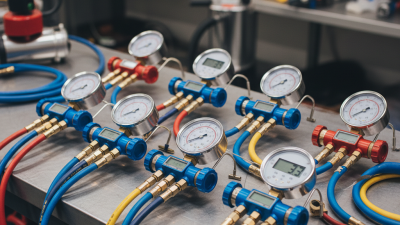
Digital models can display pressure and temperature together. Some provide automatic superheat calculations, leak-test functions, and data logging. Traditional manifold gauges remain useful, particularly when technicians need a simple, familiar setup. The choice is not always obvious. Budget, accuracy, hose durability, refrigerant compatibility, and job frequency all matter.

A small mistake can mislead the entire diagnosis. A damaged hose, blocked fitting, or poorly calibrated sensor may produce believable numbers. That is the uncomfortable part. Good technicians verify readings instead of trusting one instrument blindly. They inspect connections, compare measurements, and record conditions before adjusting the system. This article explores why refrigeration gauges remain essential for HVAC systems and how thoughtful selection can improve safety, efficiency, and service confidence.
Why Choose Refrigeration Gauges for HVAC Systems?

What Refrigeration Gauges Are and How They Work

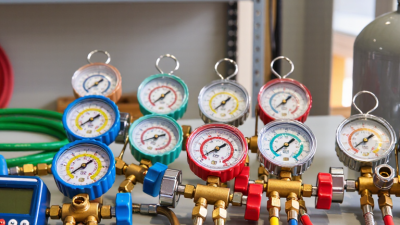
Refrigeration gauges help HVAC technicians see what the system cannot show directly. They measure pressure on the low and high sides of a refrigeration circuit. A manifold connects to service ports, while hoses carry refrigerant pressure to the gauges. The readings help estimate saturation temperature and refrigerant condition. In practice, a technician compares pressure with the refrigerant’s temperature chart. This reveals clues about superheat, subcooling, restrictions, or possible overcharging.

The gauges work through mechanical sensors or electronic pressure transducers. When pressure changes, the display or needle responds. Low-side pressure usually reflects evaporator conditions. High-side pressure often reflects condenser conditions. These readings are useful, but they are not complete answers. Airflow, outdoor temperature, coil cleanliness, and compressor condition also affect performance. One reading can mislead. I have seen technicians trust a familiar number while ignoring a blocked filter or weak airflow. Refrigeration gauges are valuable because they support measured diagnosis, not guessing.

Tips: Check hose connections before opening service valves. Use clean, rated hoses and confirm the refrigerant type. Record pressure and temperature together. Compare readings with manufacturer data and current operating conditions. Wear appropriate eye and hand protection. If the pressure seems unusual, stop and investigate instead of adding refrigerant immediately. A small leak, poor connection, or inaccurate thermometer may explain the result. Practice matters. Even experienced technicians should question readings that do not match the system’s actual behavior.

How Gauges Measure HVAC Pressure and System Conditions

Refrigeration gauges help HVAC technicians understand pressure and system conditions during service. A low-side gauge shows suction pressure near the evaporator. A high-side gauge shows discharge pressure leaving the compressor. The pressure difference reveals how the system is working under load.

Pressure also changes with refrigerant temperature. Technicians compare gauge readings with temperature charts to estimate saturation temperatures. They then check superheat and subcooling using temperature clamps. These measurements can reveal undercharge, overcharge, poor airflow, restricted components, or weak heat transfer. A normal pressure reading does not always mean the system is healthy.

In field work, I have learned that one reading can mislead. Outdoor temperature, indoor airflow, and recent compressor operation all affect results. The hoses must be connected carefully, and leaks around fittings can distort measurements. A technician should record pressure and temperature together, not rely on memory. Safety glasses and proper service procedures remain essential.

Tips: Let the system run under a stable load before measuring. Check both pressure and pipe temperature. Inspect airflow before adjusting refrigerant. Write down readings, because small changes often reveal developing faults.

Why Choose Refrigeration Gauges for HVAC Systems?

Refrigeration gauges measure suction-side and discharge-side pressure, helping technicians evaluate compressor operation, refrigerant flow, and overall system conditions.

The chart shows representative pressure readings for a properly operating R-410A air-conditioning system under moderate cooling conditions. The low-side gauge is typically around 118 psig, while the high-side gauge may read about 377 psig. Actual readings vary with outdoor temperature, indoor load, airflow, refrigerant charge, and equipment design.

Key Benefits of Using Refrigeration Gauges in HVAC Service

Why Choose Refrigeration Gauges for HVAC Systems?

Refrigeration gauges give HVAC technicians a direct view of system pressure during service. These readings help identify undercharge, overcharge, restrictions, and unusual operating conditions. A pressure reading alone is not enough. Technicians should compare it with temperature, airflow, and the equipment’s service specifications. That broader view reduces guesswork and supports safer decisions.

In field service, accurate gauges can shorten diagnostic time. A technician can connect the hoses, observe pressure changes, and check whether the system responds normally. Stable readings may indicate balanced operation, while rapid movement can suggest a deeper fault. Digital models may also calculate saturation temperature, reducing manual conversion errors. Small details matter. Clean connections prevent leaks and contaminated readings. Hoses should remain capped when not in use.

Calibration is equally important. Even a durable gauge can drift after repeated use or rough transport. I have seen technicians trust a familiar reading without checking the instrument’s condition. That habit can lead to unnecessary refrigerant adjustments. I still inspect hose seals, confirm zero pressure, and compare unusual results with a second measurement. Gauges do not replace experience. They support it. Careful documentation of pressure and temperature readings also creates a reliable service record for future maintenance.

Choosing the Right Gauge Type for Different HVAC Systems

Why Choose Refrigeration Gauges for HVAC Systems?

Choosing the Right Gauge Type for Different HVAC Systems

Refrigeration gauges help technicians read system pressure during charging, recovery, and fault diagnosis. The correct gauge depends on the HVAC system, refrigerant, and working pressure.

For residential air conditioners, a standard manifold gauge set is often practical. Its low- and high-pressure scales support common cooling checks. Heat pump systems need gauges that clearly handle both heating and cooling cycles. Switching modes can expose weak fittings or incorrect hose connections. Digital gauges provide quick readings and may calculate saturation temperature. They are useful when accuracy matters.

Commercial refrigeration systems often require gauges with wider pressure ranges. Some systems operate at pressures that can damage unsuitable instruments. Always check the refrigerant rating before connection. A deep-vacuum gauge is different from a pressure gauge. It measures evacuation quality, not refrigerant pressure. That distinction prevents many service errors.

Small systems may benefit from compact digital tools. Larger installations often need durable manifolds and longer hoses. Analog gauges remain valuable because they work without batteries. However, reading them in poor light can be difficult. A practical habit is comparing gauge readings with system temperature and operating conditions. One number rarely tells the whole story. Gauge selection is not perfect every time. Technicians should question unusual readings, inspect hoses, and verify calibration before making adjustments. A careful second check can prevent an expensive mistake.

Why Choose Refrigeration Gauges for HVAC Systems? - Choosing the Right Gauge Type for Different HVAC Systems

Gauge Type Typical Pressure Range Best-Suited HVAC System Common Refrigerant Applications Key Measurements Main Advantages Important Limitations Recommended Use
Compound Manifold Gauge Set Low side: approximately -30 to 0 inHg vacuum and 0 to 250 psi pressure; high side: commonly 0 to 500 psi Residential and light-commercial air-conditioning systems Commonly used with refrigerants such as R-134a, R-404A, R-407C, R-410A and R-32 when the gauge scale and hoses are rated for the refrigerant Low-side pressure, high-side pressure and system vacuum Combines charging, recovery and basic diagnostic functions in one tool; easy to read and widely used for service work Analog readings can be affected by parallax and temperature; pressure scales may not match every refrigerant
High-Pressure Manifold Gauge Set Commonly 0 to 800 psi or higher, depending on the model High-pressure air-conditioning and refrigeration systems Higher-pressure refrigerants, including R-410A, R-32 and some transcritical or high-pressure applications with specifically rated equipment High-side discharge or condensing pressure Provides a larger safety margin for systems operating at elevated pressures; useful for condenser and compression-side diagnosis Not suitable for low-side vacuum measurement unless paired with a suitable compound gauge; incorrect ratings create a safety hazard
Digital Manifold Gauge Often approximately -30 inHg vacuum to 700 psi, with the exact range determined by the instrument Residential, commercial and variable-capacity HVAC systems Multiple refrigerants, provided the instrument includes the required refrigerant database and pressure rating Pressure, saturated temperature, superheat, subcooling, vacuum and sometimes system temperature Improves readability; automatically converts pressure to saturation temperature; can reduce manual calculation errors Requires batteries and correct refrigerant selection; electronic sensors need calibration and protection from moisture or impact
Refrigerant-Specific Gauge Set Pressure range is selected for a particular refrigerant and system class Systems using refrigerants with distinctive pressure-temperature characteristics Examples include R-134a automotive systems, R-404A low-temperature refrigeration and R-410A or R-32 air-conditioning systems Pressure readings matched to a dedicated temperature scale Reduces the risk of reading the wrong temperature scale; often provides clear, application-focused readings Less versatile when servicing multiple refrigerants; the set must be replaced or supplemented when refrigerant requirements change
Vacuum Gauge / Micron Gauge Measures deep vacuum, commonly from atmospheric pressure down to 0 microns of mercury All systems requiring evacuation before refrigerant charging Applicable to virtually all HVAC and refrigeration refrigerants when used with clean, dry connections Absolute pressure during evacuation and standing-vacuum testing Measures evacuation quality far more accurately than a compound gauge; helps identify moisture, leaks and inadequate evacuation Does not replace a pressure manifold; sensor placement, oil contamination and leaks in hoses can distort readings
Differential Pressure Gauge Typically designed for low pressure differences, often from a few inches of water column to several psi Air-handling units, duct systems, filters, fans and combustion or ventilation equipment Not primarily used to measure refrigerant circuit pressure Pressure drop across filters, coils, ducts and air-moving components Helps evaluate airflow restrictions and fan performance; useful for diagnosing comfort and ventilation problems Cannot safely replace a refrigeration manifold for high- or low-side refrigerant measurements
Pressure Transducer with Digital Display Available in ranges from low-pressure control applications to more than 1,000 psi, depending on the sensor Packaged units, chillers, heat pumps and automated building-management systems Selected according to refrigerant compatibility, maximum pressure and connection requirements Continuous pressure monitoring, control feedback and alarm conditions Supports automation, data logging and remote monitoring; suitable for continuous operation Requires correct electrical configuration, installation and calibration; not always convenient for temporary field service

Selection note: Always confirm the gauge's maximum working pressure, refrigerant compatibility, connection type and temperature scale before use. Pressure ranges shown are typical service values and vary by instrument design and application.

How to Use Refrigeration Gauges Safely and Accurately

Why Choose Refrigeration Gauges for HVAC Systems?

Safe measurement begins before the gauges touch the system. Check the manifold, hoses, seals, and sight glass for damage. Wear safety glasses, insulated gloves, and suitable protective clothing. Work in a ventilated area, especially with flammable or high-pressure refrigerants.

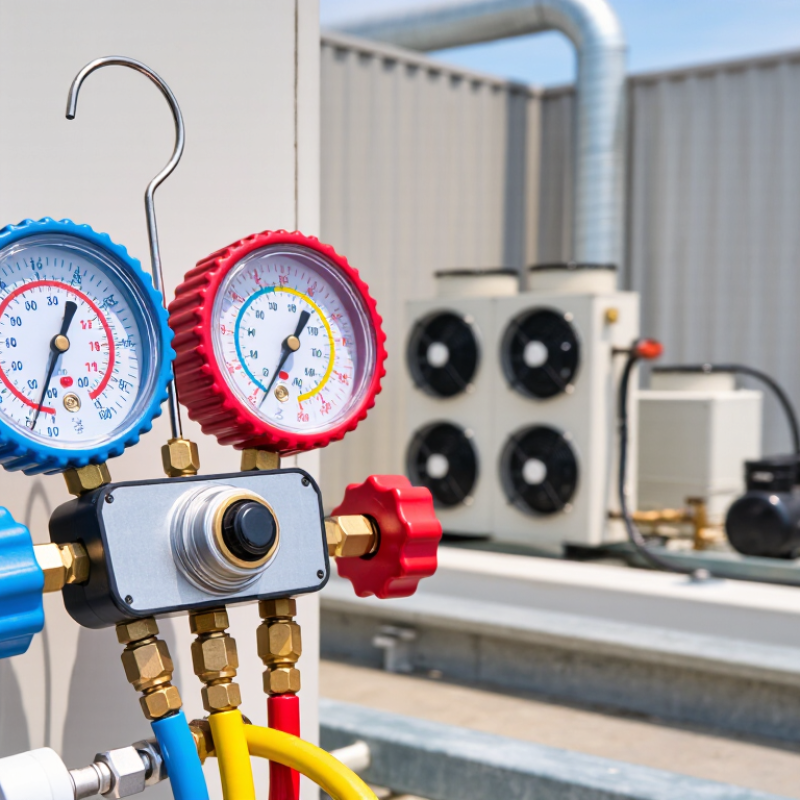
Connect the blue hose to the low side and the red hose to the high side. Keep both manifold valves closed during connection. Purge air from the hoses briefly, then open valves slowly. Read pressure only after the system stabilizes. Compare readings with the correct pressure-temperature chart, not memory. The International Energy Agency reports that cooling demand could more than triple by 2050. Accurate servicing will matter more.

Never loosen a fitting under pressure. Do not release refrigerant into the atmosphere. Use approved recovery equipment and follow the equipment manual and local requirements. The UNEP Cooling Emissions and Policy Synthesis Report estimates that efficient cooling could avoid up to 460 billion tonnes of carbon dioxide equivalent emissions by 2060. That figure makes small service decisions feel less small. Still, gauges do not diagnose everything. Incorrect airflow, blocked filters, faulty sensors, or liquid migration can produce misleading readings. I have found that recording suction pressure, discharge pressure, temperature, and outdoor conditions prevents rushed judgments. Recheck connections after testing. A clean reading is not always a correct diagnosis.