What Is the Best Digital Manometer to Buy?
Choosing the best digital manometer depends less on the longest feature list and more on the pressure you need to measure. A technician checking HVAC static pressure may value a clear display and reliable low-pressure readings. A laboratory user may care more about resolution, calibration records, and repeatability. Small details matter. Hose fittings, pressure units, and the instrument’s reference mode can change whether a reading is useful.
Measurement pioneer William Thomson, Lord Kelvin, wrote, “When you can measure what you are speaking about, and express it in numbers, you know something about it.” That principle still applies when comparing a digital manometer. This guide examines measurement range, accuracy, resolution, gauge or differential modes, data logging, durability, and calibration needs. It also considers practical issues, such as reading a screen in a dim mechanical room or connecting tubing without leaks.
There is no single best model for every job. A wide range can be convenient, but it may not provide the fine resolution a low-pressure task requires. Extra features can help, though they may add cost and complexity. Check the manufacturer’s specifications against your actual operating conditions, including expected pressure and media compatibility. One honest limitation: product specifications do not reveal how comfortable an instrument feels during repeated field use. The comparisons ahead offer a grounded way to narrow choices and identify which trade-offs deserve a closer look.

How Digital Manometers Measure Pressure
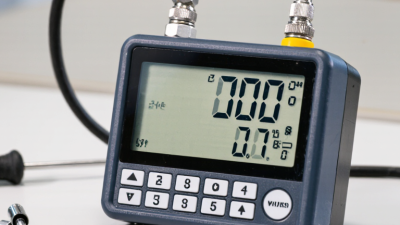
A digital manometer measures pressure by sensing how force acts on a small internal element. Many models use a diaphragm that flexes slightly when pressure changes. A sensor converts that movement into an electrical signal, and the device processes it into a readable value. It sounds simple. But the displayed result depends on the instrument’s pressure reference. Differential models compare two points, while gauge models compare pressure with surrounding air. Absolute models use a sealed vacuum reference.
Tips: Match the pressure range to your system, not just its usual reading. Check the stated accuracy, units, and whether the device measures gauge, absolute, or differential pressure. Zero it as instructed before taking a reading. A poor connection or blocked port can distort results.
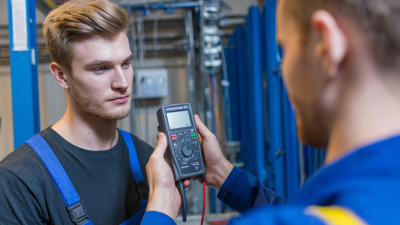
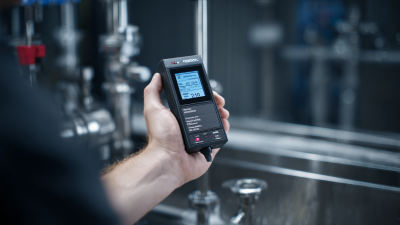
To choose the best manometer, consider where and how you will use it. A compact handheld model may suit quick checks on ventilation ducts, while a device with remote ports can help in cramped spaces. Look for a clear display and a suitable resolution, but do not confuse extra decimal places with better accuracy. Calibration requirements matter, too. Even a well-made meter can drift over time, and I would not assume one reading tells the whole story; repeat measurements can reveal an unstable system.
How a Digital Manometer Measures Pressure
Example differential-pressure readings during a gradual pressure increase. A digital manometer’s pressure sensor converts the pressure difference into an electrical signal, which the instrument displays as a pressure value. These illustrative readings show how measured values may track a reference pressure.
How to Define Your Pressure Range and Accuracy Requirements
What Is the Best Digital Manometer to Buy?
How to Define Your Pressure Range and Accuracy Requirements
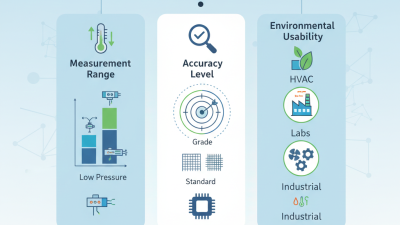
Start with the lowest and highest pressures you expect to measure, including brief spikes. A ventilation check may sit near 1 inch of water column, while a clogged filter can push readings higher. Choose a range that captures those peaks without sacrificing useful resolution at normal readings. Then check how accuracy is specified: as a percentage of full scale or of the reading. At a 0–10 in. w.c. range, 1% of full scale means ±0.1 in. w.c.; that error matters when measuring just 1 in. Small details matter. Also confirm the pressure type: differential, gauge, or absolute.
Set an error limit your work can tolerate, then compare it with instrument accuracy, calibration uncertainty, and expected temperature effects. NIST Technical Note 1297 explains that expanded uncertainty is calculated using a coverage factor; a factor of 2 often represents roughly 95% coverage when the underlying assumptions fit. Check the calibration certificate for the stated uncertainty and conditions. A quick zero check before use can catch drift, especially after moving the meter between rooms. I would not choose by range alone; that shortcut is tempting, but it can hide a poor match at the pressures measured most often.
What Is the Best Digital Manometer to Buy? — How to Define Your Pressure Range and Accuracy Requirements
| Application Profile |
Pressure Type |
Example Operating Range |
Suggested Instrument Range |
Example Accuracy Requirement |
Approximate Error at Full Scale |
What to Check Before Buying |
| Air-filter and duct pressure checks |
Differential |
0 to 1 inH₂O |
0 to 2 inH₂O |
±0.5% of full scale |
±0.01 inH₂O |
Confirm the instrument resolves small pressure changes and that its differential ports are suitable for the expected airflow conditions. |
| Low-pressure ventilation and cleanroom monitoring |
Differential |
0 to 5 inH₂O |
0 to 10 inH₂O |
±0.25% of full scale |
±0.025 inH₂O |
Check zero stability, unit selection, and whether the stated accuracy applies across the full operating temperature range. |
| General pneumatic equipment and pressure checks |
Gauge |
0 to 80 psi |
0 to 100 psi |
±0.25% of full scale |
±0.25 psi |
Choose a pressure connection and wetted materials compatible with the medium; verify the maximum allowable pressure. |
| Hydraulic systems and mid-range process checks |
Gauge |
0 to 250 psi |
0 to 300 psi |
±0.1% of full scale |
±0.3 psi |
Consider pressure spikes as well as normal pressure, and check whether the accuracy specification includes temperature effects. |
| Higher-pressure testing and equipment service |
Gauge |
0 to 800 psi |
0 to 1,000 psi |
±0.25% of full scale |
±2.5 psi |
Confirm the sensor and fittings are rated for the maximum system pressure, including foreseeable surges. |
|
Selection note: These are illustrative selection profiles, not specifications for particular instruments. Accuracy values are example requirements expressed as a percentage of full scale; actual performance varies by instrument and may also depend on temperature, calibration, and pressure conditions. Select a range that covers the highest expected pressure without making normal readings unnecessarily small on the scale. For bidirectional differential measurements, verify that the instrument supports both positive and negative pressure.
|
Which Features Matter for Your Application?
What Is the Best Digital Manometer to Buy?
Which Features Matter for Your Application?
Choose a manometer around the pressure you actually measure, not the largest number on the product sheet. For low-pressure HVAC checks, a sensitive differential model can reveal small changes across a filter or duct. For pumps and process lines, confirm its pressure range and overpressure tolerance before connecting it. Range matters. A wide range can sacrifice useful resolution at low pressures. Accuracy, repeatability, and selectable units also matter when readings guide maintenance decisions.
The U.S. Department of Energy’s Improving Compressed Air System Performance sourcebook reports that compressed air can consume about 10% of industrial electricity, and sometimes more. In that setting, a manometer can help track system pressure and investigate losses. Pick a model with suitable ports, a clear display, and data logging if readings need comparison over time. Check calibration guidance, too. A precise display is not proof of a precise measurement.
Tips: Match the sensor type to gauge, absolute, or differential pressure. Check whether the instrument records peak readings and handles the site’s temperature and moisture. Keep it simple. I would not automatically buy the tightest accuracy specification; it may add cost without improving the decision. But overlooking a small pressure drop can make routine troubleshooting harder. Read the manual, verify the instrument against a known reference, and document the test conditions.
How Common Digital Manometer Types Compare
What Is the Best Digital Manometer to Buy?
How Common Digital Manometer Types Compare
Differential manometers measure pressure between two ports, making them useful for checking duct pressure, filter drop, or room balance. Gauge models compare pressure with surrounding air and suit many general service checks. Absolute models reference a vacuum, so they fit sealed systems and altitude-sensitive measurements. For low-pressure HVAC work, a sensitive micromanometer can reveal small changes across a filter. A broad measurement range is not automatically better; it may sacrifice useful resolution near zero.
Compare accuracy, resolution, units, and calibration details—not just the largest number on the display. NIST Technical Note 1297 explains uncertainty reporting and uses a coverage factor of k=2, which often corresponds to roughly 95% coverage under stated assumptions. This is a useful benchmark when comparing specifications, though it does not guarantee that two instruments perform equally in the field. Read the fine print. A stated accuracy of 1% of full scale means ±0.1 in. w.g. on a 10 in. w.g. range. That difference can matter when measuring a small pressure drop.
Tips: Match the sensor range to your usual readings. Check whether the instrument supports zeroing, hose connections, and calibration documentation. Record readings before and after changing a filter; real ducts can behave inconsistently.
How to Select the Best Model for Your Needs
What Is the Best Digital Manometer to Buy?
How to Select the Best Model for Your Needs
Start with the pressure you expect to measure, not the longest feature list. A ventilation technician checking a filter may need a low-pressure range and fine resolution. A process engineer may need a higher range and a tougher housing. NIST Special Publication 250-39, NIST Calibration Services for Pressure, describes calibration ranges from 1 kPa to 280 MPa. That span highlights an important point: one instrument cannot serve every pressure task well. Range matters most.
Compare the instrument’s accuracy with the tolerance your work allows. A display showing extra decimal places does not guarantee a more accurate reading. Check the stated accuracy, resolution, measurement units, and whether the specification applies across the full range. For field work, consider backlighting, hose fittings, battery life, and resistance to dust or moisture. Small details matter. A fitting that leaks can undermine a careful measurement.
Think about calibration, too. NIST guidance on pressure calibration emphasizes traceability and documented measurement uncertainty; ask whether the instrument can be calibrated and whether its records suit your quality process. For routine HVAC checks, a compact differential-pressure model may be easier to carry and set up. For occasional use, advanced logging may add cost without much value. I’d still question any purchase based on a single advertised accuracy figure. Compare the full specification sheet with the pressure, environment, and tolerance you actually face.