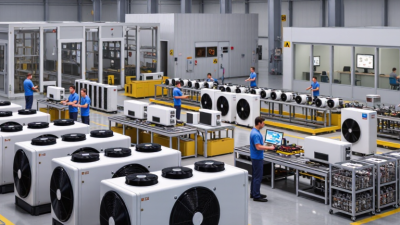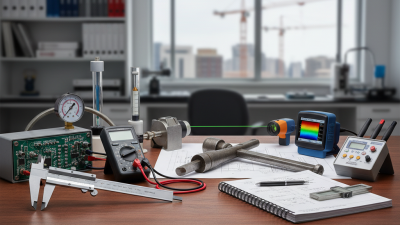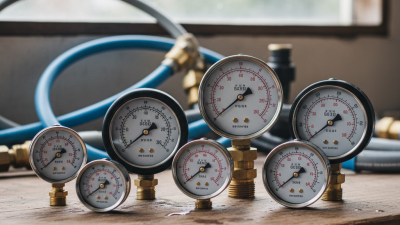
Choosing among China’s HVAC and refrigeration manufacturers requires more than comparing prices or polished product photos. Buyers should examine factory capabilities, product testing, energy performance, service coverage, and export experience. A catalogue can look impressive. The details matter.
For commercial HVAC systems, ask how equipment performs under local climate conditions and changing loads. For refrigeration, check temperature stability, compressor options, controls, and maintenance access. Dr. Joseph Allen, director of Harvard’s Healthy Buildings program, has said, “The air we breathe is the most important thing we consume.” His point underscores why system design and indoor air quality deserve attention alongside purchase price.
This guide explores manufacturers across air conditioning, chillers, heat pumps, commercial refrigeration, and related equipment. It considers product range, technical documentation, quality processes, and support after delivery. Look for verifiable evidence, such as test reports, clear warranty terms, and responsive technical teams. Confirm that claimed certifications match the exact product and destination market.
No shortlist can replace a factory audit or sample evaluation. Supplier information may also change, and public claims are not always easy to verify. That is a limitation worth admitting. Use this overview as a starting point, then validate specifications and service commitments directly with each manufacturer before making a decision.
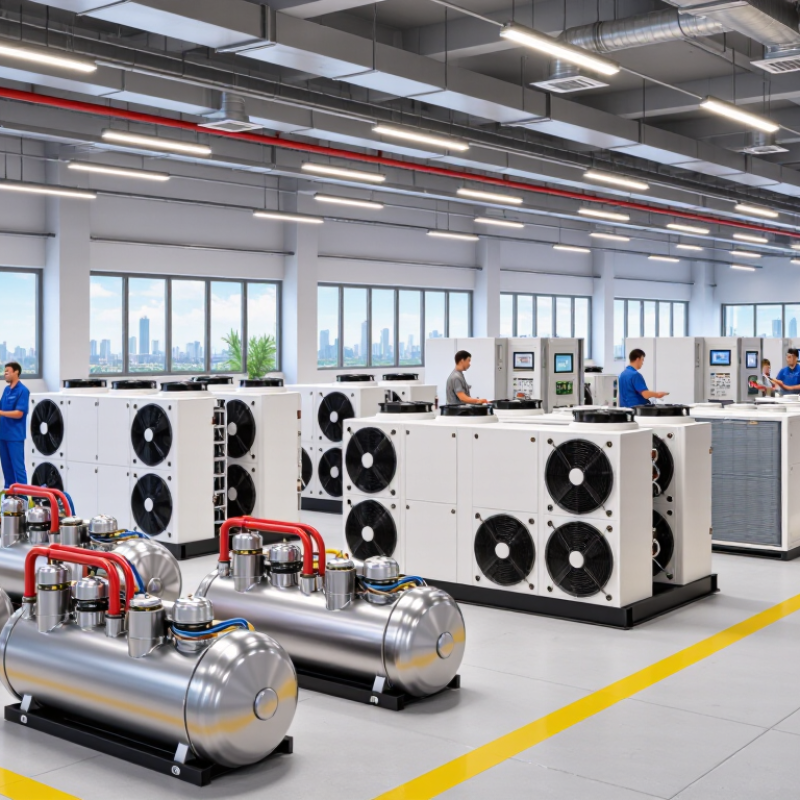
China’s HVAC and refrigeration industry is best understood as a layered manufacturing network. Component suppliers make compressors, heat exchangers, valves, motors, and control boards. Equipment makers combine these parts into air conditioners, chillers, cold-room systems, and commercial refrigeration units. Some factories specialize in one product category. Others offer contract manufacturing or custom engineering.
The supply chain can be close-knit. A unit may use a locally made copper coil, an imported sensor, and a control board from a specialist supplier. Assembly lines then test pressure, electrical safety, airflow, and cooling performance. Export-focused facilities often maintain separate procedures for product documentation and customer inspections. Details vary by factory, not just by province.
This neat picture has gaps. “Manufacturer” can mean a component producer, an assembler, or a company coordinating outside suppliers. Buyers should check who designs the system, where key parts come from, and which tests are performed on finished units. A polished showroom tells little about production control. Factory visits, sample testing, and clear technical records offer stronger evidence, though they cannot remove every risk.
When comparing HVAC and refrigeration manufacturers in China, start with the equipment’s intended duty. A cold-storage system and a comfort-cooling unit face different loads, operating hours, and service demands. Ask for performance data at the temperatures and conditions your project will actually use. Details matter.
Review how the manufacturer controls quality across production, not just during final inspection. Request sample inspection records, component traceability, pressure-test procedures, and temperature-control test results. Ask who verifies each step and how defects are recorded. A polished presentation is not proof. Where possible, inspect a production line or arrange an independent technical review.
Check whether the engineering team can explain refrigerant choices, energy performance, noise levels, and maintenance access in plain terms. Confirm that drawings, manuals, and spare-parts lists are complete and available in your working language. Ask about lead times, warranty handling, and response procedures for equipment failures. Check references for projects with similar capacity and climate conditions. I would not treat one factory visit as a complete verdict; production quality can vary over time. Compare written specifications with the delivered unit, and clarify any gaps before placing an order.
| Best HVAC and Refrigeration Manufacturers in China? — Key Criteria for Evaluating HVAC and Refrigeration Manufacturers | ||
|---|---|---|
| Evaluation Dimension | What to Assess | Evidence to Request or Verify |
| Product Compliance | Confirm that the specific product model meets the mandatory requirements that apply to its category and intended market. Requirements can differ by product type and destination. | Request model-specific declarations, test reports, and certificates. Check whether China Compulsory Certification (CCC) applies to the product and verify any certificate through the relevant official system. |
| Energy Performance | Compare cooling or heating capacity and energy efficiency at the same rated conditions and using the same test method. A higher efficiency figure is meaningful only when the rating basis is comparable. | Request complete test data identifying the standard, test conditions, model configuration, and measurement results. For products covered by China’s energy-labeling system, verify the applicable label and registered product information. |
| Independent Testing | Assess whether performance and safety claims have been checked by a competent laboratory. Accreditation is relevant only when the laboratory’s accredited scope covers the test in question. | Review recent test reports and confirm the laboratory’s accreditation status and scope through the applicable accreditation body. Check that the report identifies the same model and configuration being quoted. |
| Quality Management | Evaluate how consistently the manufacturer controls design changes, incoming materials, production, inspections, and corrective actions. A management-system certificate does not by itself certify a product’s performance. | Request the current quality-management-system certificate, check its validity and scope, and ask for relevant process-control records, inspection plans, and procedures for handling nonconforming products. |
| Manufacturing Capability | Check whether production facilities, equipment, and staff match the product’s technical complexity and expected order volume. Confirm whether critical processes are performed in-house or outsourced. | Review a facility profile, production-flow description, equipment list, and recent quality records. Arrange an audit or live facility review where practical, including checks on traceability and final inspection. |
| Refrigerant and Environmental Profile | Identify the refrigerant, its safety classification, system design requirements, and applicable environmental rules in the destination market. Refrigerant choice can affect service procedures, transport, and installation requirements. | Request the refrigerant type and charge information, safety documentation, and the manufacturer’s guidance for handling and servicing. Check current rules for the intended market rather than assuming one refrigerant is suitable everywhere. |
| Reliability and Durability | Look for evidence that products are designed and tested for their stated operating conditions, including temperature range, humidity, vibration, and expected duty cycle. | Request applicable endurance or environmental test reports, component specifications, failure-analysis procedures, and field-performance data with the operating context clearly stated. |
| Product Range and Engineering Support | Assess whether the manufacturer can provide the required capacity, configuration, controls, and system integration support without relying on unsupported customization claims. | Request technical datasheets, selection guidance, installation manuals, electrical drawings, control documentation, and written confirmation of any custom design’s scope and validation process. |
| Warranty and After-Sales Service | Compare warranty duration, exclusions, response arrangements, spare-parts availability, and responsibilities for labor, travel, and freight. Warranty terms should be assessed for the destination market. | Obtain the full written warranty and service terms. Ask for service-contact details, escalation procedures, recommended spare-parts lists, and stated support coverage for the installation location. |
| Export Readiness | Verify that the supplier understands the destination market’s product, documentation, packaging, and shipping requirements. Export experience alone does not establish regulatory compliance. | Request examples of destination-specific technical documentation, packaging specifications, shipping records where appropriate, and a clear list of certificates required for the exact product and market. |
| Commercial Transparency | Check whether the quotation clearly defines model configuration, included accessories, testing, packaging, delivery terms, payment milestones, and the treatment of engineering changes. | Compare a detailed quotation with the technical specification and purchase agreement. Require written approval for substitutions and document acceptance criteria before production begins. |
China’s HVAC manufacturers cover a broad mix of residential, commercial, and industrial equipment. Common ranges include split air conditioners, multi-zone variable refrigerant flow systems, chillers, rooftop units, and air handling units. Some producers also offer air-source heat pumps and ventilation equipment. Product availability and configurations vary, so buyers should check current technical data rather than assume every factory supplies the same options.
Refrigeration manufacturers commonly make condensing units, compressors, cold-room panels, display cabinets, and commercial freezers. Larger suppliers may combine these into systems for food processing, logistics, or supermarkets. Details matter: ask for operating temperature ranges, cooling capacity, refrigerant options, and performance data under stated test conditions. A neat catalogue is not proof of a suitable system. Samples of wiring diagrams and maintenance instructions can reveal how clearly a supplier documents its equipment.
When comparing manufacturers, match the product range to the project, not just the purchase price. Request factory test records, component specifications, warranty terms, and references for similar installations. Check whether local technicians can access spare parts and service information. Some product lists look impressive but leave key configuration details unclear. That is worth questioning. A careful review of noise levels, energy use, and installation requirements can prevent expensive surprises later.
China’s refrigeration manufacturers serve several distinct markets, and their specialties often reflect the equipment each market demands. Some factories concentrate on commercial systems for supermarkets, restaurants, and food-processing rooms. Their products may include display cases, condensing units, and walk-in cold rooms. Other manufacturers focus on industrial refrigeration, where large compressors and carefully controlled temperatures support processing and storage.
Details matter.
Cold-chain suppliers make equipment for refrigerated warehouses, transport, and distribution centers. These projects depend on stable temperatures, reliable insulation, and controls that operators can monitor during daily use. A manufacturer experienced in small display cabinets may not be the right fit for a large warehouse installation. Buyers should compare product specifications, production capabilities, quality-control procedures, and available service support. Ask for test records and references for projects with similar operating conditions. A factory visit can reveal practical details, such as how components are inspected and whether finished units receive performance testing. Published capacity alone is not proof of consistent quality. The lines between specialties are not always clear, so verify the specific team and equipment assigned to a project.
Comparing HVAC and refrigeration manufacturers for different project requirements starts with the operating conditions, not the catalogue. A cold-storage warehouse in humid Guangzhou needs different equipment from a hotel in a northern city. Record the design temperature, peak load, operating hours, available power, and space for maintenance. Then ask for performance data at your actual conditions. A headline efficiency figure may not reflect part-load operation or high outdoor temperatures.
The International Energy Agency’s The Future of Cooling report (2018) estimates that global energy demand for space cooling could more than triple by 2050 without stronger efficiency improvements. This makes verified seasonal performance, compressor control, and heat-exchanger design important comparison points. For refrigeration, check pull-down time, temperature stability, and defrost behavior. Request test methods and comparable project references, not just certificates. Also assess spare-parts access and response times. These details can matter more than a small price difference. Yet no checklist removes every risk; commissioning quality can still vary.
Tips: Send each manufacturer the same project data and ask for a written selection rationale. Compare warranty scope, local service coverage, and noise levels. Visit a working installation if possible. A polished factory tour is useful, but it is not proof of long-term reliability.
3295 Cobb International Blvd.
Kennesaw, GA 30152
800-367-1377
sale@patiostools.com
© 2023 - Marsh Instruments